IB Syllabus focus: 'Sociocultural psychology may use etic and emic methodology and include perspectives of Indigenous people.'
Understanding emic, etic, and Indigenous perspectives helps IB Psychology students evaluate how culture shapes research questions, methods, and interpretations in sociocultural psychology, where meaning may differ across communities.
Emic and etic approaches
In sociocultural psychology, researchers must decide whether they are studying behavior from inside a culture or applying concepts across cultures. This choice affects what counts as evidence, how variables are defined, and how findings are interpreted.
When researchers use an emic approach, they try to understand behavior using the categories, values, and meanings that are important within one cultural setting.
Emic approach: A research approach that studies behavior from within a specific culture using concepts and meanings that are important to members of that culture.
An emic study usually prioritizes local language, culturally specific practices, and participants’ own explanations. Its goal is depth and cultural sensitivity rather than broad comparison.
In contrast, an etic approach applies concepts or measurement tools that are intended to work across many cultures.
Etic approach: A research approach that studies behavior using concepts or measures assumed to be applicable across cultures.
Etic research is useful when psychologists want to compare groups or identify patterns that may be widespread. However, it risks assuming that the same construct has the same meaning everywhere.
The choice between emic and etic methodology also affects sampling, questionnaire design, coding of responses, and interpretation of behavior. What appears individualistic, collectivistic, or socially appropriate may depend on cultural standards rather than universal rules.
Key differences
Focus: emic methods explore culturally specific meaning; etic methods seek broader comparison.
Research tools: emic studies may adapt questions to local concepts; etic studies often use standardized instruments.
Main strength: emic approaches increase cultural relevance; etic approaches increase comparability.
Main risk: emic findings may be harder to generalize; etic findings may ignore local meaning.
Why the distinction matters in sociocultural psychology
A major issue in sociocultural psychology is whether a concept developed in one setting can be transferred to another without distortion. Ideas such as self, family obligation, emotion, or well-being may not be understood identically in every society.
If researchers treat such concepts as universal without checking local meaning, they may wrongly assume equivalence across cultures. This can reduce validity because the study may end up measuring something different from what participants actually understand. By contrast, emic work can reveal behaviors or beliefs that would otherwise be missed entirely.
Good sociocultural research often asks:
Are the categories meaningful to participants?
Was language translated in a culturally appropriate way?
Do local norms change how people respond to questions?
Are cross-cultural comparisons being made fairly?
These questions matter because culture does not only influence behavior; it also shapes the way people label experiences, explain motives, and respond to researchers.
Indigenous perspectives
An Indigenous perspective in psychology recognizes the viewpoints, knowledge systems, and priorities of Indigenous peoples rather than treating them only as subjects of outside research.
Indigenous perspective: An approach that includes the knowledge, values, experiences, and interpretive frameworks of Indigenous peoples in understanding behavior and conducting research.
This matters because many psychological theories were developed in Western academic settings and may not reflect Indigenous concepts of identity, healing, development, or community. Including Indigenous perspectives helps psychologists question whose knowledge is treated as authoritative.
Importantly, this is not just about adding Indigenous participants to a study. It may require changing the research question, consulting community leaders, respecting local protocols, and interpreting findings in ways that fit Indigenous worldviews.
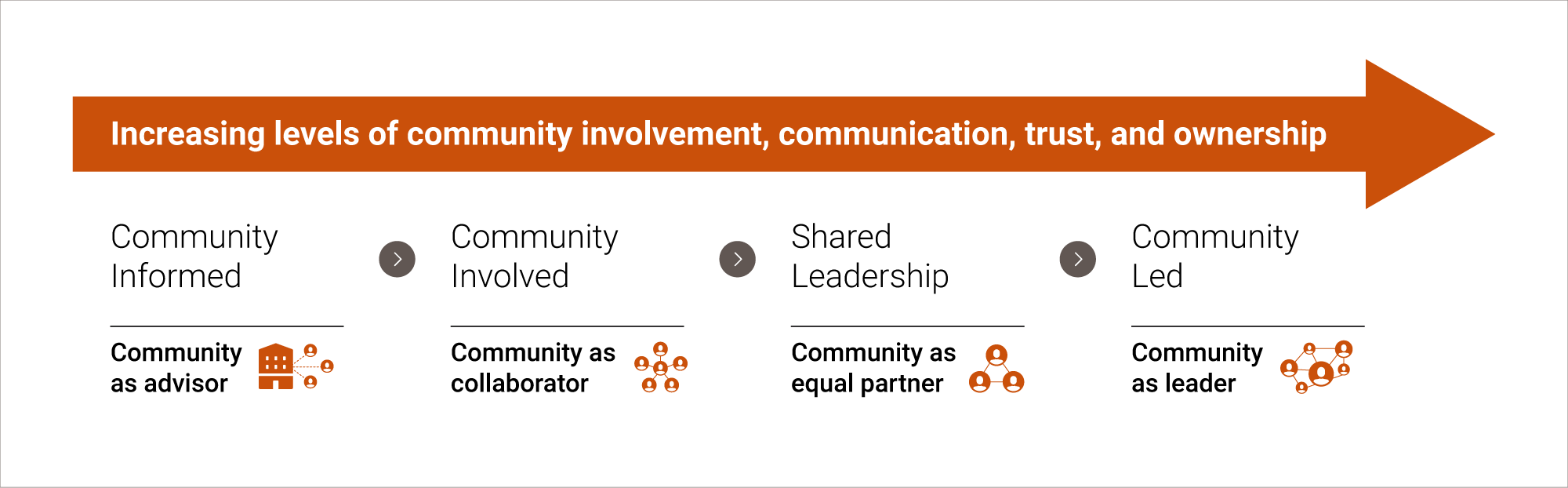
This diagram places community-engaged research on a continuum from low to high community involvement, helping distinguish consultation-only models from genuine shared leadership. It reinforces that culturally respectful work often changes governance, decision-making power, and how findings are used—not just who is sampled. Source
In many contexts, relationships, land, ancestry, spirituality, and collective responsibilities may be central to understanding behavior.
Indigenous perspectives also draw attention to the history of psychology as a discipline. Some communities have experienced research as extractive or disrespectful, especially when outsiders controlled the questions, methods, and use of results. Including Indigenous perspectives therefore improves both cultural understanding and the fairness of the research process.
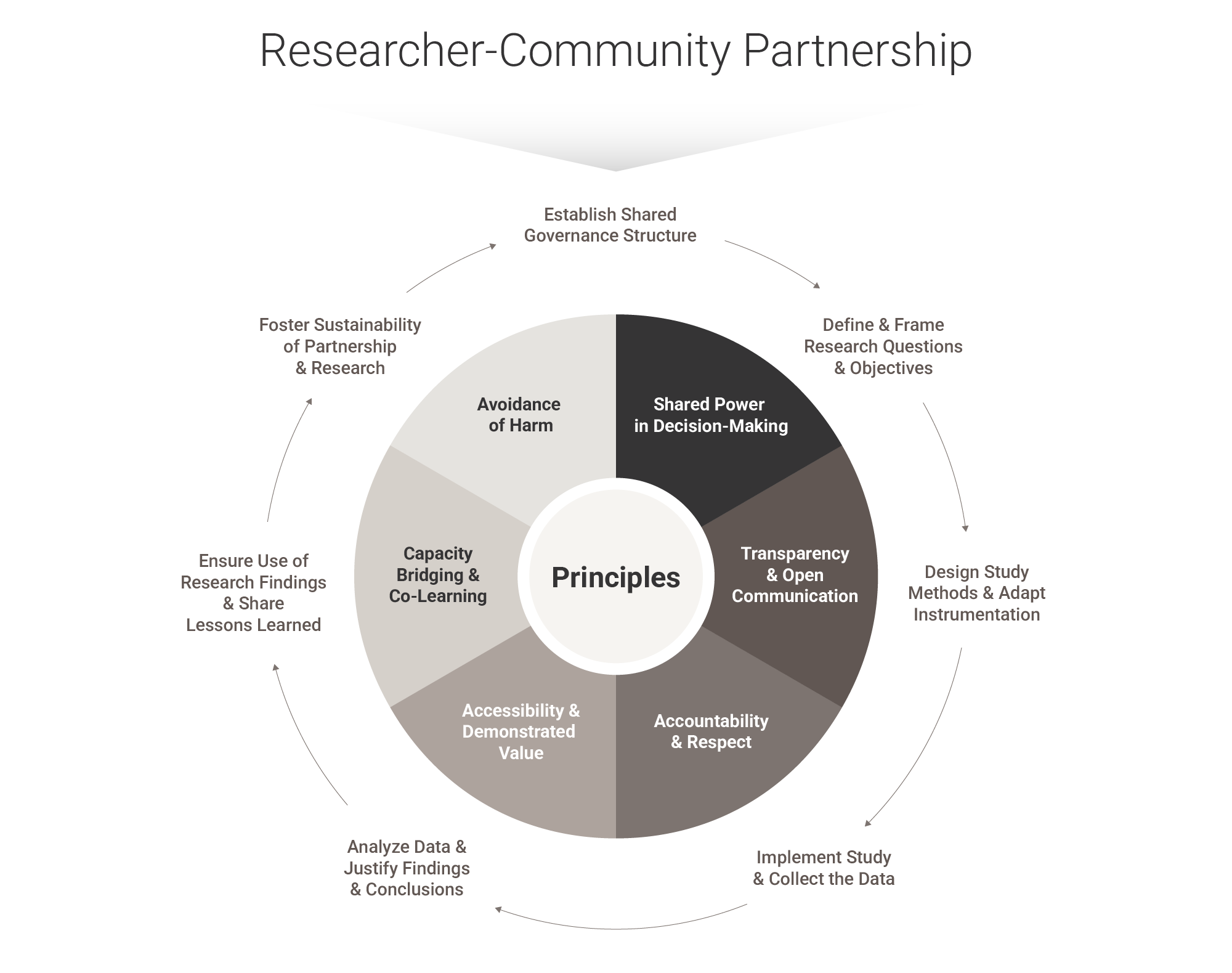
This framework diagram maps key partnership principles (e.g., shared power, transparency, avoidance of harm) onto stages of the research process. It supports the idea that “Indigenous perspectives” are methodological and ethical commitments that shape research questions, interpretation, and dissemination. Source
Avoiding misrepresentation
Do not assume one Indigenous perspective represents all Indigenous peoples.
Avoid interpreting Indigenous practices only through non-Indigenous categories.
Recognize historical context, including colonization and unequal power in research.
Value collaboration, reciprocity, and community benefit, not only data collection.
Using emic, etic, and Indigenous perspectives together
Emic, etic, and Indigenous perspectives should not be seen as mutually exclusive. A researcher may begin with emic work to learn local meanings, then carefully build an etic comparison that has better cultural fit. Indigenous perspectives can further guide the process by identifying who should help design the study, what questions are appropriate, and how results should be used.
This combination improves research by making it both more respectful and more accurate. It reminds psychologists that culture is not simply a background variable; it shapes the categories through which behavior is understood.
Strengths and limitations
Emic methodology
Strength: rich understanding of local meaning.
Limitation: findings may be less easy to compare across groups.
Etic methodology
Strength: allows broader comparison and possible general patterns.
Limitation: may oversimplify or impose outside assumptions.
Indigenous perspectives
Strength: challenge bias and include marginalized knowledge.
Limitation: researchers must avoid tokenism and commit to genuine partnership.
Practice Questions
Define the emic approach in sociocultural psychology. [2]
1 mark for stating that it studies behavior from within a specific culture or from the perspective of members of that culture.
1 mark for stating that it uses culturally specific meanings, categories, or interpretations.
Explain one difference between emic and etic methodology, and discuss one reason why including Indigenous perspectives may improve sociocultural research. [6]
1 mark for identifying a clear difference between emic and etic methodology.
1 mark for accurately explaining the emic approach as culture-specific.
1 mark for accurately explaining the etic approach as cross-cultural or comparative.
1 mark for discussing how this difference affects research methods or interpretation.
1 mark for identifying one reason Indigenous perspectives improve research, such as greater cultural relevance, reduced outsider assumptions, or inclusion of Indigenous knowledge.
1 mark for developing that reason with a relevant implication for research quality, fairness, or validity.
FAQ
Back-translation checks whether meaning survives translation.
A measure is translated from the original language into the target language.
A different translator translates it back into the original language.
Researchers compare the two original-language versions for shifts in meaning.
This helps identify wording that may be grammatically correct but culturally misleading. It is especially useful in etic research, where psychologists want some comparability across groups without assuming exact linguistic equivalence.
Community-based participatory research involves researchers working with a community rather than simply studying it.
Typical features include:
shared decision-making
local input on research questions
community review of methods
feedback on how findings are used
This is highly relevant to Indigenous perspectives because it reduces top-down research and increases local control, relevance, and trust.
Yes. Emic or Indigenous research is not limited to interviews or observation.
Quantitative methods can be used if researchers first establish that:
the construct makes sense locally
the wording is culturally appropriate
the scoring reflects local meaning
the interpretation is not imposed from outside
The key issue is not whether the method is numerical, but whether it is culturally grounded.
Individual consent means one person agrees to participate.
Community consent may also be important when:
knowledge is shared collectively
research affects the wider group
local governance structures expect consultation
cultural knowledge is not seen as purely personal property
This does not replace individual consent. Instead, both may be needed to show respect for persons and for the community.
Reflexivity means researchers examine how their own background, assumptions, and position may affect the study.
In this area, reflexivity matters because researchers may unintentionally:
treat their own categories as universal
misread local meanings
privilege academic knowledge over community knowledge
interpret silence, disagreement, or participation through the wrong cultural lens
Reflexive practice can include field notes, consultation, and explicit discussion of the researcher’s standpoint in the final report.