AP Syllabus focus:
'The rediscovery of Greek and Roman works, alongside observation of the natural world, reshaped European views and encouraged new scholarship and values.'
During the Renaissance, Europeans looked to classical antiquity and to the visible world around them, developing new habits of reading, questioning, and judging that altered intellectual life across educated society.
The classical revival
For centuries, some ancient learning had survived in Europe, but Renaissance scholars treated Greek and Roman works with renewed intensity. They sought out forgotten or neglected writings because they believed the ancient world contained models of language, ethics, and historical understanding of exceptional value. Classical literature was not seen merely as old; it was seen as authoritative, elegant, and useful.
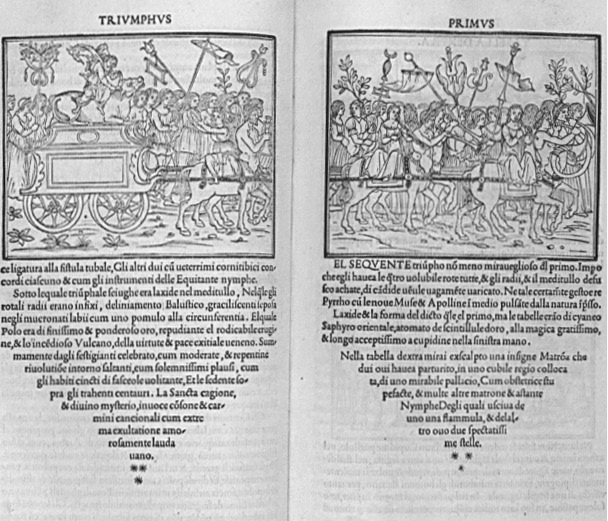
A page from the 1499 Hypnerotomachia Poliphili (Aldine Press, Venice) illustrates how Renaissance print culture helped circulate classically styled texts with unprecedented visual consistency. The harmonious typography and integrated woodcut reflect a humanist preference for clarity, balance, and cultivated presentation. Printing like this made “recovery” and reuse of the classical past a practical scholarly project, not just an ideal. Source
The revival of classical works widened the range of ideas available to educated Europeans. Ancient speeches, histories, poems, and philosophical reflections offered examples of how human beings could think about virtue, power, fame, citizenship, and moral choice. This helped weaken the assumption that inherited commentary alone should dominate intellectual life.
This broad intellectual outlook is often associated with humanism.
Humanism: An intellectual approach that drew heavily on Greek and Roman texts to study language, ethics, history, and human conduct.
Why ancient texts mattered
Classical works mattered because they offered:
respected models of rhetoric and persuasive writing
historical examples that could be compared with present conditions
discussions of moral behavior and public life
a belief that the past could guide present judgment
As readers encountered these works, they increasingly valued clarity, balance, and cultivated expression. Learning began to seem less like memorizing accepted views and more like entering a conversation with great writers of the past. The classical past became something to recover, interpret, and use.
Observation of the natural world
The specification also emphasizes observation of the natural world.
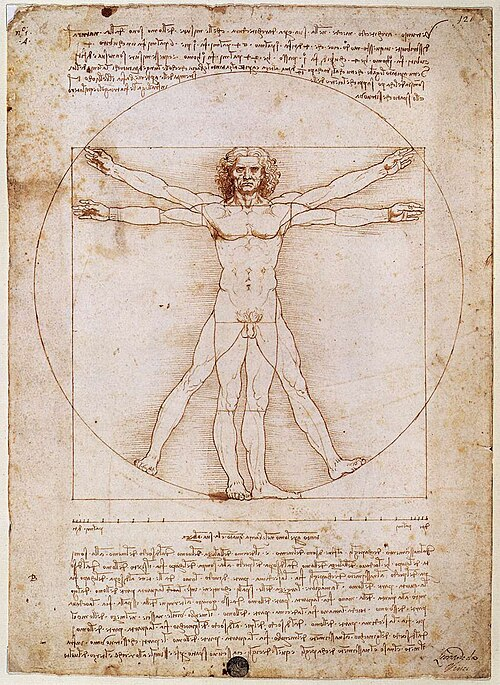
Leonardo da Vinci’s Vitruvian Man visualizes the ideal human proportions described by the Roman architect Vitruvius. It exemplifies how Renaissance thinkers treated ancient texts as authoritative while also testing them through direct observation, measurement, and geometry. The image neatly captures the Renaissance assumption that the natural world could be studied as orderly and intelligible. Source
Renaissance thought was reshaped not only by books but also by careful attention to what people could actually see. Direct observation encouraged the belief that knowledge should rest, at least in part, on evidence available to the senses.
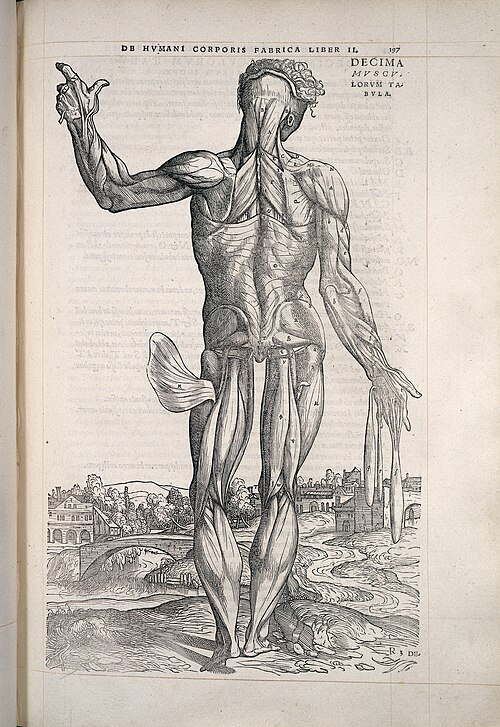
This plate from Andreas Vesalius’s De humani corporis fabrica (1543) demonstrates anatomy as a discipline built on systematic dissection and close visual study. The careful rendering communicates an ideal of evidence: the body is presented as something that can be examined directly rather than accepted solely through earlier textual authorities. In Renaissance terms, it models how observation and precise description could transform scholarly practice. Source
This shift mattered because it changed attitudes toward authority. If nature could be examined firsthand, then scholars did not have to rely exclusively on what earlier writers had said. Observation encouraged checking, testing, describing, and comparing. It rewarded curiosity and precision rather than simple acceptance.
In this environment, the world appeared newly worthy of study. Landscapes, bodies, plants, motion, proportion, and physical remains could all be examined closely. The natural world was increasingly treated as orderly, meaningful, and accessible to the human mind. That was a major change in outlook: the world was not just inherited; it was something to investigate.
A changing view of evidence
Observation promoted several new habits:
looking closely before making judgments
comparing written claims with visible reality
correcting mistakes through further inquiry
assuming that knowledge could grow through investigation
These habits did not replace older beliefs overnight. Medieval learning remained important, and many scholars still respected traditional authorities. Even so, observation widened the intellectual tools available to Europeans and made passive acceptance of received opinion less convincing.
New scholarship
The combined influence of classical recovery and observation transformed scholarship. Scholars increasingly worked to locate better copies of ancient texts, examine differences between versions, and understand ideas more accurately. Learning became more active, critical, and investigative.
This new scholarship prized:
careful reading
precise use of language
comparison of evidence
historical awareness
informed debate
Instead of treating all authorities as equally fixed, scholars became more interested in which text was most reliable, what an author originally meant, and whether a claim matched observable reality. That approach encouraged more disciplined standards of intellectual work. Scholarship was no longer just about preserving learning; it was also about refining and testing it.
The result was a change in learned culture. A scholar was expected not only to know important writings but also to judge them, interpret them carefully, and connect them to broader questions about human life and the world. This encouraged a more questioning and self-conscious intellectual atmosphere.
Reshaping European views
These developments reshaped how educated Europeans understood both the past and the present. Greek and Roman works suggested that civilizations could rise, flourish, and decline. Observation suggested that reality was open to investigation. Together, they encouraged a more expansive view of what human beings could know.
Europeans also developed a stronger sense that intellectual authority could come from multiple sources. Ancient texts provided models and standards; observation provided immediate evidence. Neither source had to stand alone. Their combination created a more flexible and questioning mentality than one based only on inherited interpretation.
New values
Because thought and scholarship changed, values changed as well. The classical revival encouraged admiration for eloquence, disciplined study, and excellence in expression. Observation encouraged patience, realism, and respect for evidence. Together, these influences promoted a culture that increasingly valued:
educated judgment
human potential
curiosity about the world
critical inquiry
intellectual achievement
These values helped reshape elite ideals. A cultivated person was expected to read widely, speak well, and engage seriously with both the wisdom of the past and the realities of the present. Knowledge was not simply something preserved; it was something refined through study and attention.
Continuity and limits
This transformation should not be misunderstood as a total rejection of the medieval world. Renaissance thinkers usually worked within a still-Christian society, and many older institutions and beliefs remained powerful. What changed was the range of authorities, methods, and standards that scholars considered legitimate.
By recovering classical works and pairing them with closer observation of nature, Europeans expanded intellectual life beyond routine repetition. Ancient learning became newly useful, and the visible world became a more trusted source of insight. This widened learned culture without erasing older traditions.
Practice Questions
Identify TWO ways the rediscovery of Greek and Roman works reshaped European views during the Renaissance. (2 marks)
1 mark for identifying one valid effect, such as increased interest in rhetoric, moral philosophy, history, or human conduct.
1 mark for identifying a second valid effect, such as challenging reliance on inherited commentary, encouraging comparison with the ancient past, or broadening ideas about what educated people should study.
Explain how observation of the natural world contributed to new scholarship in Renaissance Europe. In your answer, show how it interacted with the revival of classical learning. (6 marks)
1 mark for a clear argument that observation changed scholarship.
1 mark for explaining that observation encouraged reliance on evidence rather than unquestioned authority.
1 mark for explaining that the revival of classical works broadened the subjects and standards of learning.
1 mark for showing how observation and classical revival worked together to create more critical scholarship.
1 mark for using relevant supporting evidence or examples, such as close study of nature, comparison of texts, or renewed attention to ancient histories and moral writings.
1 mark for nuance, such as noting that these changes expanded intellectual life without fully replacing older traditions.
FAQ
Greek learning mattered because many major works were either unavailable in Latin or known only indirectly. Access to Greek opened new bodies of philosophy, history, and literature that western scholars had not fully studied.
It also let scholars compare translations with originals. That made learning more exact and gave educated Europeans a stronger sense that some ancient knowledge had been incomplete for centuries.
Byzantine scholars played an important role by bringing knowledge of the Greek language and, in some cases, manuscripts to Italy. Their teaching helped western Europeans read Greek authors directly rather than relying on second-hand summaries.
Their influence became especially important as contact with the eastern Mediterranean increased and as political instability pushed learned people westward. They were not the sole cause of the revival, but they were significant transmitters of classical knowledge.
Different writers appealed for different reasons:
Cicero for prose style and rhetoric
Virgil for poetry and literary prestige
Livy and Tacitus for history
Plato and Aristotle for philosophy
Plutarch for moral examples and biography
Admiration for these authors was not just literary. Readers often treated them as guides to language, character, and public conduct.
Manuscripts had been copied by hand for centuries, so they often contained errors, omissions, and damaged passages. Some survived in only one or two copies, and others were scattered across monastic or private collections.
Scholars therefore had to search widely, compare versions, and decide which reading seemed most accurate. This difficulty is one reason Renaissance scholarship became more critical and methodical.
Not uniformly. Some churchmen supported classical study and even sponsored it, seeing value in eloquence, moral reflection, and better language training. Others worried that pagan authors might encourage pride or distract readers from Christian truth.
In practice, many Renaissance readers tried to reconcile classical texts with Christianity rather than reject one for the other. The relationship was often one of adaptation rather than simple conflict.