AP Syllabus focus:
'Europeans states pursued overseas expansion for commercial profit and religious purposes, laying foundations for exploration and colonization.'
In the fifteenth and early sixteenth centuries, European exploration grew from a powerful mix of economic ambition and Christian zeal, with rulers and merchants often seeing these goals as mutually reinforcing.
Commercial Motives
European rulers and merchants viewed overseas travel as a path to greater wealth. Long-distance trade in spices, silk, dyes, and precious metals promised large profits. By sailing directly to Africa, Asia, or the Atlantic islands, they hoped to bypass existing intermediaries and keep more of the gains for themselves. Exploration was therefore not simply curiosity; it was an investment in commerce, taxation, and political strength.
Direct access to high-value goods, especially spices and luxury items
New routes that could reduce dependence on overland and Mediterranean middlemen
Control of ports, sea lanes, and trading privileges
Greater royal revenue through customs duties and monopoly rights
Wealth, Trade, and Profit
Asian spices were especially attractive because they were light, expensive, and easy to sell at a profit in European markets. Pepper, cinnamon, cloves, and nutmeg had culinary, medicinal, and preservative uses. Gold and silver also mattered because rulers needed money to fund armies, courts, and government. Overseas expansion offered the possibility of both immediate commercial returns and access to new sources of wealth.
This helps explain why crowns often supported voyages that private merchants alone could not afford. The potential gains were large enough to justify risk, and successful expeditions could strengthen both merchants and monarchs.
Commerce and State Power
Commercial motives were tied closely to the growth of stronger monarchies.
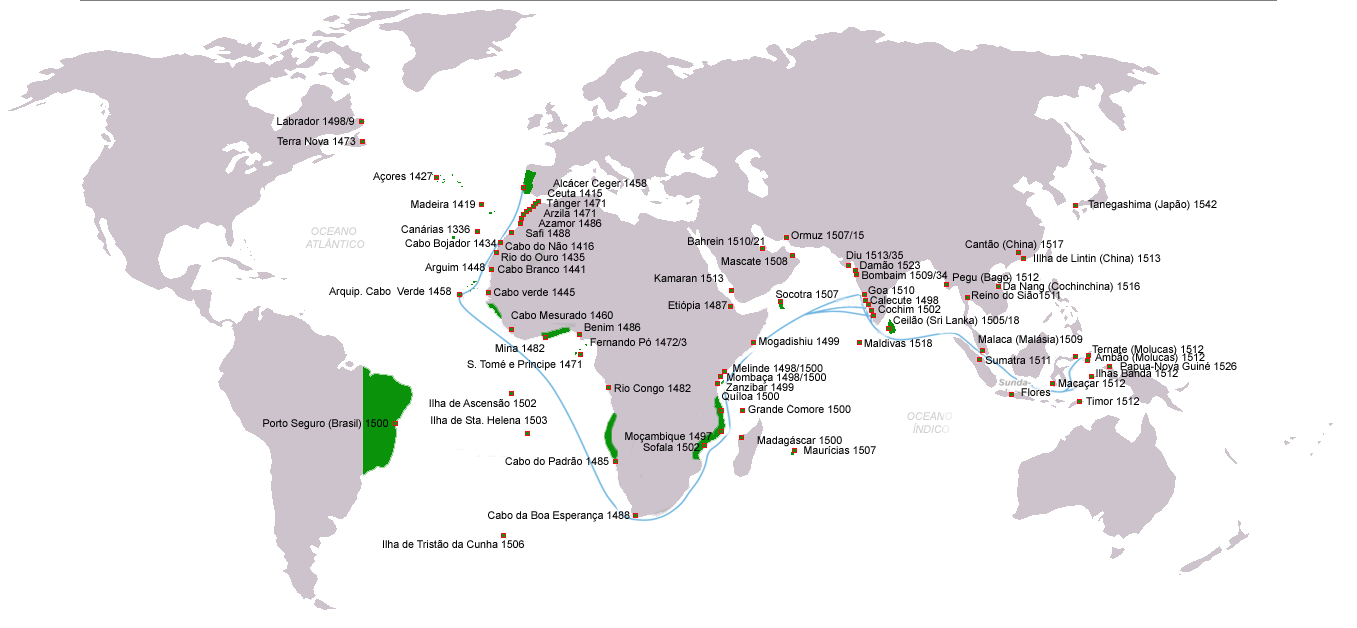
This map summarizes major Portuguese voyages and maritime routes during the fifteenth and early sixteenth centuries, showing how exploration followed navigable sea-lanes and linked Africa, Asia, and Atlantic islands. It is useful for understanding exploration as a state-supported commercial strategy aimed at reaching luxury goods (especially spices) while establishing coastal footholds. The visual layout makes clear why controlling ports and routes could translate directly into wealth and geopolitical leverage. Source
A profitable overseas route could enrich the treasury, reward supporters, and enhance international standing. Rulers wanted not only goods but also strategic advantages: fortified bases, protected shipping, and exclusive trading rights. Economic expansion overseas was thus part of a broader effort to increase the resources and authority of the state.
Portugal is a clear example.
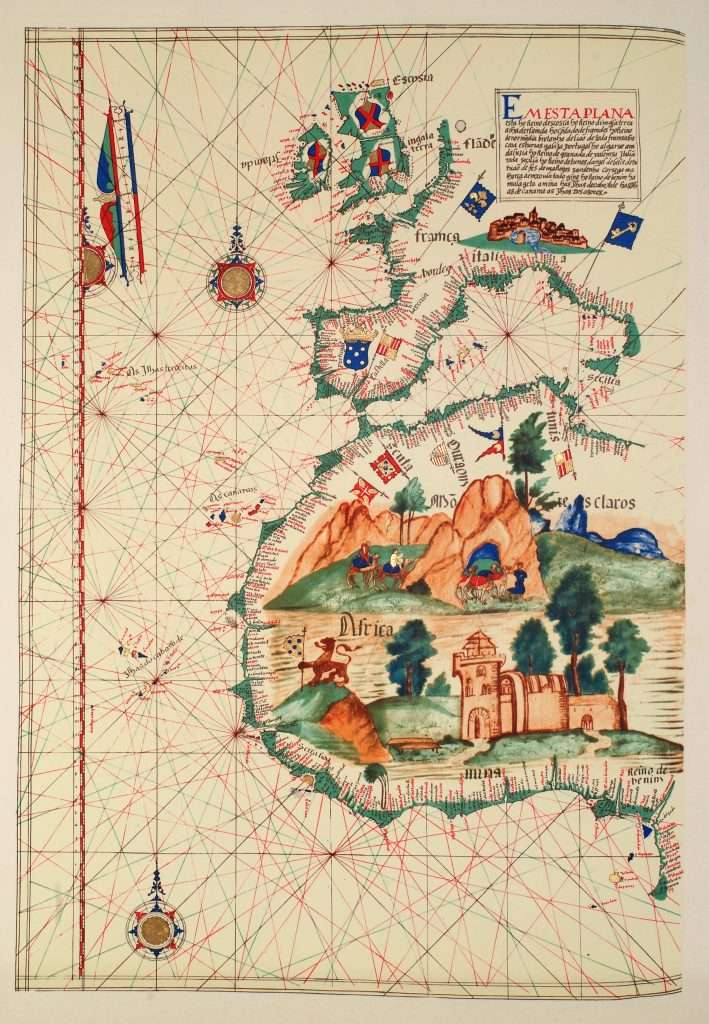
This sixteenth-century Portuguese map depicts West Africa with coastal landmarks and a prominent representation of São Jorge da Mina (Elmina Castle) in present-day Ghana. It helps illustrate how overseas expansion translated into fortified trading posts that secured access to gold and other high-value commerce. The image also underscores how mapping supported state power by making distant coasts legible for navigation and imperial control. Source
Its rulers backed voyages along the African coast because trade in gold and eastern luxuries promised lasting revenue. Spain likewise supported Columbus partly because a westward route seemed capable of opening new commercial opportunities and reducing dependence on established eastern networks.
Religious Motives
Religion was not separate from expansion; it was one of its central justifications. Many Europeans believed they had a duty to spread Christianity to non-Christian peoples. Missionary ambition, crusading ideals, and the hope of extending Catholic influence all encouraged exploration. In official language, voyages were often described as serving God as well as enriching the crown.
Christianity and the Iberian Background
Religious motives were especially strong in the Iberian kingdoms of Portugal and Spain. Their recent history had been shaped by conflict between Christian and Muslim states on the peninsula, so overseas expansion could be understood as a continuation of Christian struggle and triumph.
Reconquista: the centuries-long Christian campaign in the Iberian Peninsula that ended in 1492 with the defeat of Muslim Granada.
This background made rulers more likely to connect foreign expansion with divine favor, royal duty, and military success. Exploration could be presented as a way to carry Christianity outward after victory at home.
Papal Support and Conversion
Religious goals also appeared in the legal and ceremonial language surrounding exploration. Monarchs sought papal approval for claims overseas, and church authorities often endorsed expansion when it promised conversion. The conversion of newly encountered peoples became a major rationale for claiming land, founding missions, and extending European authority.
Yet religious motives did more than provide moral cover. Missionaries, clergy, and devout rulers often sincerely believed that salvation should be brought to newly encountered peoples. For them, commerce opened doors for evangelization, and evangelization could stabilize and legitimize overseas rule.
How Commercial and Religious Motives Worked Together
In practice, commercial and religious aims usually overlapped. A voyage might seek spices, gold, and trading advantages while also aiming to convert local populations or outflank Islamic powers. These goals were mutually reinforcing because rulers could justify expenses with promises of profit and promises of spiritual achievement.
This combination helps explain why exploration received sustained state backing. Profit alone could seem uncertain, and religion alone might not finance fleets; together, they created a powerful case for expansion. The crown gained revenue and prestige, merchants gained opportunity, and church leaders gained a wider field for Christian influence.
Foundations for Exploration and Colonization
Because these motives were so closely linked, early expeditions often moved beyond simple travel or exchange. Explorers claimed territory, established trading posts, planted symbols of sovereignty, and imagined permanent Christian and political control. The language of conversion supported the language of possession, while the search for wealth encouraged continued intervention.
Over time, this pattern laid the foundations for colonization. European powers increasingly treated overseas regions as places to be organized for trade, ruled in the name of Christian monarchs, and incorporated into wider imperial systems. What began as a search for profit and souls became a durable framework for overseas expansion.
Practice Questions
Identify and briefly explain one commercial motive that encouraged European overseas expansion in the fifteenth and early sixteenth centuries. (2 marks)
1 mark for identifying a valid commercial motive, such as direct access to spices, gold, luxury goods, or new trade routes.
1 mark for explaining how that motive encouraged expansion, such as by increasing profits, reducing dependence on intermediaries, or strengthening royal revenues.
Evaluate the extent to which religious motives, rather than commercial motives, drove European exploration in the fifteenth and early sixteenth centuries. (5 marks)
1 mark for identifying a religious motive, such as spreading Christianity or continuing crusading ideals.
1 mark for explaining how Iberian history strengthened religious motivations.
1 mark for identifying a commercial motive, such as gaining direct access to spices, gold, or profitable trade routes.
1 mark for explaining how commercial expansion could strengthen the state through revenue and prestige.
1 mark for providing a balanced evaluation that shows religious and commercial motives often worked together.
FAQ
Spices were valuable partly because they were scarce and costly to transport over long distances.
They were also prized for several uses:
flavouring food
preserving some foods
medicinal and cosmetic purposes
displaying wealth and status
Because demand was high and supply was limited, spices could be sold at very large profits in European markets.
Prester John was a legendary Christian ruler whom many Europeans believed lived somewhere in the East or in Africa.
European explorers cared about the story because they hoped to find a powerful Christian ally beyond Muslim-controlled regions. If such an ally existed, he might help:
fight Islamic states
support missionary work
open safer trade connections
Although the legend was false, it influenced the imagination behind early exploration.
Ottoman expansion did not completely cut Europe off from Asian trade, but it did make many rulers and merchants more aware of their dependence on routes controlled by others.
This encouraged interest in sea routes because they seemed to offer:
greater independence
lower long-term costs
more direct access to eastern goods
fewer political risks in times of conflict
So Ottoman power helped make overseas exploration look more attractive and strategic.
Papal bulls were formal statements issued by the pope. In the context of exploration, they could recognise claims, endorse missionary activity, and define spheres of influence between Catholic rulers.
Their importance was both religious and political. They gave expansion a sense of legitimacy and framed overseas activity as part of a Christian mission.
In practice, their authority was strongest among Catholic states, and later Protestant powers did not feel bound by them in the same way.
No. Some churchmen supported conquest because they believed it would spread Christianity, but others became critics of violence and forced conversion.
Debates emerged over questions such as:
whether conversion had to be voluntary
whether non-Christians had natural rights
whether conquest could be morally justified
This meant that religious motives for exploration were never completely simple or unified. Christianity could be used both to support expansion and to challenge its abuses.