AP Syllabus focus:
'The Protestant and Catholic Reformations transformed theology, church institutions, culture, and attitudes toward wealth and prosperity.'
In the sixteenth century, rival reform movements permanently altered European Christianity, reshaping beliefs, church organization, worship, and everyday values while changing how many Europeans judged labor, material success, and moral discipline.
Reformation and Religious Change
The Reformation was not a single event but a long process of division and renewal within western Christianity.
Reformation: A series of religious movements in the sixteenth and seventeenth centuries that challenged existing Christian authority and produced lasting divisions within European Christianity.
As Protestants broke from Rome and Catholics pursued their own renewal, Europe moved from one dominant church toward multiple competing confessions, each claiming to represent true Christianity.
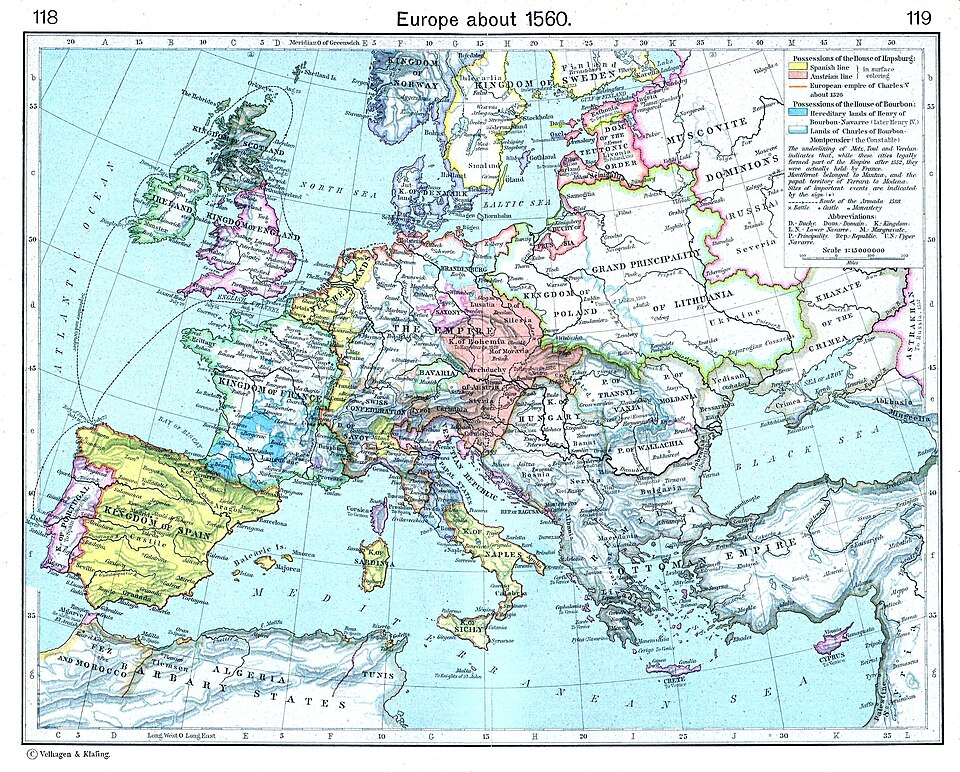
This map (c. 1560) visualizes the confessional fragmentation of Europe during the Reformation era, distinguishing major Catholic and Protestant regions. It helps connect theological disputes to the territorial and political geography of competing churches. Source
Theology: What Christians Should Believe
Protestant reformers transformed theology by challenging the medieval Catholic understanding of authority and salvation.
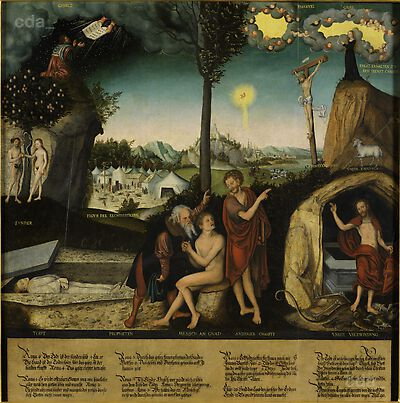
Lucas Cranach’s “The Law and the Gospel” presents a Lutheran teaching tool contrasting condemnation under the Law with salvation through Christ under the Gospel. The split composition illustrates how Protestant reformers used clear, didactic images to communicate doctrinal claims about salvation to a broad public. Source
Instead of accepting the pope and church tradition as final guides, many insisted that scripture stood above all human institutions. They also reduced the number of sacraments recognized as divinely instituted and made preaching central to worship. This changed the relationship between clergy and laity: priests were no longer seen mainly as sacramental mediators, and ordinary believers were encouraged to engage more directly with the Bible and doctrine.
The Catholic Reformation answered these challenges without accepting Protestant teachings.
Catholic Reformation: The revival and reform of the Roman Catholic Church through internal renewal and organized responses to Protestant criticism.
Catholic leaders reaffirmed the authority of the church, the importance of the sacraments, and the value of good works joined to divine grace. At the same time, they tried to correct abuses, improve religious instruction, and strengthen pastoral care. Theology therefore became more sharply defined on both sides. Instead of one broad Christian culture with room for local variation, Europe developed clearer doctrinal boundaries between Catholic and Protestant communities.
Church Institutions: How Religion Was Organized
The Reformations also transformed church institutions. In many Protestant territories, rulers and reformers created territorial or national churches under local control. Worship was often held in the vernacular, clergy were permitted to marry, and monasteries were dissolved or reduced in importance. Church life centered more on sermons, Bible reading, and catechism. Parish organization became a tool for teaching doctrine and supervising behavior.
Catholic reform reshaped institutions differently. Rather than abandoning hierarchy, Catholic leaders made it more disciplined and effective. Bishops were expected to reside in their dioceses, clergy were better trained, and new religious orders strengthened education and missionary work. Parish priests faced closer supervision, and church authorities worked to standardize worship and enforce moral expectations. These reforms made the Catholic Church more centralized, more active at the local level, and better able to compete with Protestant churches.
Culture: Worship, Learning, and Daily Life
Religious change spread beyond theology into culture. Protestant communities often simplified church interiors and reduced the use of images, relics, and elaborate ritual, especially where reformers feared idolatry. Vernacular worship and Bible reading encouraged literacy and made religion more closely tied to the household. Parents were expected to teach children basic doctrine, and schools increasingly served confessional goals.
Catholic culture also changed, but in a different direction. Catholic reform promoted renewed devotion through confession, saints, processions, sacred music, and emotionally powerful art. Rather than minimizing the senses in worship, Catholicism frequently used visual and ceremonial richness to reinforce religious commitment. Across Europe, both Protestant and Catholic leaders tried to regulate behavior more closely. They attacked drunkenness, sexual immorality, and disorderly festivals, showing that reform was not only about belief but also about shaping disciplined Christian communities.
Wealth, Work, and Prosperity
The Reformations also altered attitudes toward wealth and prosperity. Medieval Christianity had often treated commerce and profit with suspicion, especially when wealth seemed tied to greed or exploitation. Protestant reformers did not praise luxury, but some Protestant groups, especially in commercial regions, gave greater moral value to steady labor, thrift, and self-discipline. Ordinary work could be seen as a calling, and material success, if joined to sober conduct, might be read as a possible sign of divine favor.
This did not mean Protestants celebrated greed. Idleness, waste, and extravagant consumption remained sins. But the religious dignity attached to work helped legitimize merchant and professional activity in new ways. Catholic reform also valued honest labor and responsible stewardship, yet it continued to stress charity, almsgiving, and the spiritual dangers of avarice. The result was not a complete opposition between Catholic and Protestant economic values, but a noticeable shift in emphasis. Religious reform changed how Europeans connected material life to moral worth, helping create new assumptions about discipline, success, and social respectability.
Practice Questions
Identify one way the Protestant Reformation changed theology and one way the Catholic Reformation changed church institutions. (2 marks)
1 mark for one valid Protestant theological change, such as:
scripture placed above church tradition
reduced number of sacraments
greater emphasis on preaching
rejection of papal supremacy
1 mark for one valid Catholic institutional change, such as:
better clergy training
stricter supervision by bishops
new religious orders
standardized worship
stronger parish discipline
Explain how the Protestant and Catholic Reformations transformed European culture and attitudes toward wealth and prosperity in the sixteenth and seventeenth centuries. (5 marks)
1 mark for explaining one Protestant cultural change, such as vernacular worship, iconoclasm, or household religious instruction.
1 mark for explaining one Catholic cultural change, such as renewed devotional art, processions, confession, or sacred music.
1 mark for explaining one Protestant change in attitudes toward work or wealth, such as the idea of a calling or wealth as a possible sign of God’s favor.
1 mark for explaining one Catholic attitude toward wealth, such as the continued emphasis on charity, stewardship, and the danger of avarice.
1 mark for a historically defensible overall explanation linking reform to broader discipline, confessional identity, or changing moral standards.
FAQ
Protestants did not all read the Bible in the same way. Some, especially Reformed groups, believed statues, paintings, and relics encouraged idolatry and should be removed from churches.
Others, especially Lutherans, were more cautious. They often allowed images if they were used for teaching and did not become objects of worship. Local politics, town councils, and popular crowds also shaped how far image removal went.
In many Protestant lands, monasteries and convents were dissolved. Their lands and income were often taken over by rulers, nobles, or city governments.
The results varied:
some buildings became schools or hospitals
some revenues were redirected to poor relief
many monks and nuns had to return to secular life
For women in particular, the loss of convents removed one of the few respected alternatives to marriage.
Catholic reform placed greater stress on regular confession, better-trained priests, and more active pastoral care. The aim was to make religious life more disciplined and sincere.
It also encouraged new forms of devotion:
spiritual manuals
parish missions
confraternities
meditative prayer
renewed attention to the sacraments
This helped create a more supervised and emotionally engaged Catholic piety.
Music remained important in both traditions, but it was used differently. Many Protestant churches promoted congregational singing so ordinary worshippers could take part directly.
Catholic churches continued to value elaborate sacred music, but reformers wanted the words and message to be clearer. In practice:
Protestants often favoured hymns, psalms, and chorales
Catholics often retained choirs, polyphony, and Latin liturgical music
Both sides used music to teach belief and strengthen religious identity.
The phrase is useful, but it can oversimplify. Some historians argue that certain Protestant communities did link disciplined labour, thrift, and moral seriousness more closely than before.
However, critics point out that:
not all Protestants thought alike
many Catholic regions were also commercially successful
economic growth depended on trade, geography, law, and politics as well as religion
So the idea is best treated as a tendency in some Protestant settings, not a universal rule.