AP Syllabus focus:
'Rural and urban households functioned as working units in which men and women performed separate but complementary tasks.'
In sixteenth-century Europe, the household was not simply a private family space. It was the basic unit of work, production, and survival, shaping economic roles, authority, and expectations for both men and women.
The Household as a Working Unit
For most Europeans, home and work were closely connected. A household produced goods, managed resources, trained younger members, and supported everyone living under one roof. This was true in villages, where farming dominated, and in towns, where workshops and shops often operated from the home.
Household economy: A system in which the family household served as the main unit of production, labor, and consumption rather than existing only as a private domestic space.
A household usually included more than parents and children. It could also include relatives, servants, laborers, or other dependents. Each person contributed labor according to age, sex, skill, and status. This made the household a cooperative economic unit, but not an equal one. Authority usually rested with the adult male head of household, while responsibilities were divided by gender.
Why household labor mattered
It organized production of food, clothing, and market goods.
It linked family life directly to economic survival.
It trained children and young workers in expected tasks.
It made everyday labor inside the household central to the wider economy.
Rural Households
In the countryside, the household revolved around agriculture.
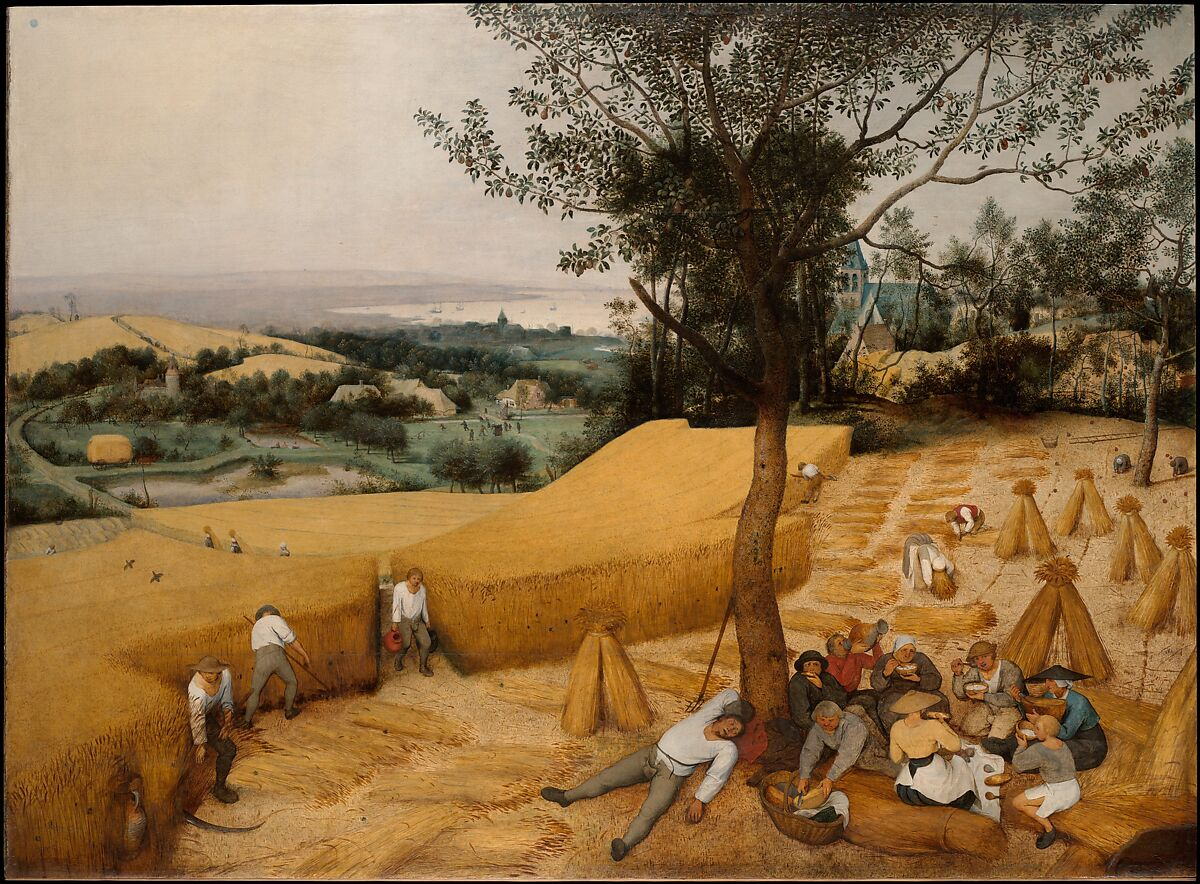
Pieter Bruegel the Elder’s The Harvesters (1565) depicts late-summer grain work within a rural landscape, capturing the seasonal rhythms that structured household survival. The scene visually reinforces how production and daily life overlapped on the farm, with labor, food, and rest occurring in the same environment. Source
Farm families depended on the labor of all members because survival required steady work across the agricultural year. Men and women often worked toward the same goal—maintaining the farm—but usually did so through different tasks.
Men were more likely to handle plowing, heavy field labor, woodcutting, and activities that carried formal legal authority, such as renting land or representing the household in village affairs. Women commonly managed dairying, poultry, kitchen gardens, food preparation, spinning, sewing, and care of small animals. They also worked in the fields during planting, harvesting, and other busy periods.
This division of labor was complementary. A rural household could not function if only men’s work or only women’s work were performed. Food production, storage, clothing production, and animal care all depended on coordinated effort. Women’s labor was especially important because much of it sustained daily life directly, even when it was less visible in official records.
Children also contributed. They watched animals, carried water, gathered fuel, and assisted adults in seasonal tasks. The rural household therefore operated as a shared labor system in which survival depended on the combined work of all members.
Urban Households
In towns and cities, the household remained a working unit, even though economic activity was more commercial. Many artisans, shopkeepers, and small producers lived where they worked. A workshop might occupy the ground floor, with family living space above or behind it.
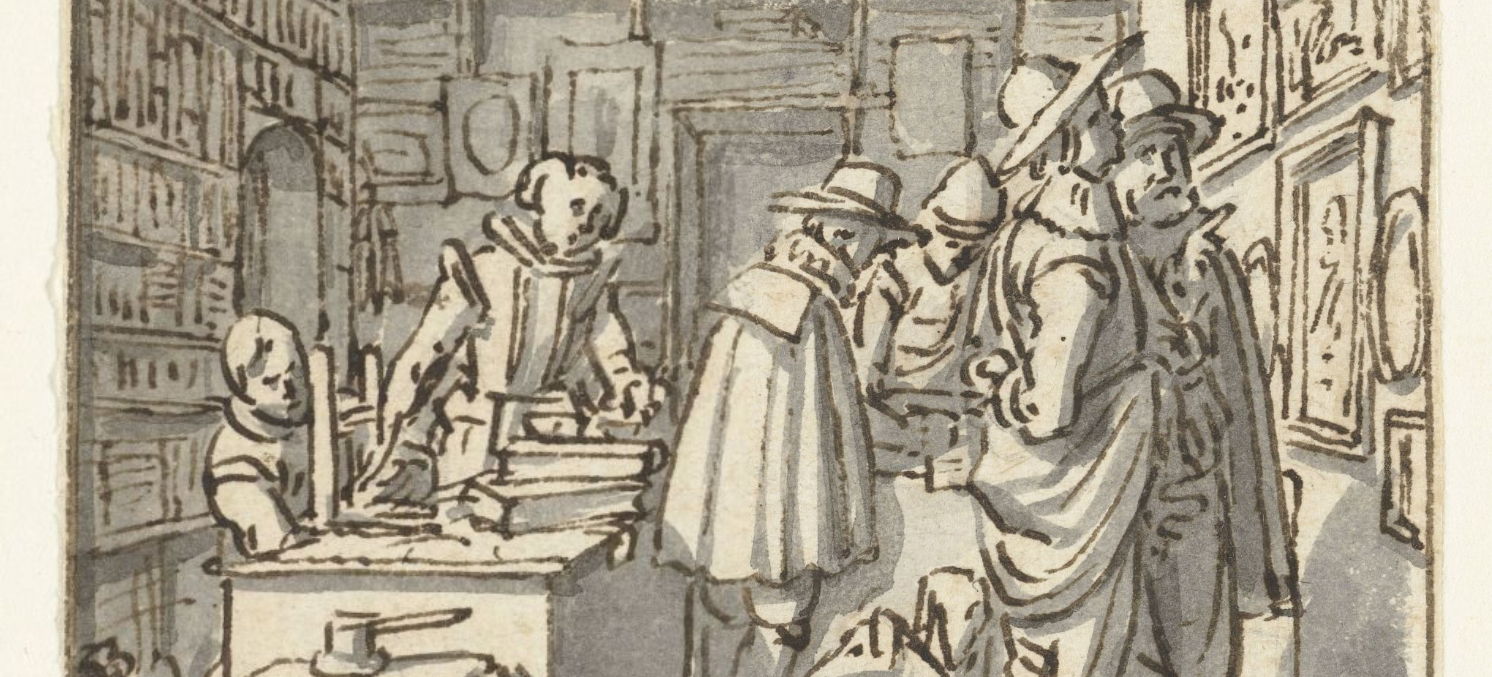
This drawing, Interior of a Bookshop (1646), shows a commercial workspace arranged inside a domestic-scale interior, making the household’s economic function immediately visible. Even though it dates to the seventeenth century, it closely reflects the early modern pattern in which family members and assistants worked and lived within the same built space. Source
Urban households often centered on a family business. The husband might hold formal status as master artisan or shopkeeper, but wives frequently made essential contributions:
assisting in production
keeping supplies organized
selling goods in local markets
managing customers or accounts
supervising helpers within the home or shop
Because production and residence were closely connected, women’s economic roles could be substantial even when laws or guild customs limited their independence. A craft shop, bakery, tavern, or retail business often depended on the labor of a married couple rather than one worker alone.
Urban households also show that gender roles were not simply a division between “public” male work and “private” female work. In early modern Europe, that boundary was often blurred. Women participated in trade and production, even if men more often held the official title, legal authority, or public recognition.
Gender Roles and Family Authority
The phrase “separate but complementary tasks” captures an important pattern. Men and women were expected to perform different forms of labor, but these roles were designed to support the same household economy. This arrangement reflected both practical needs and social ideas about gender.
Men were generally viewed as household heads, responsible for external representation, discipline, and major economic decisions. Women were associated with management of daily domestic labor, but “domestic” work itself had clear economic value.
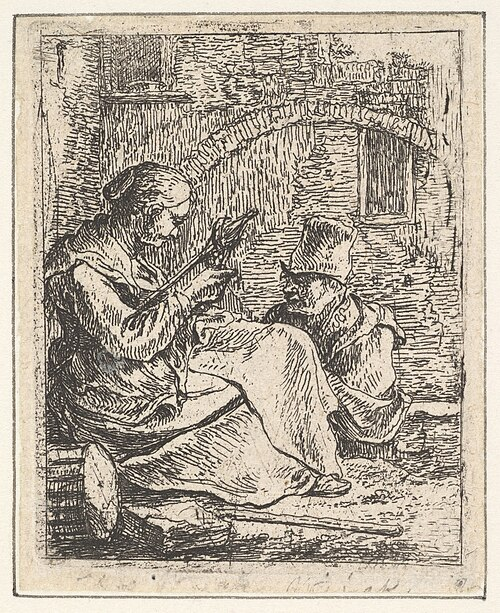
This print, Woman Spinning by Thomas Wijck (17th century), focuses on the tools and posture of hand-spinning, a foundational task in early modern textile production. It helps illustrate why spinning—often coded as women’s work—was not merely “private” labor but a productive activity that supported household consumption and market exchange. Source
Making cloth, processing food, brewing, storing goods, and overseeing household resources all contributed directly to household income or survival.
Still, complementarity did not mean equality. Men usually possessed stronger legal rights over property, wages, and contracts. Women’s work could be indispensable while receiving less status or formal recognition. This difference between economic importance and social power is central to understanding gender roles in the sixteenth century.
Historical Significance
Studying the household economy helps explain how early modern society functioned at the most basic level. Most production was not organized in large factories or separate workplaces. Instead, labor was embedded in family life.
This meant that:
economic activity was shaped by marriage, kinship, and household structure
gender expectations affected how labor was assigned and valued
both rural and urban economies depended on the coordinated work of men and women
the household was the main place where social roles were learned and repeated
The household economy also reminds us that early modern labor cannot be understood only through markets, governments, or formal institutions. Much of the work that kept society functioning took place inside homes, farms, and workshops. For AP European History, this makes the household a key lens for understanding how gender roles and economic life were tightly connected in sixteenth-century Europe.
Practice Questions
Identify ONE way women’s labor supported the household economy in sixteenth-century Europe. (2 marks)
1 mark for identifying a specific form of labor, such as dairying, spinning, food processing, selling goods, bookkeeping, or assisting in craft production
1 mark for briefly explaining how that labor supported household survival, production, or income
Explain how gender roles shaped the operation of rural and urban households as working units in sixteenth-century Europe. (5 marks)
1 mark for a clear argument that households operated through a gendered division of labor
1 mark for specific rural evidence, such as men’s field labor and women’s dairying, spinning, or food preparation
1 mark for explaining how rural male and female tasks were complementary
1 mark for specific urban evidence, such as wives assisting in shops, workshops, or household businesses
1 mark for explaining that women’s labor was economically important even though men usually held greater formal authority or legal recognition
FAQ
Dowries were not simply marriage gifts; they were economic transfers that could help establish a new household.
They might include:
money
clothing or linen
tools
livestock
property rights
A larger dowry could improve a family’s marriage prospects and strengthen the economic position of the new household. In some regions, it also gave a wife a degree of financial protection if she became widowed.
In many places, married women’s legal identity was tied closely to their husbands, which limited public recognition of their work.
Widows could sometimes act more openly because they might:
inherit a shop or workshop
sign contracts
collect debts
continue a trade in their own name
This did not mean widows were fully equal to men, but it could make their economic role more visible.
Life-cycle service meant that many young people worked as servants before marriage, often leaving home in their teens.
This mattered because it:
supplied households with labour
taught practical skills
helped young people save resources before forming their own households
In both towns and the countryside, service linked family formation to economic preparation. It also shows that households depended not only on kin, but often on unrelated workers.
Yes. Women’s rights over property varied widely by region and legal tradition.
In some areas, customary law gave women stronger claims to dowries or inheritance. In others, husbands had much greater control over family assets. These differences affected how much freedom a woman had in managing goods, making purchases, or protecting property for her children.
So, although gender roles were widespread, the legal power attached to those roles was not identical everywhere.
Yes. Women were often especially visible in trades that grew naturally out of household skills or relied on small-scale retail.
Examples included:
brewing
baking
spinning and textile finishing
selling food
lodging and tavern work
These occupations often blurred the line between domestic work and commercial activity. Even where women lacked formal status in guilds, they could still be crucial to the success of a household business.