AP Syllabus focus:
'Social dislocation and changing religious authority led city governments to regulate morals, prostitution, begging, and festival culture.'
In early modern Europe, urban officials increasingly treated behavior as a matter of public order.
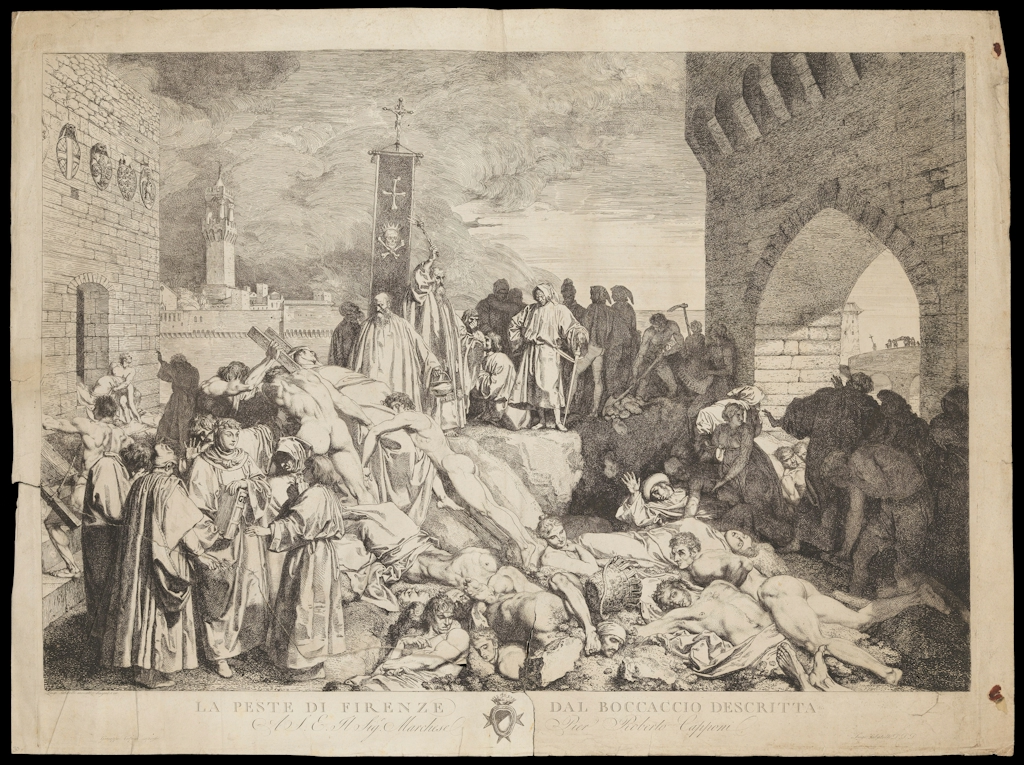
This Wellcome Collection feature assembles images and short explanations of London’s response to the Great Plague (1665), including quarantine measures (marked houses), street enforcement, and visualizations of mortality. It provides concrete visual evidence of how governments linked public behavior, mobility, and communal safety to civic authority. The set works well as a comparative “case study” for how regulation intensified when officials feared disorder and collective harm. Source
Religious upheaval and social strain pushed city governments to police conduct that earlier communities had regulated more informally.
Why city governments expanded regulation
During the 16th century, many towns and cities experienced social dislocation. Population movement, urban poverty, and the weakening of older local ties made authorities fear disorder. People who were not firmly embedded in a household or guild, such as migrants, servants, and the poor, seemed harder to supervise than long-settled residents.
At the same time, changing religious authority transformed expectations about daily conduct. The religious upheavals of the Reformation and Catholic renewal did not only alter theology; they also encouraged rulers and magistrates to create more disciplined Christian communities. City governments increasingly believed that sin was not just a private matter. It could bring divine punishment on the whole community and disturb civil peace.
As a result, urban governments took on a stronger role in shaping behavior:
issuing ordinances
supervising public spaces
punishing visible vice
connecting moral discipline with civic stability
Regulating morals as a civic responsibility
Private behavior became a public issue
City councils and magistrates increasingly tried to regulate what they saw as immoral behavior. Their concern was both religious and political. Drunkenness, sexual misconduct, blasphemy, gambling, and disorderly conduct were treated as threats to the moral health of the city.
Officials often targeted:
fornication and adultery
excessive drinking
gambling
profanity and blasphemy
disruptive behavior in taverns
failure to observe religious expectations in public life
This shift shows how morality became tied to governance. Earlier customs and church discipline did not disappear, but secular authorities played a larger role in enforcement. Magistrates used fines, short imprisonment, public shaming, and other penalties to make examples of offenders.
Moral order and urban discipline
These efforts were especially strong in cities because city life brought strangers together in crowded streets, markets, and taverns. Authorities worried that unchecked vice would spread quickly in such environments. Moral regulation was therefore part of a broader attempt to make urban life orderly, predictable, and controllable.
Officials also believed that outward behavior reflected inward discipline. A well-governed city was expected to look morally disciplined in public.
Prostitution and the policing of sexuality
Why prostitution drew official attention
Prostitution became a major focus of regulation because it stood at the intersection of sexuality, poverty, and public disorder. In some earlier periods, urban authorities had tolerated or licensed brothels as a way of containing vice. By the 16th century, however, many governments moved toward tighter control or suppression.
Authorities associated prostitution with:
public scandal
crime and violence
the spread of disease
disorderly streets and taverns
the breakdown of Christian morality
Because prostitution was highly visible, it became easier for governments to present action against it as a defense of the whole community. Sexual policing also revealed clear gender assumptions. Women accused of sexual misconduct were often punished more openly and more consistently than men.
From toleration to suppression
Attempts to regulate prostitution included closing brothels, expelling suspected prostitutes, and punishing sexual behavior outside approved norms. These measures did not eliminate prostitution, but they changed how urban governments approached it. Instead of treating it as something to manage quietly, many increasingly treated it as a moral and civic danger.
Begging, poverty, and public order
Why begging troubled authorities
Visible begging raised difficult questions about charity, disorder, and responsibility. Urban officials worried that large numbers of beggars made a city look unstable and encouraged crime. They also feared that wandering poor people might avoid work, spread disease, or escape supervision.
As a result, authorities tried to distinguish between:
the deserving poor, such as the elderly, sick, or disabled
the undeserving poor, especially able-bodied vagrants or strangers
This distinction allowed governments to claim that they were supporting genuine need while restricting uncontrolled begging.
Organizing relief and limiting mobility
City governments increasingly tried to centralize poor relief. Instead of allowing informal begging everywhere, they often:
required permission or licenses to beg
reserved aid for local residents
expelled foreign or wandering beggars
directed relief through civic or parish institutions
pushed the able-bodied poor toward work or confinement
These policies show that charity was becoming more bureaucratic and disciplinary. Relief was not simply generosity; it was also a way to classify, supervise, and control the urban poor.
Festival culture and public behavior
Why festivals mattered
Festival culture included public celebrations, seasonal revelry, drinking customs, games, and noisy communal rituals. These events were deeply rooted in local tradition, but authorities increasingly viewed them with suspicion. Crowds could become unruly, hierarchy could be mocked, and public celebration could blur the line between festivity and disorder.
Officials objected especially to festivals that encouraged:
drunkenness
sexual license
mocking of authority
riotous crowds
temporary reversal of social norms
Reshaping public celebration
City governments therefore tried to regulate when, where, and how people celebrated. They limited certain festivities, monitored taverns and streets more closely, and discouraged customs that seemed violent, disorderly, or irreverent. In place of spontaneous popular celebration, authorities preferred forms of public behavior that were more supervised, disciplined, and respectable.
This did not mean that festival culture disappeared. Many customs survived, but they increasingly existed in tension with urban governments that wanted public space to reflect order rather than communal exuberance.
Tools and limits of enforcement
City governments enforced these rules through ordinances, courts, patrols, and cooperation with local religious leaders.
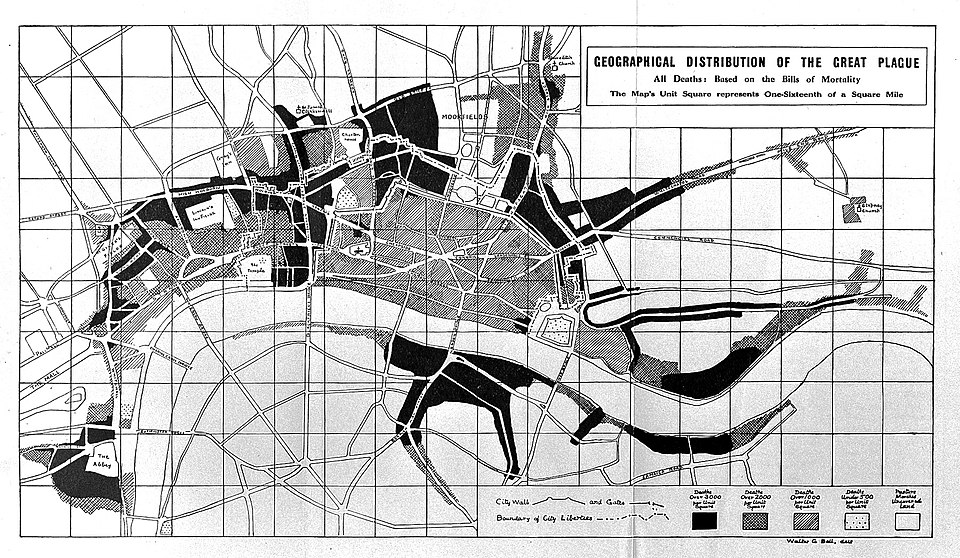
This map-like chart visualizes the spatial distribution of deaths during London’s Great Plague (1665), marking how risk and mortality varied across parishes. It demonstrates how city authorities and commentators increasingly relied on systematic observation, recordkeeping, and the mapping of urban space to understand and manage public disorder and crisis. As a study aid, it reinforces the broader point that early modern governments treated the city as an administratively “legible” landscape that could be monitored and regulated. Source
Regulation was strongest where behavior was public and visible: streets, markets, taverns, brothels, and festivals.
Enforcement, however, was uneven. Poor people, migrants, and women were more likely to face scrutiny because they were more exposed to public judgment. Wealthier residents could sometimes avoid harsh punishment. Repeated ordinances in many cities suggest that regulation was not a one-time solution but an ongoing struggle between authorities and urban populations.
Practice Questions
Identify TWO ways in which city governments regulated public behavior in 16th-century Europe. (2 marks)
1 mark for each valid identification, up to 2 marks.
Acceptable answers include:
regulating prostitution
restricting begging
policing taverns or drunkenness
punishing adultery or fornication
suppressing or limiting festival activities
punishing blasphemy or disorderly conduct
Explain how social dislocation and changing religious authority encouraged city governments to regulate morals, prostitution, begging, and festival culture in early modern Europe. (6 marks)
1 mark for explaining that social dislocation, such as migration, poverty, or weakened traditional supervision, increased fears of disorder.
1 mark for explaining that changing religious authority led officials to seek more disciplined Christian communities.
1 mark for linking moral regulation to concerns about public order or communal stability.
1 mark for linking prostitution controls to concerns about vice, disorder, or disease.
1 mark for linking begging controls to the distinction between deserving and undeserving poor or to organized poor relief.
1 mark for linking restrictions on festival culture to fears of crowd disorder, mockery of authority, or moral excess.
FAQ
Earlier officials sometimes saw brothels as a regrettable but manageable part of urban life. By concentrating prostitution in known places, they hoped to keep it away from respectable neighbourhoods.
Later, this logic weakened because reformers increasingly argued that tolerated vice still corrupted the whole community. Concerns about disease, street disorder, and public scandal also made open toleration less acceptable.
Charivari was a noisy communal ritual in which neighbours mocked behaviour they considered improper, often through shouting, banging objects, or parading outside someone’s home.
Magistrates disliked it because it allowed crowds to punish people outside formal courts. Even when it began as mockery, it could turn into intimidation, damage, or violence. Authorities preferred punishment to come from recognised civic institutions.
Some towns tried to identify approved beggars by giving them a token, badge, or written licence. This showed that the person had been examined and judged worthy of aid.
The system helped officials:
separate local poor people from strangers
direct charity into authorised channels
reduce random begging in streets and marketplaces
It also made poverty more visible to the authorities, because receiving help increasingly meant entering a record system.
Servants and apprentices were usually young, mobile, and unmarried. Because they lived away from their birth families, officials and household heads often thought they needed stricter supervision.
They were associated with:
tavern culture
curfew-breaking
sexual scandal
fights and public disorder
Their lives also blurred the line between household discipline and civic discipline, so magistrates often treated them as a key group in need of regulation.
Masks made it harder to identify individuals in a crowd. For officials, that meant less accountability and greater risk of mockery, assault, theft, or sexual misconduct.
Disguise also inverted normal social rules. A masked festival crowd could challenge rank, gender expectations, and public decorum more easily than an ordinary gathering. That is why authorities often tolerated celebration more readily when it was visible, supervised, and easier to police.