

AP Syllabus focus:
'Leisure followed the religious calendar and agricultural cycle, while public rituals enforced communal norms through humiliation.'
In sixteenth- and seventeenth-century Europe, leisure was usually shared rather than private. Times of rest, celebration, and discipline were shaped by the church year, the farming year, and the expectations of neighbors.
Rhythms of Time
Europeans did not separate work and leisure in a modern way. Instead, daily life moved according to recurring cycles. In both villages and towns, people looked to the religious calendar for Sundays, saints’ days, and major feasts, and to the agricultural cycle for periods of intense labor and relative relaxation.
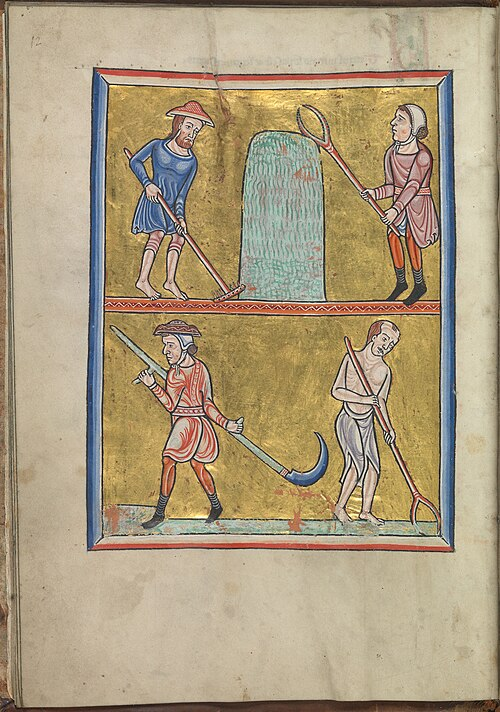
This medieval calendar illumination for June shows haymaking (mowing, turning, and stacking hay), a classic “labour of the month.” Images like this helped viewers imagine time as a repeating cycle of seasonal work, anchoring leisure and festivity to predictable moments when labor pressure eased. Source
Leisure was therefore uneven. It expanded at some moments of the year and almost disappeared at others.
Religious Calendar
The church helped organize time. Christmas, Easter, Pentecost, and local feast days created regular occasions for worship and festivity. These days often included processions, communal meals, drinking, dancing, games, and dramatic performances. Such activities were not merely entertainment. They reinforced a shared sense of belonging within the parish and reminded people that community life had a sacred rhythm. Religious holidays also drew different social groups into a common public culture, even though elites and ordinary people did not always participate in the same ways.
Many festivities also allowed temporary relaxation of ordinary discipline.
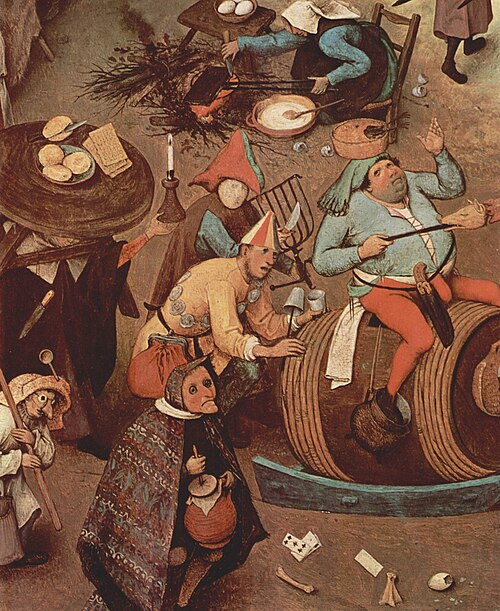
Pieter Bruegel the Elder’s The Fight Between Carnival and Lent stages a public contest between festive excess and religious restraint in a town square. The painting highlights how processions, taverns, food, and street crowds made leisure a communal, highly visible activity—one that remained structured by the church calendar and local norms. Source
Carnival customs, masked celebrations, and joking reversals of status gave communities a controlled space for laughter and release. Yet these events still reflected the values of the group. Even apparent disorder happened within a recognizable social framework and marked out who belonged, who led, and what behavior was acceptable.
Agricultural Cycle
In the countryside, leisure depended heavily on the demands of work. Planting and harvest required exhausting collective labor, leaving little time for recreation. After these peak seasons, however, people could gather for weddings, visiting, games, and seasonal celebrations. Winter often brought more opportunities for indoor sociability because the pressure of fieldwork eased. Leisure was therefore seasonal rather than evenly distributed across the year.
This pattern mattered in towns as well. Urban workers were not farmers, but they still lived in societies linked to rural production and seasonal markets. Guild life, market rhythms, and local fairs often followed the same broader calendar. As a result, both urban and rural Europeans experienced leisure as something tied to communal time, not individual choice.
Festive Leisure and Social Bonds
Leisure activities usually took place in public or semi-public settings: village greens, parish spaces, streets, taverns, and households open to neighbors. Because recreation was collective, it helped communities create and display social bonds. Dancing, games, drinking, and festival attendance allowed people to meet potential marriage partners, confirm friendships, and recognize local hierarchies. At the same time, these events exposed tensions. Disputes over status, gender roles, or proper conduct could become visible when many people gathered together.
Leisure also taught values indirectly. Young people learned acceptable forms of courtship, deference, and sociability through participation in festivals and communal gatherings. Adults used these occasions to observe one another. In this sense, recreation was never only about pleasure. It was part of the process by which communities reproduced customs and expectations from one generation to the next.
Rituals of Shame
Early modern communities did not rely only on formal courts to maintain order. They also used public rituals of humiliation to punish behavior seen as threatening local harmony. These rituals were especially powerful in small communities where reputation mattered. Being mocked before one’s neighbors could damage honor, weaken authority within the household, and mark a person as morally suspect.
Charivari and Rough Music
One common form of communal shaming was the charivari, known in some places by other names and practices.
Charivari: A noisy public ritual in which neighbors mocked or shamed people who violated expected social behavior, often with banging objects, music, disguises, or processions.
A charivari might target a husband seen as dominated by his wife, a widow who remarried too quickly, a couple accused of sexual misconduct, or a person believed to have upset proper household relations. Neighbors could gather outside a house, make loud noises, sing insulting verses, or stage a mocking procession. The point was not quiet correction but public exposure.
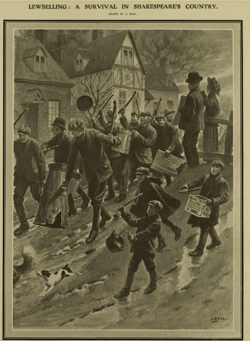
This reference page documents charivari/“rough music” as a public ritual that used noise, procession, and spectacle to shame alleged offenders. The included historical photograph of a lewbelling procession (Warwickshire, 1909) helps students visualize the mechanism of communal humiliation described for earlier periods, even though the surviving image is later than the sixteenth and seventeenth centuries. Source
By turning private misconduct into a communal spectacle, the ritual announced that the community claimed the right to judge.
Why Humiliation Worked
These practices worked because honor was social. A person’s standing depended on how others viewed their conduct. Humiliation therefore acted as a real punishment even when no official sentence followed. Public shame warned the offender, entertained the crowd, and reminded everyone else of the expected rules of marriage, sexuality, household authority, and neighborly behavior. The ritual itself became a lesson in communal norms.
Such customs show that early modern Europeans often treated order as a collective responsibility. Communities did not simply wait for judges or clergy to act. They intervened directly, using ceremony, noise, and ridicule to pressure individuals into conformity. Leisure and discipline could overlap: the same crowd that enjoyed festivity could also enjoy punishment.
Community, Audience, and Social Control
Public rituals of humiliation were not harmless traditions. They could be coercive, deeply personal, and sometimes violent. Their targets were often vulnerable because they faced not just one accuser but the judgment of an entire neighborhood. Even so, these rituals remained important because they gave communities a way to express anger, defend customary expectations, and police behavior in highly visible ways.
Because celebrations and punishments both unfolded before an audience, public space mattered greatly. Streets, churchyards, and village centers were places where communities watched themselves. In those spaces, the calendar of feast and labor structured recreation, while ritual humiliation turned collective observation into social discipline.
Practice Questions
Identify one way leisure followed the religious calendar and one way public rituals enforced communal norms in sixteenth- and seventeenth-century Europe. (2 marks)
1 mark for identifying a religious-calendar example of leisure, such as feast days, Sundays, Christmas, Easter, or parish festivals.
1 mark for identifying a ritual of communal enforcement, such as charivari, rough music, or public shaming of those accused of improper behavior.
Explain how communal leisure and public rituals helped maintain social order in early modern Europe. (5 marks)
1 mark for explaining that leisure was organized by the religious calendar, such as feast days and holy days.
1 mark for explaining that leisure was also shaped by the agricultural cycle, with more recreation after harvest or during winter.
1 mark for identifying a public ritual of humiliation, such as charivari.
1 mark for explaining how honor or reputation made public shame an effective form of social control.
1 mark for connecting these practices to the enforcement of communal norms, such as expectations about marriage, household authority, or proper conduct.
FAQ
Winter evenings often brought a lull in outdoor labour, especially in rural communities. With fewer daylight tasks in the fields, people had more time for indoor gatherings.
These settings encouraged storytelling, singing, spinning, courtship, and shared food or drink. Winter sociability could strengthen neighbourhood ties, but it also created spaces where gossip and judgement circulated more freely.
In many places, unmarried young people played a visible role in organising seasonal customs, dances, watches, and festive gatherings. They often acted as a semi-official social group within the village.
This mattered because youth culture could blend celebration with supervision. Young men in particular might police courtship expectations, object to unequal marriages, or lead noisy demonstrations against behaviour they considered improper.
Noise made a hidden offence public. Drumming, shouting, horns, and banging household objects drew attention and signalled that the matter concerned the whole community, not just one family.
Noise also had symbolic force. It suggested disorder and inversion, matching the idea that the accused person had upset the proper social order. The louder the ritual, the harder it was for anyone to ignore.
No. Similar practices appeared across Europe, but names, targets, and methods varied widely by region. A French charivari might differ from an English skimmington or another form of rough music.
Local law, language, religion, and custom all shaped the ritual. What remained consistent was the broader purpose: using public performance to express communal approval or disapproval.
Yes, though success depended on status, allies, and local authority. Wealthier families or respected householders were sometimes better able to deflect or contain public shame.
People could seek help from magistrates, clergy, kin, or patrons. In some cases, negotiation mattered: an apology, reconciliation, or feast for neighbours might calm tensions before a ritual escalated.

_-_KB_76_F_13,_folium_006v.jpg)
