AP Syllabus focus:
'Class, religion, and gender continued to shape social status and everyday perceptions in both rural and urban life.'
In the sixteenth century, social hierarchy remained deeply rooted, but Reformation-era change made rank more contested and visible in daily life across villages, towns, households, workplaces, and religious communities.
Foundations of Social Hierarchy
Early modern Europeans did not imagine society as a collection of equal individuals. They understood it as a ranked order in which people possessed different rights, duties, and levels of honor. Birth mattered greatly, but wealth, occupation, office, and reputation also shaped a person’s place, especially in towns. Social status affected access to land, justice, education, political influence, and marriage opportunities.
Estates, Privilege, and Honor
One durable way of describing society was through the three estates: clergy, nobility, and commoners.
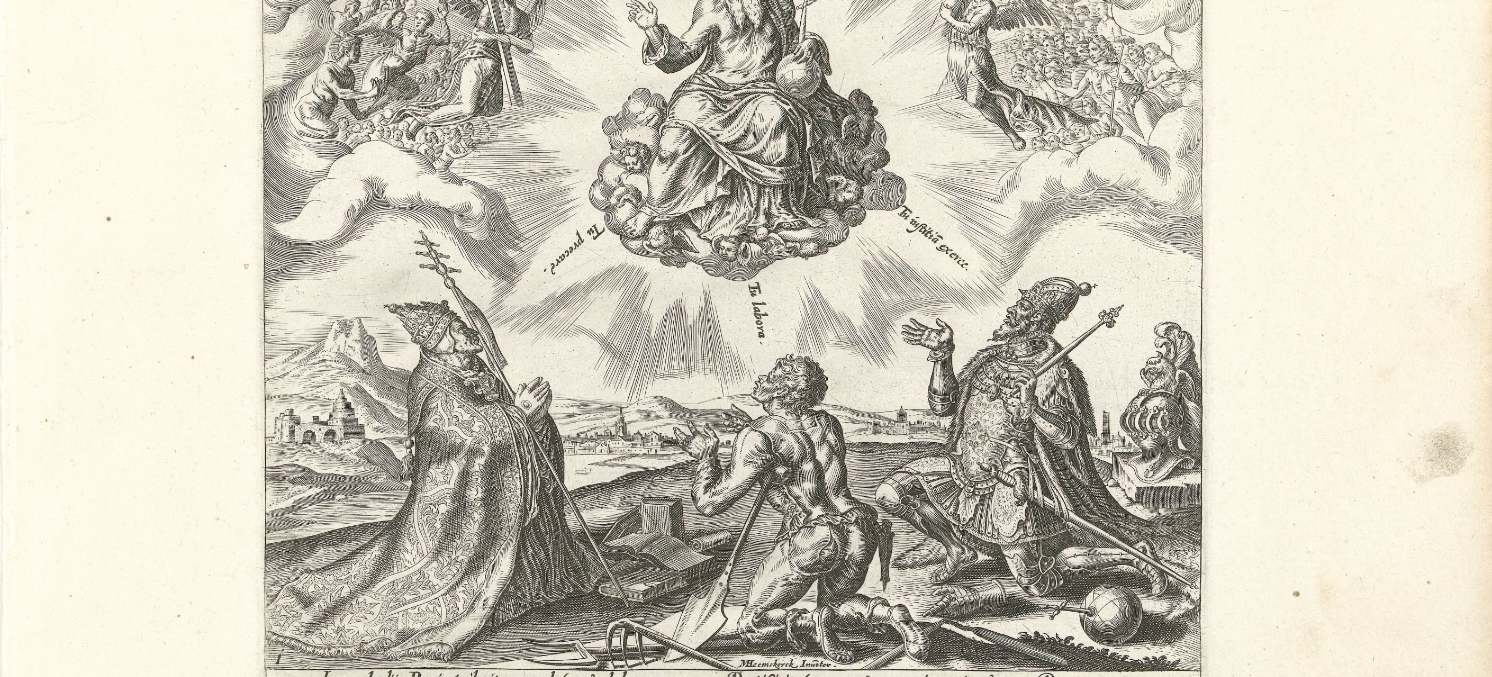
This mid-16th-century print (Philips Galle, after Maarten van Heemskerck) depicts God assigning distinct social functions to the three estates: clergy (prayer), nobility/rulers (justice and governance), and commoners (labor). The image captures how hierarchy was often framed as legitimate and even sacred, helping explain why privilege and deference were treated as normal features of everyday life. Because it is an allegory rather than a census of real people, it is best read as a cultural justification of inequality rather than a literal snapshot of society. Source
These categories did not explain every individual experience, but they reflected a world built on legal inequality and customary privilege.
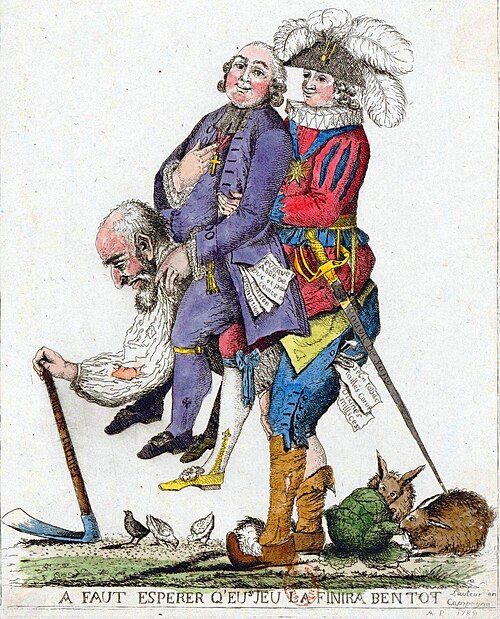
This 1789 French print shows the Third Estate physically carrying the clergy and nobility, a blunt metaphor for how privilege operated through exemptions and unequal obligations. It helps students connect the abstract language of “rights, duties, and honor” to a concrete social image: inequality is not just economic, but structured and publicly legible. While created in the late 18th century, it draws on an older estates-based view of society that remained influential long before the French Revolution. Source
Estate: A legally recognized social order, such as clergy, nobility, or commoners, with its own rights, duties, and privileges.
Members of the nobility enjoyed social prestige, exemptions, and easier access to high office. The clergy held spiritual authority and often economic privileges as well. Everyone else, from rich merchants to poor peasants, belonged to the broad category of commoners, though commoners themselves were sharply divided. Honor was central to this order: elites expected deference, while lower-status people were judged by obedience, respectability, and their public reputation.
Rural Society
Land, Dependence, and Village Status
In the countryside, hierarchy was tied most closely to landholding. At the top stood nobles, seigneurs, and large landowners, who collected rents or dues and exercised local influence. Below them were many different kinds of peasants: prosperous farmers, smallholders, tenant farmers, cottagers, and landless laborers. Village life was therefore unequal even within the same community.
Wealthier peasants often held the best land, lent money, and dominated village affairs. They could act as intermediaries between local people and higher authorities. Poorer villagers were more vulnerable to debt, harvest failure, and dependence on seasonal labor. In everyday life, status could be seen in housing quality, access to animals or tools, and the ability to support a family without constant crisis.
Rural hierarchy also differed across Europe. In many western regions, serfdom had weakened, though inequality remained strong. In parts of eastern Europe, nobles increased control over peasants and strengthened labor obligations. This created a sharper divide between privileged landlords and dependent rural workers.
Urban Society
Elites, Guilds, and Civic Rank
Towns offered more chances for advancement than villages, but they were still highly stratified. Urban elites included patricians, wealthy merchants, financiers, large master artisans, officeholders, and professionals such as lawyers. These groups often controlled town councils, charity institutions, and civic ceremonies. Below them stood the middling sort: shopkeepers, guild masters, and skilled artisans with some property and local respect.
Guild membership could help secure economic standing and social recognition. A master artisan usually ranked above an apprentice or wage laborer because he possessed training, tools, and independence. Urban society therefore linked status to both wealth and corporate membership. A person’s neighborhood, clothing, household goods, and business connections all communicated rank.
Workers, Servants, and the Poor
Below the middling groups were journeymen, apprentices, domestic servants, migrants, and casual laborers. Their lives were less secure because they lacked full independence. At the bottom stood the urban poor, including widows, beggars, and those without regular employment. Poverty was not only material; it also shaped how others judged discipline, morality, and usefulness. Town life made these distinctions highly visible because many people lived in close proximity and constantly observed one another.
Religion and Gender
Confession and Social Standing
After the Reformation, religion became an even more powerful marker of identity. Confessional belonging could affect trust, officeholding, education, charity, and inclusion within local communities. In some places, members of the majority confession enjoyed greater respect and political advantage, while minorities faced suspicion or exclusion. Religion could influence marriage choices, neighborhood ties, and access to support in times of hardship.
Religious identity also affected everyday perceptions. A person’s church attendance, visible piety, and reputation for orthodoxy could shape whether others viewed that person as respectable, loyal, and morally credible. Social rank was therefore tied not only to class but also to confessional belonging.
Patriarchy and Status
Gender shaped hierarchy in both town and country. Men generally held greater legal and public authority, while women’s status was often defined through family roles and communal expectations.
Patriarchy: A social system in which men held primary legal and social authority within households and public life.
A woman’s social position depended partly on class. Noblewomen, prosperous wives, and some widows could manage property or supervise dependents, but they still faced limits not imposed on men of the same rank. Female honor was closely tied to chastity, marriage, and household reputation, while male honor emphasized authority, independence, and public standing. Gender expectations reinforced hierarchy rather than replacing class distinctions.
Everyday Perceptions of Rank
Social status was reinforced by visible signs and routine interactions. People noticed who sat where in church, who wore expensive fabrics, who spoke first in meetings, and who could command labor, service, or credit. Deference toward superiors was expected, and insults to honor could cause conflict because they challenged the social order itself. Class, religion, and gender did not operate separately; they overlapped. A wealthy merchant, a minority artisan, a noblewoman, and a landless peasant widow all experienced sixteenth-century society through multiple, intersecting hierarchies.
Practice Questions
Identify ONE feature of rural social hierarchy in sixteenth-century Europe, identify ONE feature of urban social hierarchy in sixteenth-century Europe, and explain ONE way religion affected social standing. (3 marks)
1 mark for identifying a valid rural feature, such as the dominance of landlords, differences among peasants, or dependence on landholding.
1 mark for identifying a valid urban feature, such as patrician control, guild-based rank, or the insecurity of laborers and servants.
1 mark for explaining a valid religious factor, such as majority confessions receiving greater trust, officeholding, or access to charity.
Evaluate the extent to which class was more important than religion and gender in shaping social status in sixteenth-century Europe. (6 marks)
1 mark for a clear thesis that makes a defensible judgment.
1 mark for specific evidence showing how class shaped status in either rural or urban society.
1 mark for specific evidence showing how religion shaped status or everyday perceptions.
1 mark for specific evidence showing how gender shaped status or legal/social authority.
1 mark for analysis comparing the importance of class with religion and gender rather than merely listing factors.
1 mark for a nuanced argument, such as showing that these factors overlapped differently in town and country.
FAQ
Sumptuary laws tried to regulate who could wear certain fabrics, colours, jewellery, or furs. They turned social rank into something visible and legally protected.
In practice, these laws were unevenly enforced, but they still mattered symbolically. They told people that status should be recognisable at a glance and that wealth alone did not automatically grant elite standing.
Widows could occupy an unusual position because they were not under a husband’s authority in the same way as married women. In some towns, they could continue a workshop, keep a shop open, or manage property for a time.
Their status still depended heavily on local law, wealth, and family support. A prosperous widow could have influence, while a poor widow might face insecurity and suspicion.
Acceptance usually required more than simply arriving. Newcomers often needed work, a master, a marriage connection, or formal permission to settle.
Over time, they might improve their standing through:
church attendance
guild or parish membership
paying taxes
building trustworthy local ties
Without those connections, migrants could remain socially marginal even if they found employment.
Servants were in a transitional position. They were not independent household heads, but they were not children either. Many were young adults expected to serve before marriage.
This made their status uncertain:
they lived within another household
they depended on a master or mistress
their future rank had not yet been fully established
Because of this, service was both a sign of dependence and, for some, a stage on the path to greater respectability.
Charity did not simply relieve need; it also sorted people into categories. Local authorities and church institutions often distinguished between the ‘deserving’ and ‘undeserving’ poor.
Those seen as elderly, ill, or temporarily unlucky were more likely to receive help. Those viewed as idle or disorderly might be denied support.
This meant charity reflected moral judgement as well as compassion, reinforcing ideas about discipline, usefulness, and social worth.