AP Syllabus focus:
‘Distance from Britain and lax oversight encouraged unusually democratic self-government: town meetings in New England and elected assemblies dominated by elite planters in the southern colonies.’
Early British American colonies developed distinctive practices of self-government as distance from Britain and weak imperial supervision enabled colonists to craft political institutions that balanced community participation, local interests, and emerging elite authority.
Foundations of Colonial Self-Government
Colonial self-government in the 17th and early 18th centuries grew from practical necessity. Because Britain was far away and communication lagged for months, colonists often had to administer daily governance, resolve disputes, and regulate local economies without awaiting imperial instruction. This environment fostered a political culture that valued local autonomy, experimentation in representative systems, and community-based decision-making. Over time, these practices formed the political bedrock upon which later colonial resistance to imperial control rested.
New England Town Meetings
Structure and Purpose
New England’s town meeting system developed mainly in Puritan colonies such as Massachusetts and Connecticut. This form of governance centered on the small town as the fundamental political unit, allowing free male propertyholders to gather periodically to make decisions about taxes, public works, schools, and local ordinances. The town meeting became an enduring symbol of participatory politics in early America.
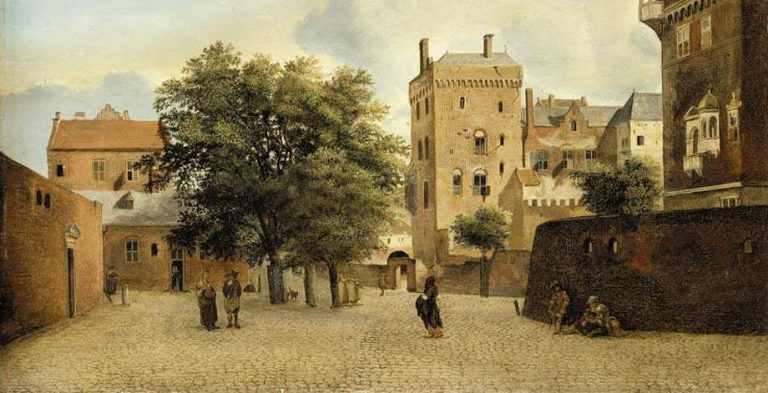
This illustration shows an early New England town meeting where male propertyholders debated local matters and voted directly on taxes and ordinances. It reflects the Puritan emphasis on community oversight and civic responsibility. Decorative border text appears around the slide, which includes extra detail not required by the syllabus but does not alter the central depiction of town-meeting politics. Source.
Town Meeting: A form of local governance in which eligible community members gather to deliberate and vote directly on public matters.
Town meetings reflected Puritan ideals of covenantal community and moral responsibility. Because congregations valued collective oversight, political decisions often blended civic and religious concerns. The meeting served as both a legislative and administrative body, demonstrating how colonists merged social cohesion with participatory governance.
Between meeting sessions, elected officials—typically selectmen—carried out routine administrative tasks. Their accountability to the broader community reinforced the expectation that political authority stemmed from the consent of ordinary settlers, a notable contrast to Europe’s hierarchical traditions.
Political Culture in New England
The participatory nature of town meetings cultivated widespread political literacy among settlers. Debates over land, taxation, and communal responsibilities required colonists to understand civic processes and articulate local priorities. This encouraged a political culture defined by:
Regular public deliberation
Broad, though not universal, male participation
Moral expectations of public service
Close linkage between religious and civic life
These features made New England one of the most democratic regions in the British Empire, even though voting rights remained restricted to property-holding men and often intersected with Puritan religious membership.
Southern and Chesapeake Colonial Assemblies
Emergence of Elected Assemblies
In the southern Atlantic coast colonies and the Chesapeake, growing plantation economies and dispersed settlement patterns encouraged a different model of governance: elected colonial assemblies. These representative bodies expanded gradually during the 17th century as colonists sought control over taxation, local defense, and land policies. Unlike the direct participation seen in New England, southern governance concentrated authority in the hands of local elites.
Colonial Assembly: A representative legislative body elected by property-holding colonists to enact laws and manage local taxation.
Assemblies such as the House of Burgesses in Virginia played a crucial role in developing representative political institutions.
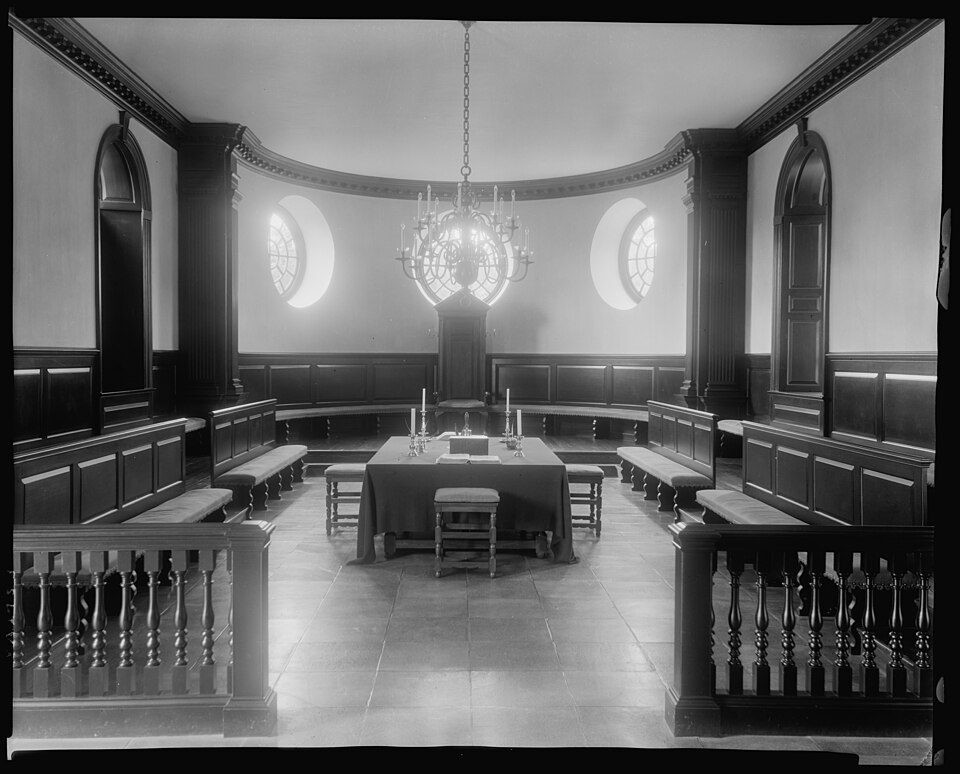
This photograph depicts the chamber of the Virginia House of Burgesses in Williamsburg, where wealthy planters served as elected representatives. The arrangement of benches and the elevated chair highlight the hierarchical nature of southern colonial politics. The room’s formal layout underscores how legislative authority was concentrated among elite landholders. Source.
Elite Rule and Limited Participation
The plantation system shaped who could participate in politics. Landownership functioned as the gateway to political power, and the vast economic disparities of the southern colonies ensured that wealthy planters held disproportionate influence. Assemblies often demonstrated:
Elite dominance, with political offices concentrated among a small group of planters
Regional interests, such as regulating tobacco, land claims, and plantation labor
Institutional continuity, with experienced politicians maintaining long tenures
Close negotiation with royal governors, who represented imperial authority
Despite their hierarchical nature, these assemblies became crucial in asserting colonial rights. Their control over taxation and legislation allowed them to challenge governors who attempted to enforce unpopular imperial directives.
Shared Features of Colonial Self-Government
Influence of Distance and Weak Oversight
Across the colonies, geographic separation from Britain profoundly shaped political development. Because the Crown and Parliament struggled to enforce consistent policies, colonists filled the vacuum with institutions tailored to local needs. This practical autonomy fostered expectations of self-rule, even in regions where participation was limited.
The colonial experience emphasized several shared political characteristics:
Reliance on elected representatives or community gatherings
Local control over taxation and public spending
A belief that legitimate authority required consent from governed colonists
Routine negotiation—sometimes conflict—with royal governors and imperial officials
Laying Groundwork for Later Resistance
Although rooted in daily governance rather than ideology, these institutions nurtured habits of political independence. Town meetings encouraged ordinary colonists to debate policies openly, while assemblies institutionalized representative government. These traditions would later supply both the framework and the conviction to resist imperial attempts to tighten control in the mid-18th century.
Variation and Regional Distinctiveness
New England vs. Southern Models
The contrast between New England’s more democratic town meetings and the South’s elite-dominated assemblies highlights the regional diversity emphasized in the syllabus.
New England fostered broad civic participation, whereas southern colonies nurtured representative bodies tightly linked to social hierarchy. Together, these forms illustrate how colonial political culture reflected environmental, economic, and demographic conditions while still evolving under the umbrella of British imperial identity.
Enduring Patterns
Both systems persisted because they served colonial interests: community cohesion in New England and planter authority in the South. Though different in structure, each contributed to the broader pattern of unusually democratic self-government, born from distance, necessity, and the opportunities of the Atlantic world.
FAQ
Most towns held at least one annual meeting, but additional sessions could be called when urgent matters arose.
Agendas were shaped by local needs rather than higher authorities. Typical items included land distribution, road maintenance, school funding, and the appointment of minor officials.
Clergy had no formal political role, but religious concerns often influenced priorities, especially in Puritan communities.
No. While the core principle of direct participation was widespread, structures varied.
Smaller towns often held more informal gatherings with high attendance, whereas larger or wealthier towns developed more complex procedures, including written warrants and committees.
Local customs, economic interests, and the strength of religious institutions also shaped how meetings functioned.
Qualifications were not uniform across New England.
Common requirements included:
Free status
Male gender
Property ownership or rate-paying eligibility
Church membership in some early Puritan towns
Serving as a selectman generally demanded higher property thresholds, reinforcing the influence of established families.
Assemblies largely acted independently, reflecting the decentralised nature of British colonial governance.
Cooperation occurred mainly in moments of shared threat, such as frontier conflicts or wartime taxation. Even then, coordination was limited by regional rivalries and differing economic priorities.
Unlike New England’s intercolonial religious networks, southern assemblies had few formal mechanisms linking one colony’s legislature to another.
Governors used several tools to assert authority, though success varied.
They could:
Veto laws passed by the assembly
Delay legislative sessions
Withhold approval for taxation bills
Appoint or dismiss certain officials
Assemblies countered by controlling revenue, refusing to fund projects or salaries unless governors conceded to local demands. This created recurring political standoffs that strengthened legislative self-confidence over time.
Practice Questions
Question 1 (1–3 marks)
Explain one way in which New England town meetings contributed to democratic practices in the British colonies.
Question 1
1 mark: Identifies a relevant feature of New England town meetings (e.g., direct participation by eligible male propertyholders).
2 marks: Describes how this feature contributed to democratic practices (e.g., voting directly on taxes, laws, or local matters).
3 marks: Provides a clear explanation linking the participatory nature of town meetings to broader democratic development in the colonies (e.g., fostering political literacy, reinforcing consent-based governance).
Question 2 (4–6 marks)
Evaluate the extent to which colonial assemblies in the southern colonies, such as the House of Burgesses, promoted self-government. In your answer, consider both democratic features and limitations.
Question 2
4 marks: Provides a valid judgement about the extent of self-government in southern colonial assemblies and supports it with at least one accurate piece of evidence (e.g., elected representatives, taxation authority).
5 marks: Develops the argument with additional evidence or explanation showing both strengths and limits (e.g., elite planter dominance, limited electorate).
6 marks: Offers a balanced, well-reasoned evaluation addressing both democratic elements and significant constraints, demonstrating clear understanding of regional political structures and their implications for self-rule.