AP Syllabus focus:
‘Spanish, French, Dutch, and British colonizers pursued different economic and imperial goals involving land and labor, shaping social and political development and relations with Native populations.’
European empires in North America pursued distinct goals that shaped their labor systems and relationships with Indigenous peoples, producing contrasting colonial structures, cultural interactions, and long-term regional patterns.
Comparing European Imperial Goals
European imperial strategies in North America varied according to economic priorities, religious motivations, and geopolitical rivalries.
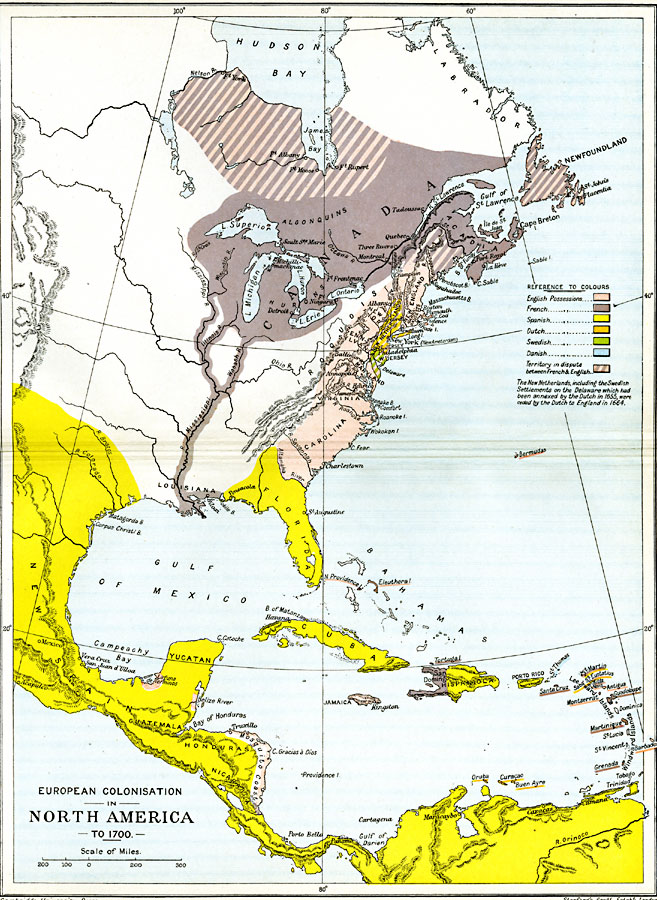
This map shows major European colonial possessions in North America between 1500 and 1700, highlighting Spanish, French, British, and Dutch claims. It illustrates how each empire pursued different goals through territorial expansion, with overlapping and contested zones that fueled imperial rivalry. The map also includes Swedish and Danish outposts, which exceed the AP focus but contextualize the wider competitive landscape. Source.
Spanish Goals: Wealth Extraction and Religious Conversion
Spain’s empire centered on obtaining mineral wealth and expanding Catholic influence.
Spanish colonizers focused on extracting gold and silver, especially in Mexico and the Southwest.
Missionaries sought to convert Native peoples to Catholicism, integrating them into Spanish colonial society.
Settlements were often directed by the Crown, creating hierarchical systems that embedded Indigenous labor within imperial institutions.
French Goals: Commerce and Diplomacy
France emphasized commercial activity rather than large-scale settlement.
French colonization revolved around the fur trade, which required sustained cooperation with Indigenous trapping communities.
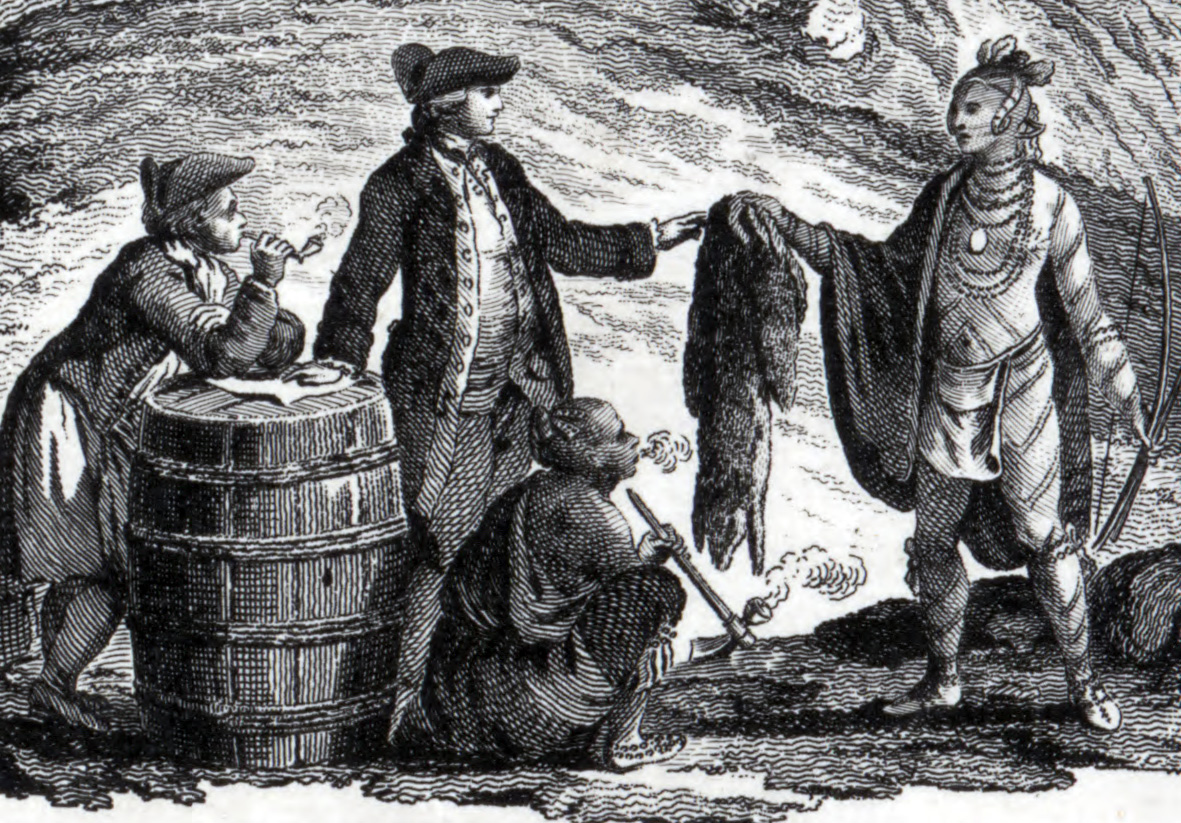
This image portrays European traders and Indigenous partners exchanging furs for manufactured goods, underscoring how commercial cooperation underpinned French and Dutch imperial strategies. It highlights the diplomatic and economic alliances essential to sustaining the fur trade. The scene is dated 1777, slightly later than AP Period 2, but accurately represents established seventeenth-century trade patterns. Source.
Low population numbers led French officials to cultivate diplomatic alliances to protect trade networks and frontier territories.
Intermarriage between French traders and Indigenous women helped secure kinship ties that reinforced economic and military relationships.
Dutch Goals: Profit and Global Trade
Dutch colonization emerged within a broader commercial empire.
The Dutch West India Company prioritized profit through trade, especially in furs and Atlantic commerce.
Dutch colonies welcomed diverse settlers, reflecting the Netherlands’ commercial cosmopolitanism.
Unlike Spain, the Dutch did not pursue systematic conversion or large-scale territorial control, focusing instead on efficient trading posts.
English Goals: Land Ownership and Permanent Settlement
English colonies grew through large-scale migration and agrarian expansion.
Settlers sought land ownership, economic opportunity, and, in some regions, religious autonomy.
Agricultural development depended on occupying Native land, often leading to dispossession and conflict.
English political traditions encouraged the formation of local self-governing communities, shaping colonial society to a greater extent than imperial direction.
Labor Systems Across Empires
Labor organization reflected each empire’s priorities and population patterns.
Spanish Labor Systems: Encomienda and Forced Indigenous Labor
Spain employed coercive labor systems to support resource extraction.
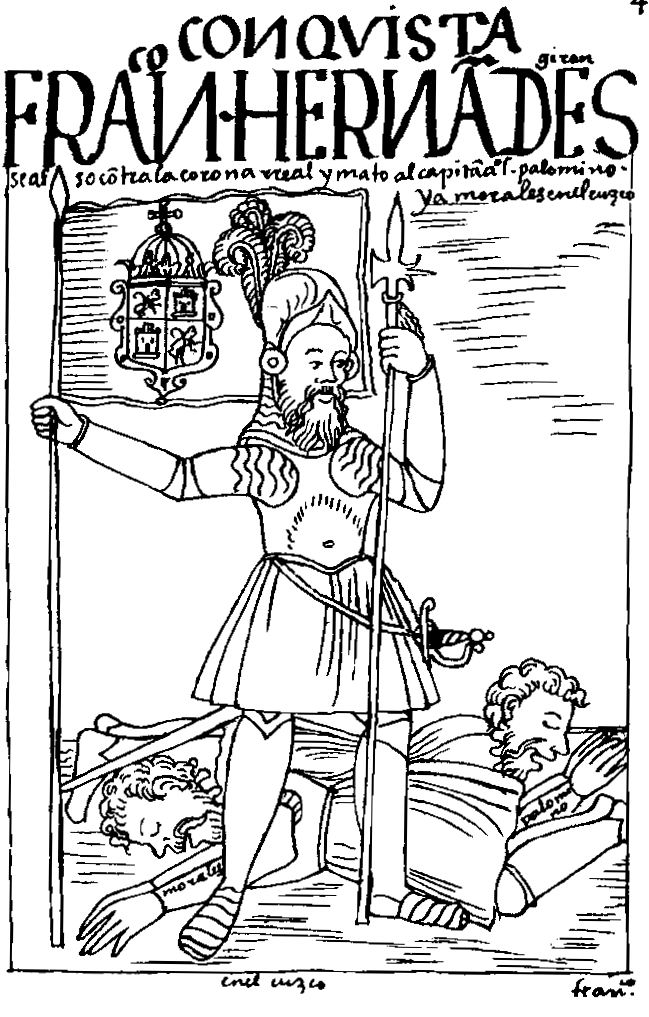
This drawing shows a Spanish encomendero directing Indigenous laborers, illustrating how the encomienda system bound Native communities to forced tribute and work. It reinforces how Spanish imperial goals combined wealth extraction with Christianization under a rigid hierarchy. The historical specifics shown exceed AP requirements but illuminate broader debates about colonial abuses and reform efforts. Source.
Under encomienda, Spanish officials gained rights to Indigenous labor and tribute.
Encomienda: A Spanish labor system granting colonists authority over Indigenous labor and tribute in exchange for supposed protection and Christian instruction.
Later systems, such as repartimiento, attempted to regulate exploitation but continued forced labor practices.
African slavery supplemented Indigenous labor, especially in the Caribbean.
A normal sentence appears here to maintain continuity before the next definition block.
French and Dutch Labor: Cooperative Exchange
French and Dutch labor models relied less on coercion.
The fur trade required voluntary Indigenous participation, not forced labor.
Fur Trade: A commercial system in which European merchants exchanged manufactured goods with Indigenous trappers for pelts destined for global markets.
Because economic success depended on alliances, both empires avoided labor systems that would alienate Indigenous partners.
Limited demographic growth also reduced pressure for territorial labor exploitation.
English Labor: Indentured Servitude and Enslaved Africans
English colonies built agricultural societies requiring intensive labor.
Early labor needs were met through indentured servitude, in which migrants worked for a fixed term in exchange for passage.
Over time, especially in the Chesapeake and the South, colonists increasingly relied on African chattel slavery, which became hereditary and race-based.
Indigenous Relations and Imperial Patterns
Indigenous peoples shaped and responded to European colonization in distinct ways.
Spanish-Indigenous Relations: Assimilation and Resistance
Spain sought to integrate Native peoples into colonial society through mission systems and hierarchical governance.
Missions reorganized Indigenous communities around Catholic doctrine and Spanish authority.
Indigenous resistance, including revolts such as the Pueblo Revolt, challenged Spanish control and prompted reforms toward limited accommodation.
French and Dutch Relations: Alliance Building
French and Dutch success depended on mutual cooperation with Indigenous nations.
They supplied firearms, metal goods, and cloth in exchange for furs and military support.
Indigenous nations leveraged these partnerships to strengthen their positions against rival groups, increasing their diplomatic agency.
English-Indigenous Relations: Displacement and Conflict
English settlement patterns generated persistent land conflict.
Permanent agricultural towns displaced Indigenous communities, provoking wars such as the Pequot War and later territorial clashes.
English settlers tended to view land as individually owned property, contrasting with Indigenous conceptions of shared territorial stewardship.
Limited intermarriage and minimal cultural integration contributed to rigid boundaries between English and Indigenous societies.
Comparative Overview
Spanish colonization emphasized extraction, conversion, and hierarchical labor systems that combined Indigenous and African labor.
French and Dutch colonization prioritized trade and alliances, producing cooperative—but strategically fragile—relationships with Indigenous groups.
English colonization focused on land acquisition and agricultural settlement, resulting in demographic expansion, coercive labor systems, and frequent conflict with Native peoples.
FAQ
Spanish colonisation centred on regions with mineral wealth, encouraging extractive labour systems.
French and Dutch traders operated in northern woodlands rich in fur-bearing animals, reinforcing mobile trading networks rather than settlement.
British colonists occupied fertile coastal plains ideal for agriculture, incentivising land ownership, family migration, and eventual displacement of Indigenous communities.
For Spain, Catholic conversion was a core imperial aim, leading to mission systems that sought to restructure Indigenous cultural life.
French Catholic missionaries also worked among Indigenous groups, but their efforts generally coexisted with alliance-based diplomacy.
The largely Protestant British colonies placed less emphasis on Indigenous conversion and instead prioritised territorial expansion, reinforcing social separation.
European empires with smaller settler populations, such as the French and Dutch, relied more heavily on diplomacy and commercial partnerships because they lacked the manpower to dominate Indigenous groups militarily.
Larger settler populations, as seen in the British colonies, created greater pressure for land, which intensified displacement and conflict. Spanish colonial centres varied, but where Spanish populations remained limited, they often depended on Indigenous labour systems to maintain economic output.
Intermarriage was most prevalent in French and some Dutch frontier regions because it strengthened trade alliances and created kinship networks vital for fur trading.
By contrast, British settlers brought larger numbers of European women and sought to establish separate communities, reducing incentives for intermarriage. Spanish intermarriage occurred more frequently in regions with dense Indigenous populations but was shaped by rigid caste hierarchies.
Indigenous nations actively used European rivalries to their advantage by forming selective alliances.
They often:
Negotiated for better trade terms.
Acquired firearms or goods unavailable elsewhere.
Formed coalitions to counter regional threats.
This strategic diplomacy allowed Indigenous groups to exert influence despite rising colonial pressures.
Practice Questions
Question 1 (1–3 marks)
Identify one way in which French or Dutch colonisation in North America differed from Spanish colonisation in their relations with Indigenous peoples. Briefly explain how this difference reflected each empire’s broader colonial goals.
Question 1 (1–3 marks)
1 mark: Identifies a valid difference (e.g., French/Dutch reliance on alliances versus Spanish coercive labour).
1 additional mark: Explains how this difference shaped or reflected Indigenous relations (e.g., alliances facilitated trade; coercion supported extraction).
1 additional mark: Links the difference to broader imperial goals (e.g., Spanish pursuit of wealth and conversion; French/Dutch focus on commerce and diplomacy).
Maximum: 3 marks.
Question 2 (4–6 marks)
Evaluate the extent to which labour systems in the Spanish, French, Dutch, and British colonies reflected each empire’s economic and imperial priorities between 1607 and 1754. In your answer, use specific evidence to compare at least two European empires.
Question 2 (4–6 marks)
1–2 marks: Provides a general description of labour systems used by at least two European empires.
1–2 additional marks: Explains how these labour systems reflect each empire’s economic or imperial goals (e.g., Spanish extractive systems, French/Dutch cooperative trade, British agricultural labour and land expansion).
1–2 additional marks: Offers comparative analysis showing similarities or differences between empires, supported by specific historical evidence.
Maximum: 6 marks.