

CIE Syllabus focus:
'Candidates should understand possible measures to improve the profitability, liquidity and efficiency of an organisation.'
Improving performance means choosing actions that strengthen profit generation, maintain enough cash to meet obligations, and use resources more productively. Accountants help managers identify suitable measures and likely trade-offs.
Understanding the three areas
Profitability is concerned with the business’s ability to earn profit from its operations and resources.
Profitability: The ability of a business to generate profit from revenue, capital employed, and other resources used in trading.
A profitable business is not automatically safe if it lacks cash, so profitability must be considered alongside liquidity.
Liquidity focuses on whether the business can meet short-term obligations when they fall due.
Liquidity: The ability of a business to pay its short-term debts from available current assets and cash resources.
A business may also be liquid but still weak if it uses its assets poorly and wastes resources.
Efficiency is about using resources such as inventory, labor, non-current assets, and time in the best possible way.
Efficiency: The extent to which a business uses its resources economically and productively to generate revenue and control costs.
Measures to improve profitability
Increasing revenue
A business can improve profitability by increasing sales revenue, provided the extra revenue is greater than any extra costs.
Possible measures include:
increasing selling prices where demand is not very sensitive to price
improving product quality to justify a higher price
promoting higher-margin products
entering new markets or targeting new customer groups
improving customer service to encourage repeat purchases
However, raising prices may reduce sales volume, so management must consider demand conditions and competitors’ responses.
Reducing cost of sales
Lower cost of sales can increase gross profit and gross profit margin.
Ways to achieve this include:
negotiating better purchase prices from suppliers
buying in economic quantities where storage costs remain reasonable
reducing wastage, breakage, and theft
improving inventory control so obsolete goods are minimized
finding more reliable suppliers to reduce spoilage or delays
Care is needed because buying cheaper materials may reduce quality and damage long-term sales.
Controlling operating expenses
Profitability improves when expenses rise more slowly than revenue or are reduced without harming operations.
Common measures are:
reducing unnecessary administrative costs
monitoring utility usage and avoiding waste
improving staff scheduling to reduce idle time
reviewing advertising to remove ineffective spending
outsourcing selected activities if this lowers total cost without lowering service quality
Cost reduction should not become excessive. Cutting maintenance, staff training, or promotion too aggressively may lower future profitability.
Improving labor productivity
Labor is often a major cost. Profitability can improve if workers produce more output in the same time.
Measures include:
training staff
setting realistic performance targets
using better equipment or systems
organizing work more effectively
introducing incentives linked to output or quality
Higher productivity reduces unit cost, but incentive schemes must be designed carefully so quality does not fall.
Measures to improve liquidity
Speeding up cash inflows
Liquidity improves when cash is received sooner.
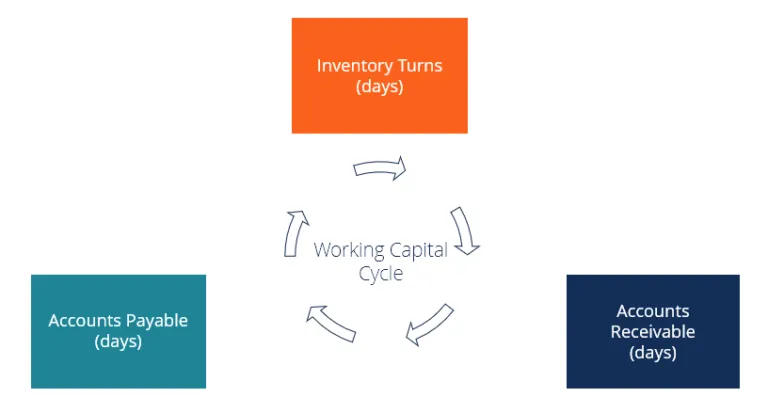
This diagram illustrates the working capital (cash conversion) cycle, showing how cash is tied up in inventory and trade receivables before being recovered from customers, while trade payables provide a period of supplier financing. It reinforces why faster collections, leaner inventory, and well-managed payment timing can improve liquidity without changing sales volume. Source
Useful measures include:
tightening credit control over trade receivables
sending invoices promptly
following up overdue accounts quickly
offering cash discounts for early payment where suitable
requesting deposits from customers for large orders
These measures can strengthen cash flow, but discounts reduce revenue per sale and very strict credit terms may drive customers away.
Managing cash outflows
A business can improve liquidity by controlling the timing of payments.
Possible actions are:
taking full credit periods allowed by suppliers
preparing cash budgets to forecast shortages early
postponing non-essential expenditure
spreading large payments where possible
matching payment dates more closely with expected receipts
Delaying payments too much may harm supplier relationships, reduce creditworthiness, or cause the loss of settlement discounts.
Improving inventory management
Inventory ties up cash. Reducing excessive inventory often improves liquidity.
This may be done by:
ordering more frequently in smaller quantities
identifying slow-moving items
returning unsold goods where suppliers allow this
improving demand forecasting
removing obsolete inventory through discounts or promotions
Inventory levels must not be reduced so far that the business cannot meet customer demand.
Securing short-term finance when necessary
If internal measures are not enough, a business may improve liquidity through short-term finance, such as temporary bank facilities.
This can help the business meet immediate obligations, but interest costs and repayment terms must be considered because short-term finance can increase pressure on future cash flow.
Measures to improve efficiency
Using non-current assets more effectively
Efficiency improves when assets generate more revenue relative to their cost.
Measures include:
increasing output from existing machinery
reducing downtime through planned maintenance
replacing outdated equipment that causes delays
improving production scheduling
disposing of idle or underused assets
An asset should not be kept merely because it is owned; it should contribute effectively to operations.
Improving receivables and payables procedures
Administrative efficiency helps both liquidity and profitability.
Measures include:
maintaining accurate customer records
checking customer creditworthiness
reconciling accounts regularly
standardizing payment approval procedures
avoiding duplicate or late payments
Efficient systems save time, reduce errors, and support better cash management.
Improving workflow and operations
Operational efficiency can be increased by:
simplifying business processes
reducing unnecessary movement or paperwork
using technology to speed up routine tasks
setting reorder levels and control procedures
comparing performance between departments or time periods
Efficiency is improved when the same output is achieved with fewer resources, or greater output is achieved from the same resources.
Balancing the three objectives
Measures that improve one area may weaken another, so decisions should not be made in isolation.
Examples of trade-offs include:
reducing inventory may improve liquidity and efficiency but risk lost sales
offering discounts for prompt payment may improve liquidity but reduce profit margin
delaying payment to suppliers may improve liquidity but damage relationships
cutting staff may reduce costs but lower service quality and sales
The best measures are those that improve overall business performance rather than one ratio alone. Management should consider the business’s objectives, the likely effect on customers and suppliers, and whether the measure is sustainable in both the short term and the long term.
Practice Questions
State two measures a business could take to improve its liquidity. (2 marks)
1 mark for each valid measure, up to 2 marks.
Acceptable answers include:
faster collection from trade receivables
reducing excess inventory
delaying non-essential payments
taking full credit from suppliers
preparing cash budgets
arranging short-term finance
A business has weak profitability and slow inventory turnover. Suggest and explain three measures the business could take to improve profitability and efficiency. (6 marks)
1 mark for each relevant measure suggested, up to 3 marks.
1 mark for each developed explanation linked to profitability or efficiency, up to 3 marks.
Possible answers:
reduce wastage or theft; lowers cost of sales and increases gross profit
improve inventory control; reduces obsolete stock and improves inventory turnover
promote higher-margin products; increases profit earned from sales
train staff; raises productivity and lowers unit cost
dispose of slow-moving inventory; frees resources and improves efficiency
improve production scheduling; increases output from existing resources
FAQ
Profit is based on accounting income and expenses, not just cash movements.
A business may make strong credit sales and report profit, but if customers are slow to pay, cash may be tied up in receivables.
Other causes include:
buying too much inventory
paying suppliers too quickly
spending heavily on expenses or assets before cash is received
This is why profitable businesses can still face cash-flow problems.
No. Cost cutting can improve profit, but only if it does not damage the business’s ability to earn revenue.
Poor cost cutting may lead to:
lower product quality
weaker customer service
staff dissatisfaction
reduced sales in the future
In many cases, improving revenue quality, labor productivity, or inventory control is more effective than simple cost reduction.
Efficiency can often be improved through better organization rather than major capital spending.
Examples include:
better staff scheduling
clearer procedures
tighter inventory control
reducing delays between production stages
improving communication between departments
These changes may increase output or reduce waste using existing resources.
It may be unsuitable if the discount given is too large compared with the liquidity benefit.
It can also be a poor choice when:
customers already pay on time
profit margins are very low
the business may attract customers who expect future discounts
Management should compare the cash-flow improvement with the loss of revenue from the discount.
Strong liquidity only shows that short-term debts can be paid. It does not mean resources are being used well.
A liquid business may still:
hold too much inventory
have underused assets
suffer from slow procedures
employ more labor than necessary
Improving efficiency helps protect future profitability and reduces the chance that liquidity will weaken later.
