

CIE Syllabus focus:
'Candidates should understand the limitations of accounting information and problems that may reduce the usefulness of analysis.'
Accounting information supports decision-making, but it must be interpreted carefully. Financial statements and ratio analysis can inform users, yet both can be weakened by estimates, timing issues, missing context, and differences in accounting treatment.
Why accounting information has limits
Accounting information converts business activity into monetary figures. That makes performance easier to review, but it also means that some important realities are simplified or left out.
Accounting information: Financial data and related disclosures prepared to help users assess a business's performance, financial position, and financial changes.
This information is useful, but it is not a perfect record of economic reality. It is prepared under accounting rules and conventions, and those rules still require judgment.
It is mainly historical
Most accounting information is based on transactions that have already happened. Revenue, expenses, assets, and liabilities are usually reported for a past period or at a specific date in the past.
Because of this:
financial statements may not reflect current market conditions
asset values may differ greatly from what assets are worth now
profits from a previous year may not be a reliable guide to future profits
A business may look successful from last year's figures, but demand, costs, or competition may already have changed. This reduces the usefulness of analysis for users making forward-looking decisions.
It includes estimates and judgment
Many accounting figures are not exact.
They depend on professional judgment, such as:
the useful life of a non-current asset
the residual value of an asset
the amount likely to be collected from trade receivables
the value assigned to inventory
Reasonable accountants may make different judgments from the same evidence. This means two sets of accounts can both follow accepted practice and still produce different profit figures or asset values. Analysis based on those numbers may therefore appear more precise than it really is.
Problems that reduce the usefulness of analysis
Different accounting policies reduce comparability
Analysis is less useful when businesses do not measure items in the same way. One business may depreciate assets quickly, while another may spread depreciation over a longer period. One may value inventory differently from another.
These differences affect reported profit, asset values, and ratios. As a result, comparisons between businesses may be unfair or misleading. Even comparison with a previous year can become difficult if a business changes its accounting policies or estimates.
Inflation and changing prices distort figures
Accounting information often uses original cost.
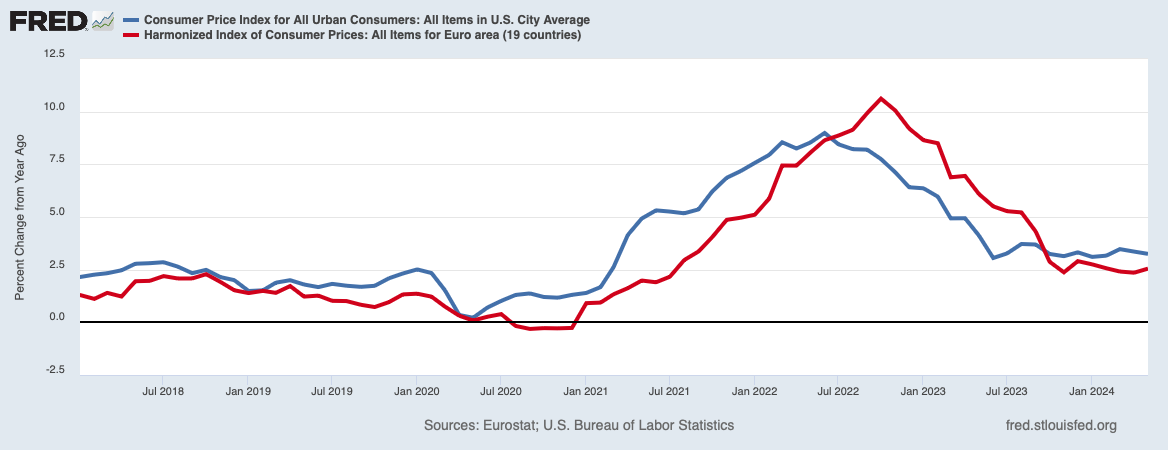
A time-series chart of inflation (CPI-based) showing how the general price level changes over time. When prices rise, historical-cost amounts in the financial statements (e.g., older non-current assets and older inventory costs) can diverge from current economic values. This helps explain why multi-year comparisons may be distorted in inflationary periods. Source
When prices rise over time, this can make reported figures less realistic.
For example:
non-current assets may be shown at amounts far below current value
older inventory costs may be matched against newer selling prices
profit may appear stronger than the real economic gain
This means trend analysis over several years can be distorted, especially in periods of significant inflation. A rise in profit may partly reflect changing prices rather than better performance.
Published figures leave out non-financial factors
Financial statements mainly report items that can be measured in money. However, many factors that affect success cannot be easily included, such as:
quality of management
employee skills and morale
customer loyalty
brand reputation
product quality
environmental or legal risk
A business may show strong profits while facing serious operational weaknesses. Equally, a business investing in staff training or brand development may look weaker in the short term than it really is. This limits the value of analysis based only on accounting information.
Aggregated totals hide detail
Published accounts combine many transactions into broad totals. For external users, this can hide important information.
For example:
total revenue does not show which products are profitable
total trade receivables does not show how much is overdue
total expenses may hide rising costs in one department
inventory figures do not show whether items are slow-moving or obsolete
A set of accounts may therefore appear clear, while still giving only a partial view. This is a major limitation for investors, lenders, and other external users who do not have access to internal records.
Timing can distort the picture
Financial statements are prepared for a defined accounting period and at a specific reporting date. This can make analysis sensitive to timing.
A business may have:
seasonal sales patterns
unusual year-end inventory levels
one-time gains or losses
temporary changes in receivables, payables, or cash near the reporting date
If the year-end date is not typical of normal operations, the reported position may not represent the business throughout the year. Analysis based on that date can therefore be misleading.
Window dressing can make results appear better than they are
Managers may try to present the strongest possible picture at the reporting date. This may stay within accounting rules, but it can still reduce the reliability of analysis.
Window dressing: Action taken to make financial statements appear more favorable at the reporting date than the normal underlying business position would suggest.
This may involve speeding up cash collection, delaying purchases, cutting expenditure temporarily, or choosing presentation methods that improve appearance. Users should be cautious when results seem unusually strong without clear operational reasons.
The value of analysis depends on the quality of the records
Accounting information is only as reliable as the records from which it is prepared. If bookkeeping is incomplete, inaccurate, or poorly organized, the final accounts may also be weak.
Problems may include:
omitted transactions
misclassifications
arithmetic errors
failure to update ledgers promptly
unsupported estimates
Even when statements look professionally prepared, poor source data can reduce their usefulness. Analysis cannot correct weak underlying information.
How to judge usefulness more carefully
When evaluating accounting information, a student should ask whether it is:
relevant to the decision being made
reliable enough to be trusted
comparable with other periods or other businesses
complete enough to support judgment
Useful analysis often requires more than the financial statements alone. Users may also need notes to the accounts, management commentary, knowledge of the industry, and non-financial evidence such as market share trends or customer retention data.
Practice Questions
State two limitations of accounting information. (2 marks)
1 mark for each valid limitation stated, up to 2 marks.
Acceptable answers include:
it is historical
it includes estimates or judgment
different accounting policies reduce comparability
inflation distorts figures
non-financial factors are omitted
information may be aggregated
window dressing may occur
poor underlying records reduce reliability
Explain three problems that may reduce the usefulness of accounting analysis for an external user comparing two businesses. (6 marks)
1 mark for each valid problem identified, up to 3 marks.
1 mark for each explanation of how it reduces usefulness, up to 3 marks.
Maximum 6 marks.
Acceptable points include:
different accounting policies make profit or asset figures not directly comparable
inflation makes historic cost figures less meaningful
non-financial factors are not included, so the full business position is not shown
aggregated totals hide important detail
year-end timing may not reflect normal trading
window dressing can improve appearance without improving real performance
inaccurate records reduce reliability of the accounts
FAQ
An audit increases confidence, but it does not make accounts perfect.
Auditors usually work with:
sampling rather than checking every transaction
materiality, meaning very small errors may be ignored
evidence available at the time of the audit
An audit also does not guarantee future success, strong cash flows, or the absence of every fraud. It mainly supports whether the statements present a reasonable view under the accounting framework used.
Earnings management usually means using judgment within accounting rules to produce a preferred result, such as smoothing profit between years.
Fraud involves deliberate deception, such as inventing sales or hiding liabilities.
The boundary matters because:
earnings management may still comply technically with rules
fraud breaks rules or laws
both can reduce the usefulness of analysis, but fraud is much more serious
Users should read accounts carefully when profits look unusually stable or unexpectedly strong.
A seasonal business may look very different at different times of year.
For example:
inventory may be high before a peak selling season
cash may be low after stock purchases
receivables may rise sharply during busy periods
If analysis uses only one reporting date, it may not reflect the normal average position. In these cases, users often benefit from interim reports, monthly data, or average balances rather than relying only on year-end figures.
The notes add detail that the main statements cannot show on their own.
They may explain:
accounting policies used
major estimates and uncertainties
unusual or one-off items
breakdowns of balances
commitments or risks not obvious from totals alone
This does not remove all limitations, but it helps users judge whether the figures are comparable, reliable, and affected by special circumstances.
Large businesses often combine many products, locations, or divisions into one set of published numbers.
This can hide:
a loss-making division being supported by a profitable one
dependence on one major customer
weak performance in a key market
rising risk in one part of the business
That is why segment information, where available, is useful. It can show whether success is broad-based or concentrated in only a small part of the organization.

