IB Syllabus focus: 'Bias is a limitation in objective thinking, involving cognitive filters of experience and preference that can be implicit or explicit.'
Bias matters in psychology because it shapes how people notice, interpret, and remember information. Understanding bias helps students assess psychological explanations more critically and recognize why complete objectivity is difficult in a human science.
What bias means
In psychology, bias refers to a limitation in objective thinking. It does not only mean deliberate unfairness. It means thinking is filtered through prior knowledge, beliefs, emotions, expectations, and values, which influence what seems important or believable.
Bias: A limitation in objective thinking caused by mental filters shaped by experience and preference.
Bias matters because psychology studies human behavior, so interpretation is always involved. Both everyday judgments and psychological explanations can be shaped by the thinker's mental filters.
Cognitive filters of experience and preference
The syllabus describes bias as involving cognitive filters.
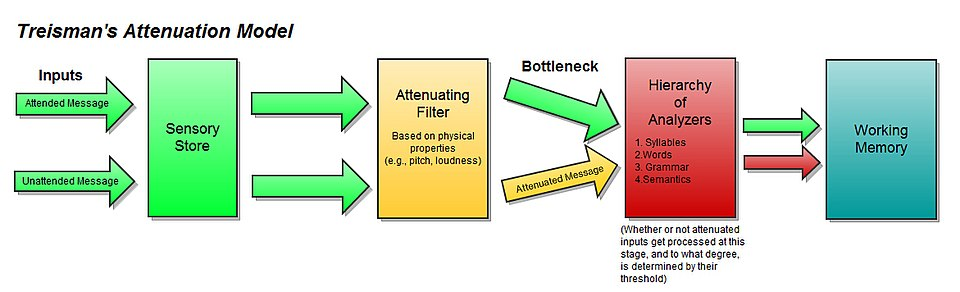
Diagram of Treisman’s attenuation model of selective attention, showing how incoming information is filtered so that some signals are processed strongly while others are weakened but not fully blocked. This provides a mechanistic way to visualize how mental “filters” can systematically shape what information reaches awareness and influences judgment. Source
A cognitive filter is a mental lens through which information is processed. People do not absorb all information equally; they select and interpret it in ways influenced by previous experience and current preferences.
Experience can include:
culture and socialization
education
relationships
emotional memories
Preference can include:
personal values
expectations
likes and dislikes
goals
These filters help people manage a complex world. However, they can also narrow attention and distort judgment, especially when people assume their interpretation is completely neutral.
Implicit and explicit bias
Bias can be implicit or explicit.
This matters because not all bias is conscious.
Implicit bias
Implicit bias operates automatically. A person may not realize that a preference or assumption is affecting judgment.
Implicit bias: An automatic, often unconscious tendency that influences perception or judgment.
Implicit bias can appear in quick impressions, emotional reactions, or interpretations that feel natural. Because it operates below full conscious awareness, it can be hard to detect in oneself. People may sincerely believe they are being objective while still being influenced by hidden assumptions.
A key feature of implicit bias is that it may conflict with a person's stated beliefs. Someone may openly value fairness, yet still respond differently to similar situations because of unconscious associations.
Explicit bias
Explicit bias is conscious. The person is aware of the belief, attitude, or preference and can usually state it directly.
Explicit bias: A conscious and reportable belief, attitude, or preference that affects judgment.
Explicit bias may be easier to identify because it can be expressed in words or deliberate choices. However, it is not always openly admitted. People sometimes hide explicit bias because of social pressure or concern about how others will judge them.
The distinction between implicit and explicit bias shows that bias is not only a matter of intention. A person can think in biased ways even without wanting to.
Why bias limits objectivity
Objectivity in psychology means judging evidence as fairly and accurately as possible, without letting personal viewpoints dominate interpretation. Bias limits this goal because people rarely approach information as blank slates.
When bias is present, it can affect:
attention: what is noticed or ignored
interpretation: what meaning is assigned to behavior
memory: what is remembered clearly or forgotten
evaluation: what is seen as credible or important
If a person expects a certain kind of behavior, they may be more likely to notice evidence that fits that expectation and miss evidence that challenges it. This creates a patterned limitation in thinking rather than a one-time mistake.
Bias is systematic
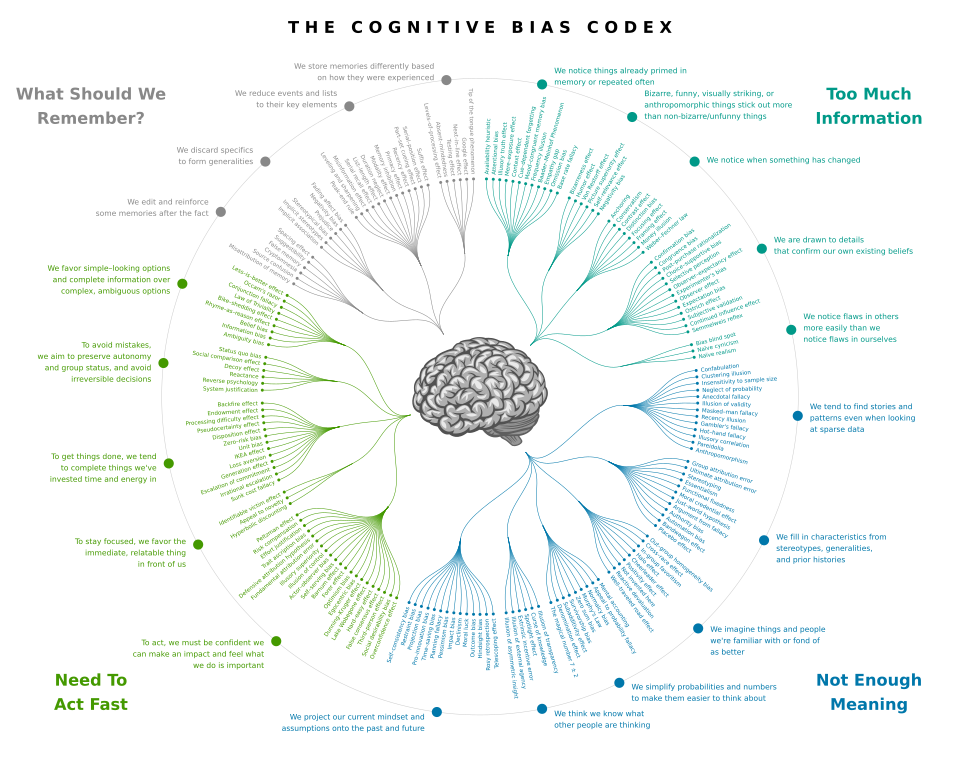
A structured map (“cognitive bias codex”) organizing many well-known cognitive biases into broader functional clusters (e.g., biases linked to too much information, not enough meaning, and the need to act fast). It helps students see bias as systematic—producing predictable directions of distortion rather than random error—and connects specific examples (like confirmation bias) to larger patterns in cognition. Source
Bias is important because it is usually systematic. It pushes thinking in a particular direction instead of producing random errors. In psychology, this matters because repeated patterns of interpretation can narrow understanding of behavior.
Bias in everyday psychological thinking
Bias is not limited to academic work. It affects ordinary social perception. People often make quick judgments about motives, emotions, personality, and intentions. These judgments can feel accurate because they are immediate, but they may still reflect filters of experience and preference.
Common situations where bias may influence thinking include:
interpreting another person's tone or facial expression
deciding whether behavior seems normal or unusual
judging whether a source is trustworthy
explaining why someone acted in a certain way
Because psychology aims to understand behavior carefully, students should be alert to the possibility that a first interpretation is shaped by assumptions rather than only by evidence.
Why recognizing bias matters
Recognizing bias does not mean saying that all judgments are useless or that objectivity is impossible. It means understanding that human thinking has built-in limitations, so good psychological thinking requires self-awareness and caution.
This matters in psychology because it promotes:
greater self-reflection
caution about first impressions
openness to alternative interpretations
more balanced evaluation of evidence
humility about the certainty of one's own viewpoint
Bias is easiest to notice in other people and hardest to notice in oneself. Thoughts often feel reasonable from the inside, which is why biased thinking can seem like "common sense." Psychology encourages students to question that feeling and separate confidence from evidence.
Practice Questions
Define bias in psychology and state one difference between implicit and explicit bias.
1 mark for defining bias as a limitation in objective thinking or as thinking shaped by cognitive filters.
1 mark for stating that implicit bias is automatic or unconscious.
1 mark for stating that explicit bias is conscious or directly reportable.
Explain how cognitive filters of experience and preference can limit objective thinking in psychology.
1-2 marks for explaining that experience and preference act as mental filters shaped by learning, values, goals, or memories.
1-2 marks for explaining that these filters affect attention, interpretation, memory, or evaluation.
1 mark for showing that bias can occur without deliberate intention.
1 mark for referring clearly to implicit and/or explicit bias in the explanation.
FAQ
No. Bias is the broader term. It refers to any limitation in objective thinking caused by mental filters.
Prejudice is a more specific kind of biased attitude, usually involving a social group and often including a positive or negative evaluation.
A person can show bias without prejudice, such as favoring familiar ideas over unfamiliar ones.
Prejudice, however, is almost always a form of bias because it shapes judgment in a non-objective way.
Biased thinking often feels objective because people experience their own thoughts from the inside. Their judgments seem reasonable, familiar, and well supported, even when hidden assumptions are shaping them.
This is especially true when a judgment fits past experience or is socially reinforced.
People are also better at noticing the reasoning of others than the unnoticed steps in their own thinking.
As a result, confidence and accuracy can feel similar even when they are not.
Yes. Implicit bias is learned through repeated exposure to associations in families, schools, media, and society, so it can also be reshaped through new experiences.
Change is usually gradual rather than instant.
It may be helped by:
repeated exposure to counterexamples
meaningful contact with different people
deliberate reflection on automatic reactions
environments that reward more careful thinking
However, old associations can return in some settings, so change is often context-dependent.
Not necessarily. Bias is a normal feature of human cognition, so simply having bias does not automatically make someone unethical or unscientific.
What matters more is how a person responds to that fact.
A good psychologist does not assume perfect neutrality. Instead, they remain reflective, open to correction, and cautious about overconfidence.
Problems become more serious when someone denies the possibility of bias or refuses to question their own judgments.
They may be using different cognitive filters. One person may focus on tone of voice, another on context, and another on past experiences with similar behavior.
Each observer may therefore assign a different meaning to the same event.
Their values and expectations also matter. If one person expects hostility and another expects anxiety, the same behavior can be interpreted in opposite ways.
This is why psychology emphasizes careful interpretation rather than assuming that first impressions are automatically correct.