IB Syllabus focus: 'Creating controls for bias is central to research, while recognizing that psychological data may be subjective.'
Psychological research aims to produce trustworthy knowledge, but researchers and participants are never completely neutral. Controls for bias increase objectivity, strengthen the credibility of findings, and clarify how far results reflect evidence rather than expectations.
Objectivity: The attempt to base research decisions, observations, and interpretations on evidence and explicit procedures rather than personal beliefs, expectations, or preferences.
Why bias controls matter
Bias controls are procedures that reduce the chance that findings are shaped by expectations, selective attention, or inconsistent methods. In psychology, this matters because researchers often study complex thoughts, emotions, and behaviors that cannot always be measured as directly as physical variables.
Without strong controls:
researchers may unintentionally influence participants
observations may depend too heavily on the person recording them
results may be interpreted in ways that fit prior beliefs
conclusions may appear stronger than the evidence justifies
At the same time, psychology must recognize that some data are inherently subjective. Self-reports, interviews, and personal accounts describe how people experience the world from their own perspective. This does not make such data useless; it means researchers must handle them carefully and interpret them with caution.
Key ways psychologists control bias
Standardization
Standardization means keeping procedures as consistent as possible across participants.
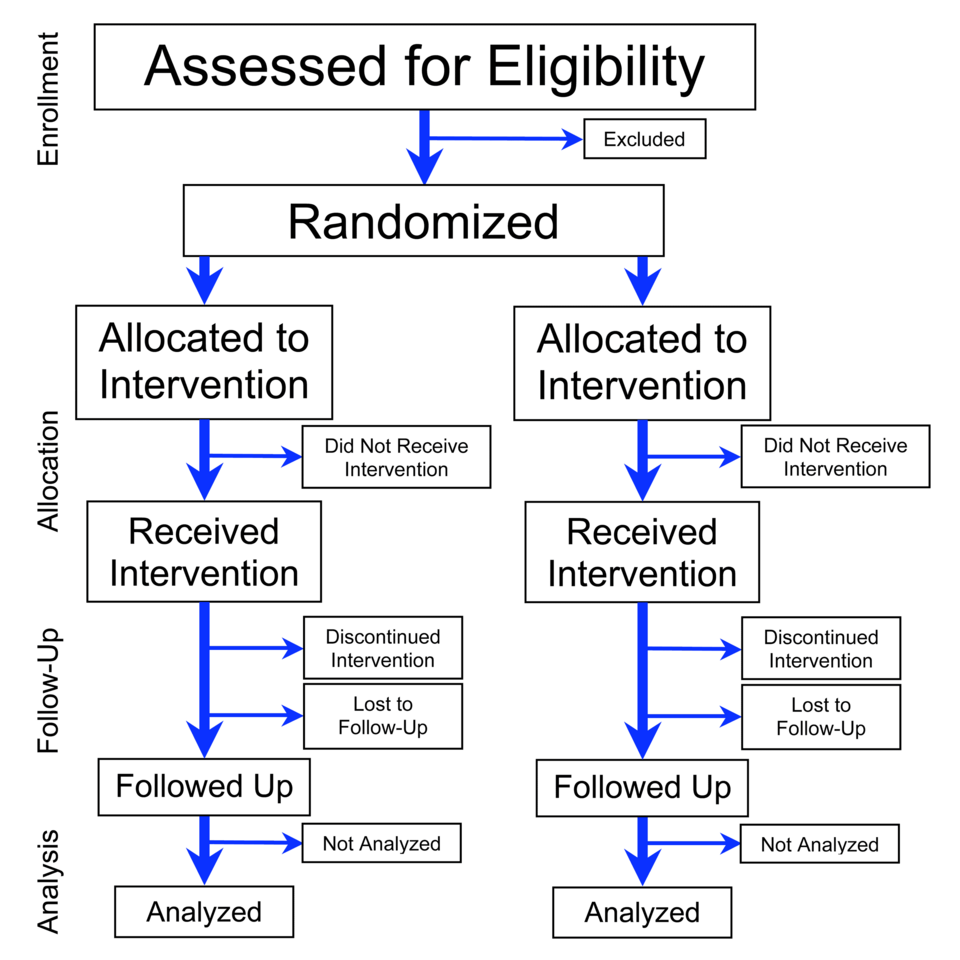
CONSORT-style flowchart of a parallel randomized trial, showing the standardized sequence of enrollment, random assignment, follow-up, and analysis. Flow diagrams like this make procedural decisions explicit (including exclusions and attrition), which helps readers evaluate potential sources of bias and threats to objectivity. Source
This includes using the same instructions, materials, timing, setting, and scoring criteria.
Standardization helps objectivity because it reduces the influence of accidental differences in how the study is run. If one participant receives extra guidance or a different explanation, the data may reflect the procedure rather than the psychological process being studied.
Common forms of standardization include:
scripted instructions
fixed time limits
identical testing conditions where possible
predetermined scoring rules
planned procedures for participant questions
Clear operational definitions
A major source of bias is vagueness. If a variable is poorly defined, researchers may measure it differently from one case to another. Psychologists therefore use operational definitions, meaning clear statements of how a variable will be observed, recorded, or categorized in a study.
Clear definitions make research more objective because they reduce room for personal interpretation. Instead of recording whether a participant seemed “anxious,” a researcher might record a specific observable behavior using a fixed rule.
Researchers also improve objectivity by deciding coding categories, exclusion criteria, and scoring methods before collecting or analyzing data.
Blinding
Blinding reduces the influence of expectations on behavior and judgment. In a blind procedure, the participant, the researcher, or both do not know key details about the condition or hypothesis.
This matters because expectations can shape:
how participants respond
how researchers ask questions
how ambiguous behavior is interpreted
how data are recorded
Even simple masking procedures can reduce subtle cues from the researcher and lower the risk of biased observations.
Training and inter-rater consistency
When research depends on observation or coding, psychologists try to ensure that more than one trained person would score the same material in a similar way. Training observers with detailed coding guides reduces guesswork and personal interpretation.
Useful practices include:
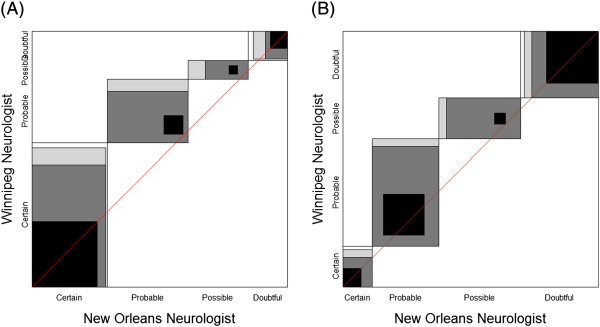
Agreement chart (Bangdiwala plot) comparing two raters’ categorizations, where darker/filled areas concentrate along the diagonal when agreement is high. Visualizations like this complement numerical indices (e.g., kappa) by showing where disagreements occur and whether one rater tends to systematically rate higher or lower than the other. Source
pilot coding before the main study
comparing ratings across observers
discussing disagreements and refining categories
using transcripts or recordings so judgments can be checked
These steps do not remove all subjectivity, but they make it more visible and more manageable.
Reflexivity and transparency
In psychology, objectivity is supported not only by control procedures but also by transparency. Researchers should explain exactly how data were collected, coded, and interpreted so others can evaluate the process.
Important transparency practices include:
reporting the full procedure clearly
explaining how categories or themes were developed
stating inclusion and exclusion decisions
reporting limitations rather than hiding them
making analytical decisions visible
In more interpretive research, psychologists may use reflexivity, which means actively reflecting on how their own background, assumptions, and relationship to the research may affect the study. Reflexivity is not the opposite of objectivity. Instead, it recognizes that complete neutrality may be unrealistic and that honest self-awareness can reduce hidden bias.
Working with subjective psychological data
Many important psychological questions involve experiences that only the participant can describe, such as pain, stress, identity, or emotion. Because of this, psychology cannot avoid subjective data altogether.
Researchers can still improve the quality of subjective data by using:
neutral, non-leading questions
consistent interview schedules
validated questionnaires
anonymous or confidential responses when appropriate
careful coding procedures for open-ended answers
Subjective data become more trustworthy when researchers distinguish clearly between what participants said and how the researcher interpreted it. This separation helps prevent personal assumptions from being presented as direct evidence.
It is also important to remember that objectivity does not always mean removing human judgment. In some studies, interpretation is necessary. The goal is to ensure that interpretation is disciplined, explicit, and open to checking by others.
Objectivity as a research goal
Psychology does not assume that all data can be perfectly neutral. Human behavior is studied by human researchers, often through language, observation, and meaning. For that reason, bias control is best understood as a process of reducing distortion, not achieving perfect detachment.
A strong psychological study therefore aims to:
make procedures clear
limit avoidable researcher influence
apply consistent decision rules
document interpretive choices
recognize where subjectivity remains
This approach allows psychologists to produce findings that are more credible, more replicable, and more honest about the limits of the evidence.
Practice Questions
Explain one way psychologists can control bias in research.
1 mark for identifying one valid control, such as standardization, blinding, or clear operational definitions.
1 mark for briefly describing how that control is used in research.
1 mark for explaining how it reduces bias or improves objectivity.
Discuss why creating controls for bias is central to psychological research while recognizing that psychological data may be subjective.
1 mark for explaining that bias can distort data collection, recording, or interpretation.
1 mark for explaining objectivity as using evidence-based and consistent procedures.
Up to 2 marks for describing two valid controls for bias, such as standardization, blinding, observer training, or clear coding rules.
1 mark for explaining why some psychological data remain subjective, such as self-reports or interviews.
1 mark for a balanced discussion showing that controls improve credibility but cannot remove all subjectivity.
FAQ
Preregistration means recording the research question, hypotheses, variables, and analysis plan before the main data analysis begins.
It helps reduce bias by making it harder to change the plan after seeing the results. If researchers later deviate from the original plan, that change can be reported openly, which improves transparency and objectivity.
Coder drift happens when observers or raters gradually change how they apply coding categories over time.
This threatens objectivity because the same behavior may be scored differently at the beginning and end of a study. Researchers can reduce coder drift through recalibration sessions, repeated training, and occasional checks on previously coded material.
When a questionnaire or interview schedule is translated, meaning can shift even if the wording seems accurate.
This matters because small changes in tone, cultural meaning, or emotional intensity can systematically influence responses. Researchers often improve objectivity by using back-translation and by checking whether participants understand the item as intended, not just literally.
Digital tools can improve consistency by automating timing, scoring, transcription, or coding support.
However, they do not guarantee full objectivity. The software still reflects human choices about categories, settings, and training data. Researchers should document how the tool was used and check whether it may introduce new forms of bias.
The layout of a room, camera position, seating arrangement, or even where the researcher stands can affect participant behavior and observer attention.
Standardizing the setting helps reduce these unintended influences. This is especially important in observational research, where minor environmental differences may change what is noticed, recorded, or interpreted.