IB Syllabus focus: 'Causality in psychology includes questions of agency, motivation, influence and interaction in explaining behaviour.'
Causal explanation in psychology is not only about identifying variables. It also asks how much people choose their actions, what drives them internally, and how other people or situations shape what they do.
Agency and causal explanation
A central issue in this topic is agency.
Agency: The capacity of a person to act intentionally, make choices, and exert some control over behavior.
In causal explanation, agency matters because behavior is not always a simple reaction to external events. People interpret situations, consider goals, and sometimes decide between alternatives. A student who studies, avoids studying, or changes strategy is not only responding to conditions; the behavior may also reflect perceived choice.
Degrees of control
Psychologists therefore ask how much control a person had at the time of action. Agency can be high, when behavior is deliberate and self-directed, or limited, when options are constrained by stress, social rules, addiction, fear, or lack of resources. This makes causal explanation more complex: the same behavior may partly result from personal decision and partly from circumstances.
Treating behavior as fully chosen can oversimplify causality. It may ignore barriers that reduce control. However, treating people as having no agency at all can also be misleading, because individuals often interpret and respond to the same environment differently. A useful explanation considers both the person’s active role and the limits placed on that role.
Motivation as a cause of behavior
Another key factor is motivation.
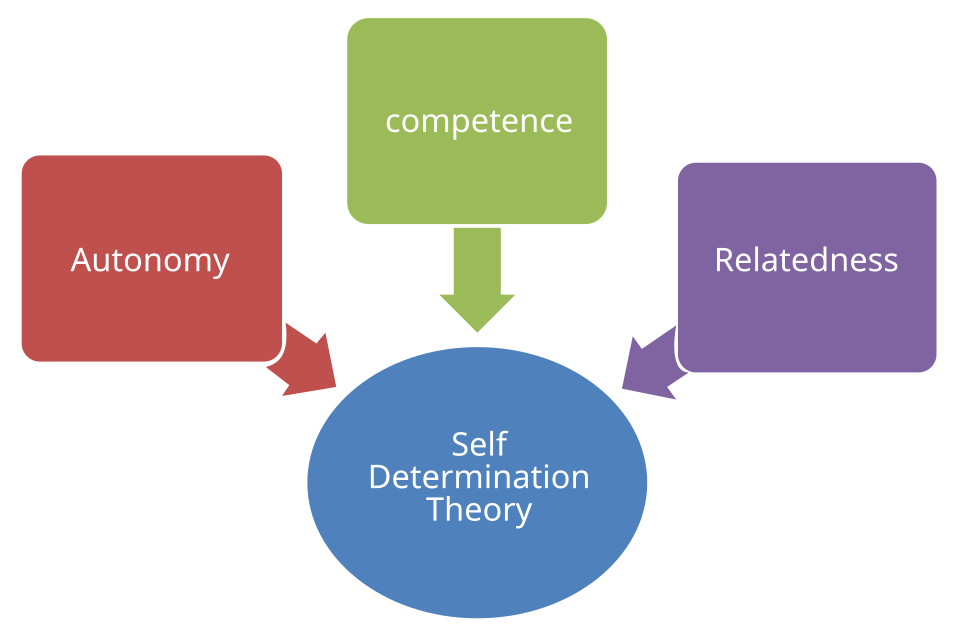
This diagram summarizes Self-Determination Theory by showing three basic psychological needs—autonomy, competence, and relatedness. In causal explanations, it helps you link motivation to whether behavior feels self-endorsed (autonomy), doable (competence), and socially connected (relatedness). Source
Motivation: Internal processes that energize, direct, and sustain behavior toward goals or away from unwanted outcomes.
Motivation helps explain why a behavior starts, why it continues, and why it stops. Two people may perform the same action for very different reasons: interest, reward, approval, fear, competition, or the desire to avoid failure. Because motives shape attention and effort, they are often central to causal explanation.
Why motives matter
Psychologists may distinguish between intrinsic motivation, where behavior is driven by interest or satisfaction, and extrinsic motivation, where behavior is driven by external outcomes such as praise, grades, or money. This matters because different motives can produce different levels of persistence and emotional involvement.
Motivation is not always stable. It can change with fatigue, success, frustration, expectation, and social context. For that reason, causal explanations based on motivation should avoid assuming that one motive permanently determines behavior. A person may act from mixed motives, and some motives may not be fully conscious. This means psychologists must think carefully about whether a behavior reflects immediate desire, long-term goals, or conflict between the two.
Influence and social causation
Behavior is also shaped by influence from other people and social environments. Influence includes direct pressure, such as instructions, rewards, or threats, and indirect pressure, such as norms, role expectations, modeling, or group identity.
Sources of influence
Causal explanations in psychology often ask whether a behavior occurred because a person wanted to do it, because they felt they should do it, or because they believed others expected it.
These possibilities can lead to the same outward action but imply different causes.
Influence is especially important because people rarely act in isolation. Family, peers, teachers, leaders, and wider social groups can alter what seems acceptable, desirable, or necessary. Social influence may increase conformity, reduce independent decision-making, or strengthen motivation if group goals are shared. As a result, causes are often distributed across both the individual and the social setting.
Interaction among causes
The specification emphasizes interaction, meaning that causes work together rather than separately.
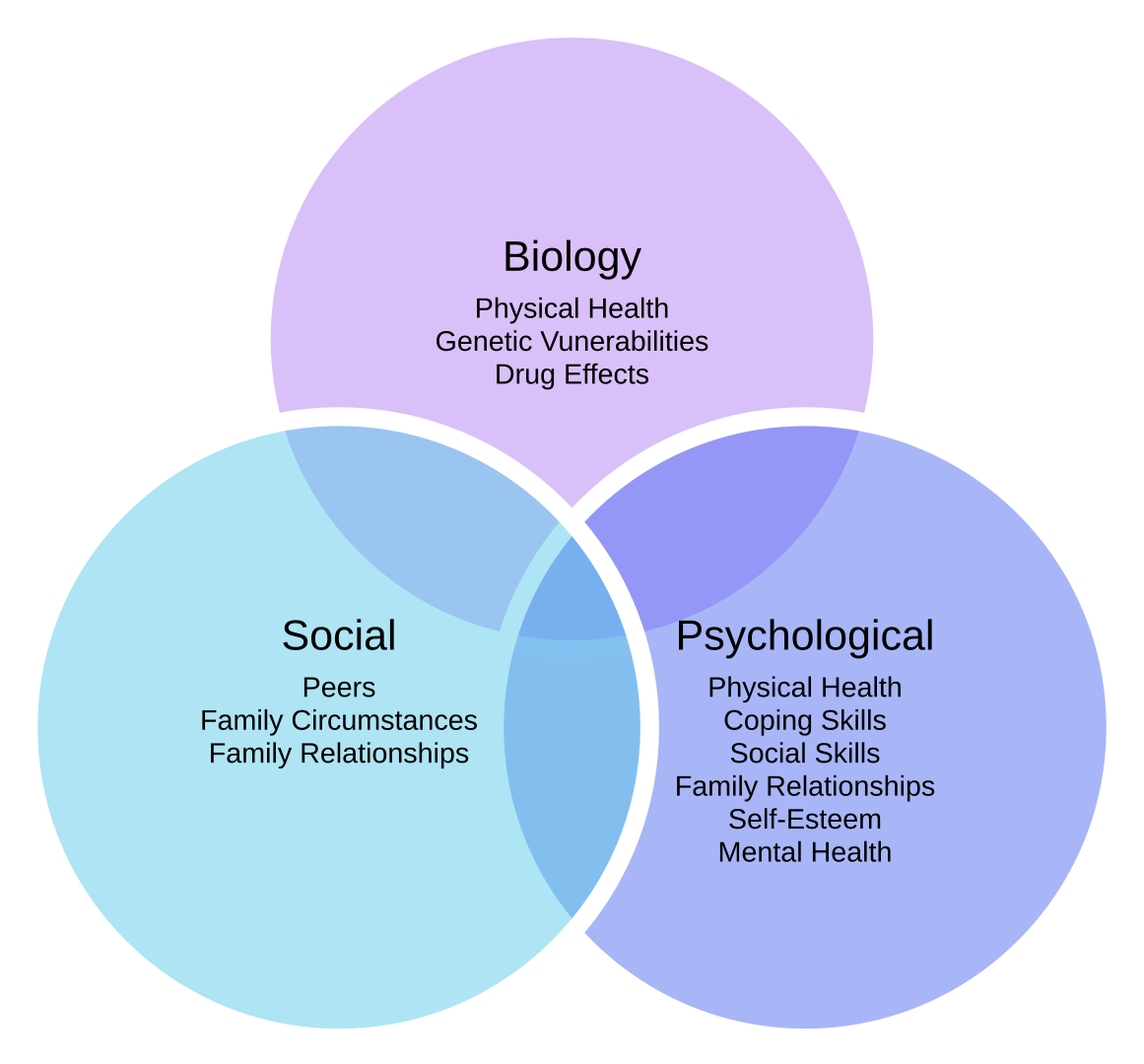
This Venn-style diagram shows how multiple levels of explanation overlap rather than operate independently. Even though it is framed as “biological–psychological–social,” it visually reinforces your key idea that behavior is often explained by interacting internal and external factors, not single causes. Source
Interaction: A situation in which the effect of one factor depends on another factor operating at the same time.
In many cases, agency, motivation, and influence combine. Social influence can change motivation by making some goals seem more valuable or urgent. Motivation can alter responsiveness to influence, because strongly committed individuals may resist pressure more than uncommitted individuals. Agency affects whether a person accepts, negotiates, or rejects influence.
Why single-cause explanations are limited
This interaction shows why single-cause explanations are usually weak. If psychologists say a person behaved in a certain way only because of peer pressure, they may miss personal goals or deliberate choice. If they explain the same behavior only through motivation, they may miss the social context that activated or shaped that motivation. A strong causal explanation considers how internal processes and external forces work together.
The timing of causes also matters. Influence may come first, motivation may intensify next, and agency may be expressed in the final decision. In other cases, an existing motive may lead a person to seek out particular groups, increasing exposure to influence. Causality in psychology is therefore dynamic rather than a simple one-way chain.
How psychologists frame explanations
When evaluating a causal explanation of behavior, psychologists often ask:
What choices were realistically available?
What goals, needs, or incentives were operating?
Who or what was influencing the person at that moment?
Did these factors strengthen, weaken, or change one another?
Was the behavior deliberate, pressured, habitual, or mixed?
These questions help avoid false either-or thinking. Human behavior is often best explained by a combination of personal agency, motivational processes, and social influence, rather than by one factor alone.
Practice Questions
(2 marks): Define agency in the context of causal explanations in psychology.
1 mark for stating that agency involves personal choice, intention, or control over action.
1 mark for linking agency to explaining why a behavior occurs.
(6 marks): Explain how agency, motivation, and influence may interact in a causal explanation of behavior.
1 mark for identifying agency as the person’s capacity for choice or control.
1 mark for identifying motivation as internal drives, goals, or reasons for behavior.
1 mark for identifying influence as pressure, expectations, or effects from other people or groups.
1 mark for explaining that influence can shape or change motivation.
1 mark for explaining that agency can affect whether influence is accepted, resisted, or negotiated.
1 mark for integrating all three into one coherent explanation of behavior.
FAQ
Perceived agency is how much control a person believes they have. Actual agency is how much control they truly have in the situation.
A person may feel powerless even when options exist, or feel fully in control when strong external limits are present. This matters because behavior is often guided by what people think they can do, not only by what is objectively possible.
Yes. A cause does not need to be fully conscious to influence behavior.
People may not be able to clearly explain why they acted, especially when habits, emotional reactions, or identity-based goals are involved. Psychologists may infer such motives from repeated patterns, persistence, or behavior that continues even when the person gives incomplete verbal reasons.
This often happens when social pressure affects outward behavior more strongly than personal belief.
Common reasons include:
wanting approval
avoiding conflict
protecting status in a group
obeying authority temporarily
In causal terms, the public action may be caused mainly by influence, while the private belief reflects a different motive or personal judgment.
Often yes, especially when those values are central to identity.
Resistance is usually stronger when:
the person has thought carefully about the issue
the value is tied to self-respect
supportive others share the same position
the pressure is seen as unfair or manipulative
However, even strong values can weaken under repeated pressure, uncertainty, or high emotional stress.
Short-term rewards are immediate, vivid, and emotionally powerful. Long-term goals usually require delay, planning, and self-control.
This creates a causal conflict between:
immediate motivation for comfort, pleasure, or relief
long-term motivation for achievement, health, or improvement
When immediate rewards are highly available, agency may need extra effort to keep behavior aligned with distant goals.