IB Syllabus focus: 'Researchers study ways to promote change, including stress management and healthy behaviour, while recognizing resistance to change.'
Psychologists are interested not only in explaining behavior, but also in changing it. This includes encouraging healthier habits, managing stress effectively, and understanding why people often resist change.
Why psychologists study behavior change
In psychology, change often refers to shifts in thoughts, emotions, or actions over time. Research on promoting change is practical because it can improve well-being, reduce risk, and help people function more effectively in everyday life.
Behavior change is especially important in areas such as:
stress management
exercise and physical activity
diet and nutrition
sleep habits
reducing harmful behaviors such as smoking or substance misuse
Behavior change: A measurable alteration in a person’s actions or habits over time, often as the result of psychological, social, or environmental influences.
Psychologists do not assume that people simply change when given information. Knowledge can help, but lasting change usually depends on motivation, reinforcement, social context, and the design of the intervention itself.
Promoting change
Principles of effective change
Research suggests that change is more likely when people:
understand why the change matters
believe they are capable of making it
have specific and realistic goals
receive feedback on progress
experience support from others
can practice the new behavior repeatedly until it becomes more routine
A common psychological principle is that small, manageable steps are often more effective than dramatic demands. If a goal feels too difficult, people may become discouraged and stop trying. By contrast, gradual success can increase confidence and commitment.
Another key principle is self-monitoring, where people track their own behavior. Recording stress levels, sleep, exercise, or diet can increase awareness and make patterns easier to identify. This can also help link behavior to triggers, such as tiredness, workload, or social pressure.
Stress management
Stress management is a major area of behavior change research because stress affects both mental and physical health.
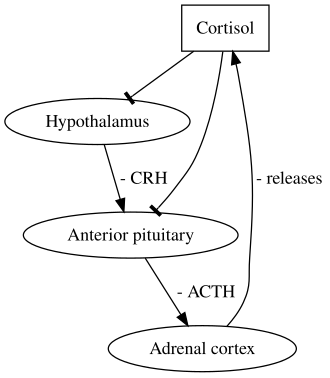
This schematic shows the hypothalamic–pituitary–adrenal (HPA) axis: stress triggers the hypothalamus to release CRH, which stimulates the anterior pituitary to release ACTH, leading the adrenal cortex to secrete cortisol. The inhibitory arrows represent negative feedback, where cortisol helps regulate (dampen) further HPA activation to maintain homeostasis. This pathway is central for understanding how chronic stress can keep the body in a prolonged physiological “stress state.” Source
Psychologists study ways to help individuals reduce stress responses or cope with demands more effectively.
Useful approaches may include:
relaxation techniques, such as controlled breathing or progressive muscle relaxation
cognitive strategies, such as reframing a situation so it seems more manageable
problem-focused coping, such as planning, prioritizing, and time management
social support, including talking to trusted friends, family, or professionals
healthy routines, such as sleep, exercise, and balanced daily structure
These methods work best when they are practiced consistently. Stress management is not only about reducing immediate tension; it is also about building habits that increase resilience over time.
Promoting healthy behavior
Psychologists also investigate how to encourage behaviors that protect long-term health. These behaviors may involve prevention rather than treatment, such as exercising regularly or improving nutrition before major health problems develop.
Strategies often include:
setting clear behavioral goals
using prompts or reminders
linking behavior to an existing routine
rewarding progress
reducing practical barriers
increasing social accountability
For example, a person is more likely to maintain exercise if the activity is convenient, enjoyable, and socially supported. Healthy behavior is therefore shaped not only by personal choice, but also by the surrounding environment.
Recognizing resistance to change
People do not always respond positively to efforts to change their behavior. Resistance is common, even when the new behavior is beneficial.
Resistance to change: A tendency to avoid, delay, reject, or abandon changes in behavior, even when those changes may be helpful or desirable.
Resistance does not necessarily mean stubbornness. In psychology, it is often understood as a predictable response to uncertainty, discomfort, or perceived threat.
Why resistance happens
There are several reasons why people resist change:
habits are automatic, so old behaviors are repeated with little thought
unhealthy behaviors may provide immediate rewards, while benefits of change are delayed
change can threaten a person’s identity or self-image
people may fear failure, judgment, or loss of control
the environment may continue to cue the old behavior
stress, fatigue, or low mood can reduce effort and persistence
Resistance may be active, such as arguing against advice, or passive, such as procrastination or inconsistency. It can also appear as relapse, when a person initially changes but later returns to previous behavior.
This is why psychologists view change as a process rather than a single event.
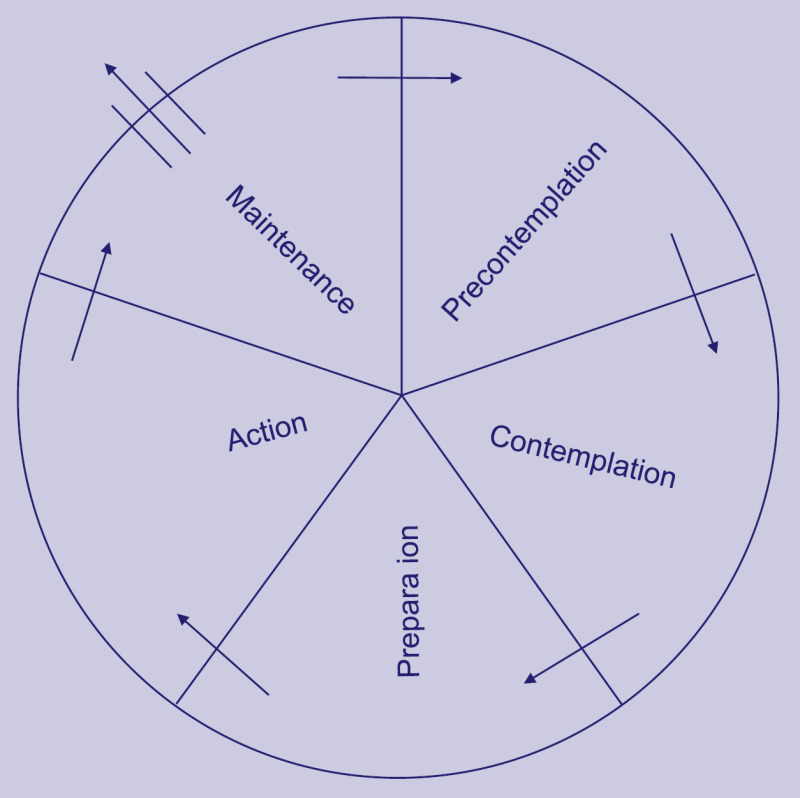
This diagram illustrates the Transtheoretical Model (Stages of Change), showing behavior change as movement through precontemplation, contemplation, preparation, action, and maintenance. The circular layout emphasizes that change is iterative and may involve cycling back (e.g., after relapse) before re-entering later stages. It is commonly used to design “stage-matched” interventions that fit a person’s readiness to change. Source
Starting a new behavior is only one stage; maintaining it is often harder.
Reducing resistance and supporting maintenance
Matching strategies to the person
To reduce resistance, psychologists often emphasize readiness, autonomy, and fit. Interventions are more effective when they match the person’s current motivation and circumstances. If advice is too demanding or feels imposed, resistance may increase.
Helpful approaches include:
offering choice rather than pressure
exploring the person’s own reasons for change
setting short-term achievable targets
identifying likely obstacles in advance
building coping plans for difficult situations
A person who expects setbacks is often better prepared to recover from them. This makes relapse less likely to become a complete return to old habits.
Maintenance over time
Long-term change usually depends on repetition and support. Psychologists therefore focus on:
booster strategies, such as follow-up check-ins
continued self-monitoring
rewards that encourage persistence
supportive relationships
changing the environment so the healthier behavior becomes easier
For stress management, this might mean scheduling regular breaks and practicing coping skills before stress becomes overwhelming. For healthy behavior, it might involve making the desired option the simplest one available.
Promoting change is therefore not just about persuading people. It involves understanding behavior in context and recognizing that resistance is a normal part of the change process.
Practice Questions
State one reason why people may resist behavior change. [2]
1 mark for identifying a valid reason, such as habit, fear of failure, immediate rewards from old behavior, low perceived control, or environmental cues.
1 mark for a brief accurate statement showing why this leads to resistance.
Explain how psychologists may promote healthy behavior or stress management while recognizing resistance to change. [6]
1–2 marks: Basic understanding of one valid strategy for promoting change.
3–4 marks: Clear explanation of at least one strategy linked to healthy behavior or stress management, with some recognition that resistance can interfere.
5–6 marks: Detailed explanation of one or more strategies, such as goal setting, self-monitoring, social support, gradual targets, or reducing barriers, clearly linked to the idea that resistance is normal and must be addressed through appropriate intervention design.
FAQ
Short-term change is often easier than maintenance because early motivation can fade.
Old habits usually have strong cues attached to them, such as places, times, emotions, or social situations. If those cues remain the same, the previous behavior can quickly return.
Maintenance is stronger when:
the new behavior is repeated often
rewards continue over time
the environment supports the change
people have a plan for setbacks
Stress can narrow attention toward immediate relief instead of long-term goals.
When people feel overwhelmed, they may choose behaviors that are fast and familiar, even if those behaviors are unhelpful. Stress can also reduce sleep, planning, patience, and self-control.
This means interventions may fail if they expect high effort during periods of high stress. In practice, simpler routines and automatic cues are often more useful than complicated plans.
No. Fear can grab attention, but it does not always produce lasting change.
If a message is too threatening, people may:
deny the problem
avoid the message
feel helpless
become defensive
Fear is more likely to help when it is paired with clear, realistic actions the person believes they can actually do. Without a sense of control, fear may increase resistance instead of reducing it.
Behavior is strongly influenced by group norms. If friends, family, or coworkers support a behavior, it feels more normal and easier to continue.
However, groups can also maintain unhealthy patterns. People may resist change if they fear exclusion, teasing, or conflict. This is especially true when a behavior is tied to belonging or identity.
Supportive groups help by:
normalizing the new behavior
providing encouragement
increasing accountability
reducing feelings of isolation
A lapse is a brief slip back into an old behavior. A relapse is a more complete return to the previous pattern.
This distinction matters because people often interpret one lapse as total failure. That reaction can make relapse more likely.
Psychologists often encourage a “recover quickly” mindset:
identify what triggered the lapse
avoid self-blame
restart the plan immediately
adjust the strategy if needed
Seeing setbacks as part of change can improve long-term persistence.