IB Syllabus focus: 'Psychologists evaluate treatment effectiveness and health promotion strategies at individual, local and global levels.'
Evaluating change in psychology means asking not only whether an intervention works, but also for whom, in what setting, and whether its benefits can be maintained and extended beyond one group.
What psychologists are evaluating
When psychologists evaluate treatments, they examine whether an intervention improves psychological or physical well-being. This evaluation should go beyond asking whether symptoms decrease. Psychologists also consider whether people function better in daily life, whether improvement lasts, and whether the intervention creates any negative effects.
Treatment effectiveness: The extent to which a psychological or health intervention produces meaningful improvement in symptoms, functioning, or well-being.
A treatment may appear successful if a person reports feeling better, but psychologists usually look for a wider pattern of change. They may consider reduced distress, improved relationships, better school or work performance, lower relapse rates, and greater ability to cope independently. A treatment that produces only short-term improvement may be less valuable than one that creates smaller but more stable benefits.
Evaluating treatment effectiveness
Core criteria
Psychologists often judge treatment effectiveness using several criteria at the same time:
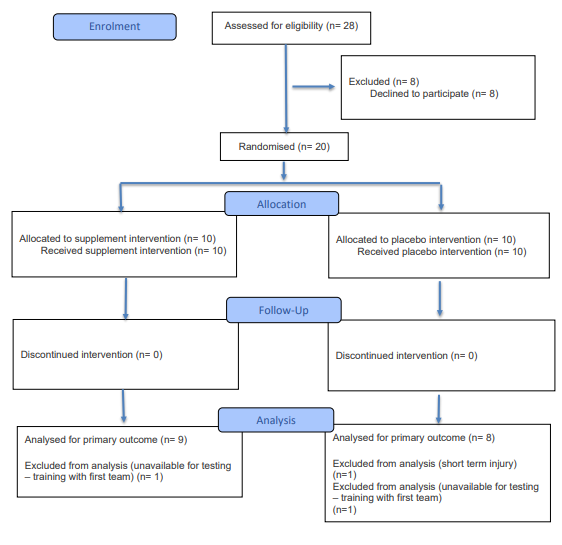
A CONSORT 2025-style randomized trial flow diagram showing participant progress through enrolment, allocation to groups, follow-up, and analysis. This kind of figure helps you evaluate feasibility (e.g., exclusions, attrition) and interpret outcomes in context—especially when results depend on who was actually analyzed. Source
Symptom reduction: Are the main symptoms less frequent, less intense, or less disruptive?
Improved functioning: Can the person manage school, work, family life, or social relationships more effectively?
Maintenance of change: Does improvement continue after treatment ends?
Relapse prevention: Is the person less likely to return to earlier patterns of difficulty?
Acceptability: Is the treatment tolerable, practical, and acceptable to the person receiving it?
Side effects or costs: Does the treatment create stress, stigma, dependence, or other unwanted outcomes?
These criteria matter because treatments can succeed in one sense and fail in another. For example, an intervention might reduce symptoms but be so demanding that many people stop using it. Psychologists therefore evaluate both outcomes and feasibility.
Treatment evaluation also requires attention to individual differences. A treatment that helps one person may not help another to the same degree. Age, severity of symptoms, family support, motivation, and cultural expectations can all influence whether a treatment is experienced as useful. Because of this, effectiveness is rarely a simple yes-or-no judgment.
Evaluating health promotion strategies
Psychologists also evaluate health promotion strategies, which aim to improve health before serious problems develop or to reduce risk at a population level.
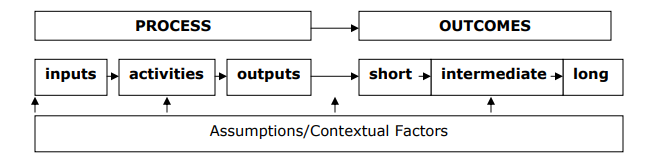
A general logic model layout that links program inputs and activities to outputs and short-, intermediate-, and long-term outcomes. This supports evaluation by clarifying what should be measured at each stage (process vs. outcomes) and by making maintenance/sustainability questions easier to plan for. Source
Health promotion: Planned action designed to improve health by preventing illness, reducing risk, or encouraging healthier behavior in individuals or populations.
Health promotion can target behaviors such as exercise, diet, sleep, safer sex, medication adherence, or reduced substance use. Unlike treatment, which usually responds to an existing problem, health promotion often focuses on prevention, education, and behavioral change.
Key evaluation questions
When evaluating health promotion, psychologists ask questions such as:
Did the strategy actually change behavior?
Did people understand and remember the message?
Did the change last over time?
Did the strategy reach the intended audience?
Was it equally effective across different groups?
Were there unintended effects, such as blame, anxiety, or exclusion?
A campaign may have strong scientific content but still fail if it does not engage the target group. Similarly, a strategy may improve knowledge without producing real behavioral change. For this reason, psychologists distinguish between awareness, attitude change, and actual behavior change.
Evaluation at different levels
Individual level
At the individual level, evaluation focuses on the outcome for a single person. Psychologists ask whether the treatment or health promotion strategy met that person’s needs. Relevant issues include personal goals, motivation, symptom history, and whether the intervention fits the person’s beliefs and circumstances.
This level is especially important because success in psychology is often personal. A meaningful outcome might be fewer panic attacks, better sleep, or the ability to return to school. A strategy can be valuable even if its effect is modest, as long as the improvement matters in the person’s life.
Local level
At the local level, psychologists examine how well an intervention works in a particular school, clinic, neighborhood, or community. Here, effectiveness depends partly on context. Resources, staff training, language, social norms, and access to services can all affect outcomes.
An intervention that works well in one community may be less effective in another if there are different barriers to participation. Local evaluation therefore considers:
Access: Can people realistically take part?
Relevance: Does the intervention address local needs?
Engagement: Do people trust and use the service or campaign?
Sustainability: Can the strategy continue with available resources?
Global level
At the global level, psychologists consider whether a treatment model or health promotion strategy can be applied across countries or cultures. A globally useful intervention should not be judged only by success in one region. It must also be examined for scalability, cultural relevance, and equity.
Global evaluation raises broader questions:
Can the strategy be adapted to different languages and cultural values?
Is it affordable in low-resource settings?
Does it address major global health priorities?
Can it be implemented through different health systems?
A strategy that is effective in a wealthy urban setting may not transfer easily to rural or lower-income contexts. This means that global success depends not only on psychological theory but also on practical implementation.
Interpreting evidence carefully
Psychologists usually evaluate treatments and health promotion strategies by combining different kinds of evidence. They may use symptom scores, attendance records, behavioral outcomes, follow-up data, and participant feedback. Looking at more than one outcome gives a fuller picture of success.
Interpretation should remain cautious. Improvement may be uneven, delayed, or limited to certain groups. Some interventions produce strong short-term gains but weak long-term outcomes. Others show modest average effects while being highly useful for particular individuals or communities. For that reason, evaluation in psychology is best understood as a process of judging how well, for whom, and under what conditions an intervention promotes meaningful change.
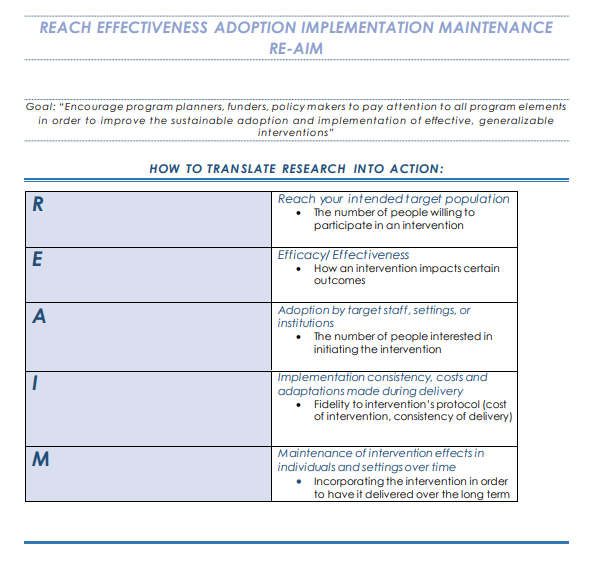
A one-page RE-AIM summary that defines the five dimensions used to evaluate real-world public health impact: Reach, Effectiveness, Adoption, Implementation, and Maintenance. It’s especially helpful for connecting individual outcomes (effectiveness/maintenance) with local and organizational factors (adoption/implementation) that determine whether a strategy works beyond one setting. Source
Practice Questions
State two criteria psychologists may use to evaluate treatment effectiveness. [2]
1 mark for each valid criterion stated, up to 2 marks.
Acceptable answers include:
symptom reduction
improved daily functioning
maintenance of improvement over time
relapse prevention
acceptability to the client
low level of unwanted side effects or costs
Explain why psychologists should evaluate health promotion strategies at the individual, local, and global levels. [6]
1-2 marks for explaining the individual level:
whether the strategy changes behavior or well-being for a person
whether it fits personal needs, motivation, or circumstances
1-2 marks for explaining the local level:
whether it works in a specific community, school, clinic, or region
whether local access, resources, and cultural relevance affect success
1-2 marks for explaining the global level:
whether the strategy can be adapted across countries or cultures
whether it is scalable, equitable, and practical in different systems
Full marks require clear explanation of all three levels, not just listing them.
FAQ
Efficacy refers to whether an intervention works under highly controlled conditions, such as a tightly managed research study.
Effectiveness refers to whether it works in real-world conditions, where clients may miss sessions, staff may vary in training, and resources may be limited.
A treatment can show high efficacy but lower effectiveness if everyday delivery is less consistent.
High dropout rates may suggest that an intervention is too demanding, unappealing, expensive, or poorly matched to participants’ needs.
They matter because:
results may look stronger than they really are if only the most motivated people remain
low completion reduces real-world usefulness
dropout patterns can reveal barriers such as stigma, transport, time, or language
An intervention is harder to recommend if many people cannot complete it.
Scalability means a strategy can be expanded without losing too much quality or impact.
Psychologists look at:
training required for staff
cost per participant
dependence on specialized equipment
ease of adapting materials
whether results remain strong in larger, more diverse groups
A program that only works with expert staff and heavy funding may be effective locally but difficult to scale.
People may report improvement because they want to please the therapist, justify the time they invested, or present themselves positively.
Self-report can still be useful, but it may miss:
unconscious habits
behavior outside the session
relapse after the program ends
That is why psychologists often compare self-report with other indicators, such as attendance, behavior records, or follow-up outcomes.
They may consider cost-effectiveness, meaning whether the benefits are large enough to justify the money, time, and staff required.
This does not mean choosing the cheapest option. A more expensive program may still be worth using if it:
prevents relapse
reduces hospital visits
improves long-term functioning
reaches high-risk groups effectively
Cost judgments are especially important when resources are limited and one program must be chosen over another.