IB Syllabus focus: 'Psychologists use brain imaging, twin studies, virtual reality simulations, questionnaires and other techniques to measure behaviour.'
Measuring behavior in psychology requires tools that capture actions, thoughts, and biological processes in different ways. Each technique produces a different kind of evidence, so psychologists must choose methods that fit the behavior being studied.
Why psychologists need different techniques
Psychologists rarely measure behavior with a single tool because human behavior can be visible, self-reported, or inferred from biological activity. A technique is useful only if it matches the phenomenon being studied. For example, a questionnaire can capture beliefs or habits, while brain imaging records neural activity linked to a task.
Some techniques measure behavior more directly, such as recording responses in a simulation or observing actions in a task. Others measure indicators that help psychologists infer behavior, such as brain activation, genetic similarity, or physiological arousal. This means that measurement is not just about collecting data; it is also about deciding what kind of data best represents the target behavior.
Brain imaging
Brain imaging is used when psychologists want to link behavior to the brain’s structure or activity.
Brain imaging: Methods that produce images or recordings of brain structure or brain activity in order to investigate links between neural processes and behavior.
Common examples include:
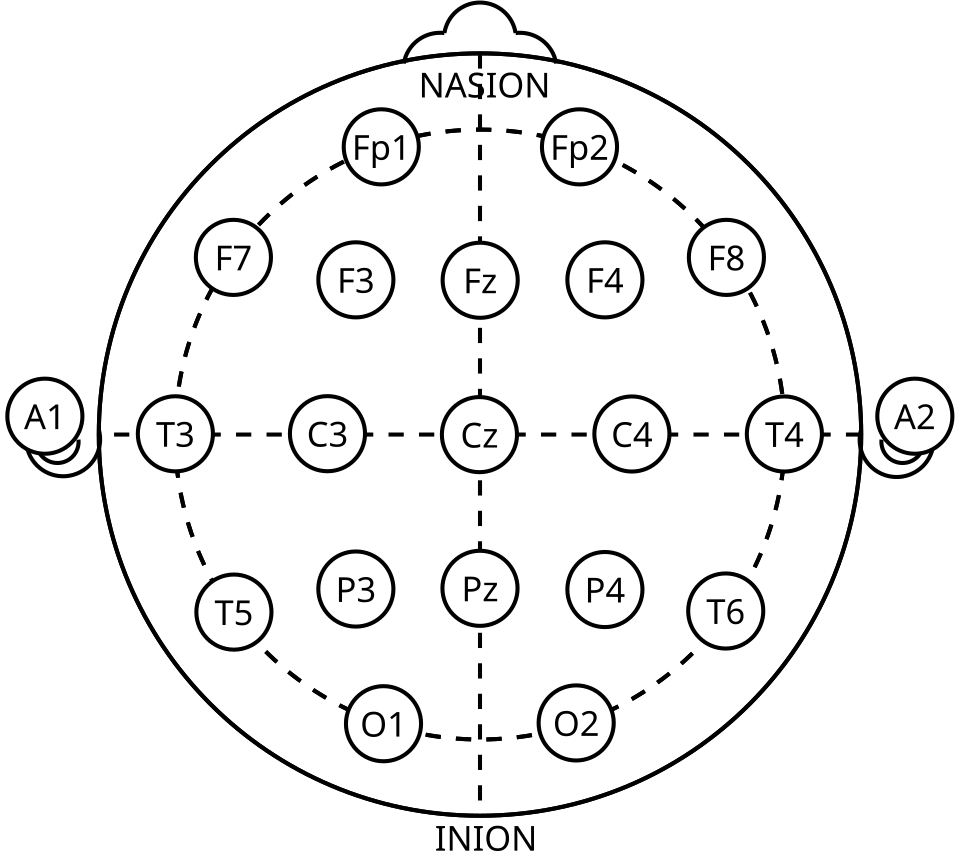
This diagram shows the standard 10–20 system used to place EEG electrodes across the scalp. The labeled positions (e.g., F, C, P, O regions) support consistent measurement of electrical activity across participants and studies. It helps explain how EEG can capture time-sensitive neural responses during attention, perception, or memory tasks. Source
MRI, which shows brain structure
fMRI, which shows changes associated with brain activity
EEG, which records electrical activity over time
These methods are especially useful for measuring behavior that depends on attention, memory, emotion, or decision-making, because they provide biological evidence during or around a task. Brain imaging can also be valuable when participants cannot describe their mental processes clearly.
However, brain imaging usually measures correlates of behavior rather than behavior itself. A scan may show that a brain area is active while someone performs a task, but that does not automatically reveal exactly what the person is thinking. Brain imaging is also often expensive, technically demanding, and sometimes carried out in artificial settings that may influence participants’ responses.
Twin studies
A different measurement strategy is the twin study, which compares patterns of similarity between monozygotic and dizygotic twins.
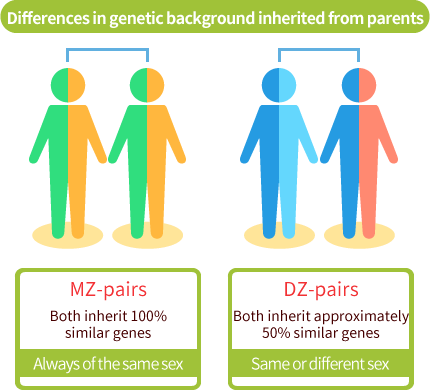
This diagram contrasts monozygotic (identical) and dizygotic (fraternal) twins by showing their different developmental origins. It clarifies why twin studies are informative: monozygotic twins share (nearly) all their genes, whereas dizygotic twins share, on average, about half. That difference allows psychologists to compare similarity patterns (e.g., concordance rates) to estimate genetic influence on behavior. Source
Twin study: A research technique that compares behavioral similarity in identical and fraternal twins to estimate the contribution of genetic factors.
Twin studies do not measure behavior in the same immediate way as a scan or questionnaire. Instead, they measure how strongly traits or behaviors are shared across different types of twins. Psychologists may examine concordance rates, personality scores, symptom patterns, or cognitive performance.
This technique is useful because identical twins share more genetic material than fraternal twins. If identical twins are more similar on a behavior, this suggests a stronger genetic contribution. Twin studies have been important in research on intelligence, mental disorders, and personality.
Their main limitation is that they depend on assumptions. For example, psychologists must consider whether identical and fraternal twins experience equally similar environments. Twin studies also cannot identify the exact gene or mechanism involved. They are best understood as a way of estimating genetic influence on behavior, not as a complete explanation of that behavior.
Virtual reality simulations
Virtual reality simulations allow psychologists to place participants in a controlled but lifelike environment and measure what they do.
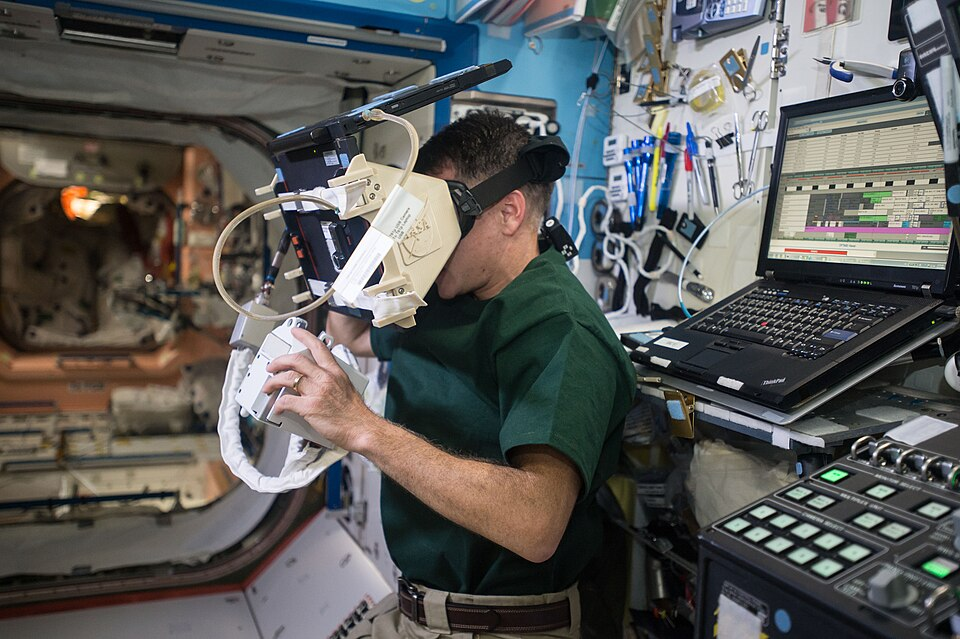
This photo shows a participant wearing a head-mounted display (VR headset), illustrating how virtual environments can immerse participants while researchers control stimuli and record behavior. In psychological research, this setup supports precise measurement of actions (e.g., navigation choices or response timing) in situations that would be unsafe or impractical in real life. It also highlights a key limitation discussed in the notes: the equipment itself can make the setting feel artificial for some participants. Source
This is especially useful when real-world behavior would be difficult, dangerous, or impractical to study directly.
In virtual environments, psychologists can measure:
navigation
reaction time
risk-taking
social responses
attention to specific cues
A major strength of virtual reality is that the researcher can standardize the setting while still creating a more realistic experience than a simple laboratory task. This helps when studying behavior in contexts such as driving, public speaking, or emergency decision-making.
Limitations still exist. Participants may behave differently if the simulation feels artificial, and some people experience cybersickness or discomfort. Familiarity with gaming technology can also affect performance, which means the measured behavior may partly reflect technological experience rather than the target variable alone.
Questionnaires
Questionnaires measure behavior through self-report. Participants answer a set of standardized questions about their attitudes, emotions, experiences, or typical actions.
Questionnaire: A structured set of written questions used to collect self-reported psychological or behavioral data.
Questionnaires are widely used because they are efficient. A psychologist can collect data from many people in a relatively short time, and responses can often be scored and compared easily. They are especially useful for behaviors that occur outside the lab, such as sleep habits, study patterns, health behaviors, or social attitudes.
Questionnaires can include:
closed questions, which produce fixed responses
rating scales, which measure degree or intensity
open questions, which allow fuller responses
The main challenge is that questionnaires depend on what participants are willing and able to report. Responses can be shaped by social desirability, poor memory, misunderstanding of wording, or guessing what the researcher wants. Because of this, questionnaires are best seen as measures of reported behavior rather than guaranteed records of actual behavior.
Other techniques for measuring behavior
The syllabus also refers to other techniques, reminding students that psychologists are not limited to the four methods above. Additional approaches include:
observations, which record visible behavior
interviews, which gather detailed verbal accounts
physiological measures, such as heart rate or skin conductance
eye-tracking, which shows visual attention patterns
These techniques differ in whether they measure overt actions, subjective experience, or bodily responses associated with behavior. For example, observation is useful when behavior can be seen directly, while physiological measures are useful when behavior involves arousal or stress.
The best measurement strategy is the one that captures the target behavior as directly and accurately as the research question allows.
Practice Questions
Identify one reason why virtual reality simulations can be useful for measuring behavior.
1 mark for identifying a relevant reason, such as control, realism, or safety.
1 mark for explaining how that reason helps psychologists measure behavior.
Discuss the use of brain imaging and questionnaires as techniques for measuring behavior.
1 mark for describing brain imaging as a way of recording brain structure or activity linked to behavior.
1 mark for explaining one strength of brain imaging.
1 mark for explaining one limitation of brain imaging.
1 mark for describing questionnaires as a self-report measure of behavior, attitudes, or experiences.
1 mark for explaining one strength of questionnaires.
1 mark for explaining one limitation of questionnaires.
FAQ
fMRI is better for showing where activity is happening in the brain, because it gives strong spatial detail.
EEG is better for showing when activity happens, because it records electrical changes very quickly. This makes EEG useful for timing attention or perception, while fMRI is often better for locating brain systems involved in a task.
The comparison only works if psychologists can contrast two levels of genetic similarity.
Monozygotic twins share nearly all their genes.
Dizygotic twins share roughly half, like ordinary siblings.
If identical twins are much more similar on a behavior than fraternal twins, researchers infer a stronger genetic influence. Without both groups, that comparison becomes much weaker.
A useful simulation does not need to look perfect, but it should produce the same kinds of responses that the real situation would trigger.
Psychologists often improve realism by:
matching sounds and visuals to the setting
allowing natural movement or interaction
giving participants believable goals
reducing lag or technical glitches
The key issue is whether participants respond behaviorally as if the situation matters.
A Likert scale asks participants to rate agreement, frequency, or intensity on a fixed range, such as 1 to 5 or 1 to 7.
It is popular because it turns subjective judgments into data that are easier to compare across participants. It also gives more nuance than a simple yes/no question. However, scale labels must be clear, or different participants may interpret the same number differently.
They usually run a pilot test with a small sample first.
This helps them check:
whether items are confusing
whether questions are too long or repetitive
whether response options cover likely answers
whether sensitive wording discourages honest replies
After piloting, researchers may rewrite items, remove weak questions, or adjust the order so the final questionnaire is clearer and more consistent.