IB Syllabus focus: 'Ethical standards can influence findings, including through consent, withdrawal rights, sampling bias and anonymity in self-report data.'
Ethics do not only protect participants; they can also shape who takes part, what they say, and which results researchers can confidently interpret in psychological studies.
How ethics shapes findings
Ethical procedures influence research results because they affect participation, disclosure, and retention. In psychology, findings come from people who agree to join, stay in the study, and provide usable data. This means ethics is not separate from methodology: it helps determine the final sample and the quality of the evidence.
When researchers interpret results, they should ask two linked questions:
Did ethical protections change the kind of participants who took part?
Did ethical protections change the honesty, completeness, or amount of data collected?
Both questions matter because findings may reflect not only psychological processes, but also the ethical conditions under which the data were produced.
Consent and the shape of the sample
Informed consent protects participant autonomy, but it can also influence findings before the study even begins.
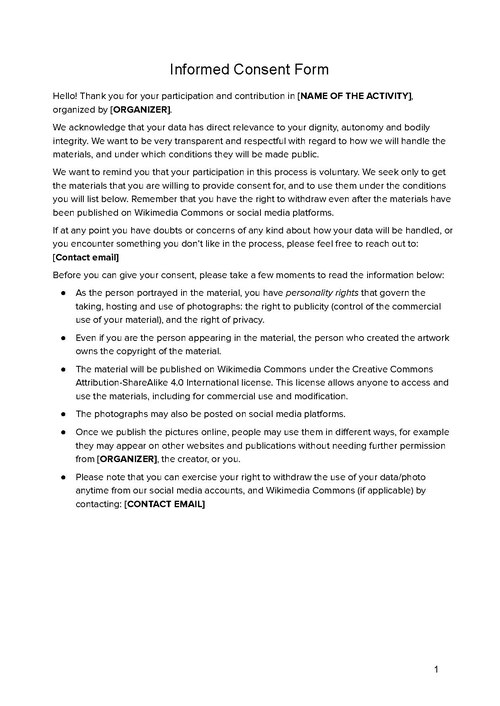
A sample informed-consent document demonstrating the typical components of consent (purpose, permissions, and a clear record of voluntary agreement). Seeing the form helps explain how the consent process can encourage self-selection and influence who ultimately enters a study. Source
Informed consent: A process in which participants are given sufficient information about a study and freely agree to take part.
People who consent are often different from people who refuse. Volunteers may be more educated, more confident, less distressed, or more interested in psychology. In sensitive research, such as studies of trauma, addiction, or prejudice, people who feel most uncomfortable may decline to participate. As a result, the final sample may exclude exactly the participants whose experiences are most relevant.
Consent forms can also affect expectations. If participants are told enough about procedures to make a free choice, they may guess the topic or purpose of the study. This can influence later responses, especially in attitude measures or interviews. Ethical transparency is necessary, but it may reduce spontaneity and alter how naturally people respond.
Withdrawal rights and missing data
The right to withdraw means participants can leave a study at any time, including refusing to answer particular questions.
This ethical protection is essential, yet it may affect results through missing data or attrition, meaning loss of participants over time.
If withdrawal happens randomly, the main effect may be a smaller sample. However, withdrawal is often systematic. Participants may leave because they feel bored, anxious, embarrassed, or negatively affected by the procedure. If those people are more likely to drop out than others, the remaining sample is no longer balanced.
For example, if participants who experience the highest stress withdraw from a stress study, the final findings may underestimate the negative effects of the situation. In longitudinal research, dropout can be especially important because the people who remain until the end may differ in motivation, well-being, or life circumstances from those who leave earlier.
Researchers therefore need to report:
how many participants withdrew
when withdrawal occurred
whether withdrawal seemed related to the topic or procedure
Without this information, readers may assume the final results represent the original sample more accurately than they actually do.
Sampling bias as an ethical issue
Ethical standards can also create sampling bias by limiting who can be recruited or who feels able to participate.
Sampling bias: A distortion in the sample caused by selecting participants in a way that makes some groups more likely to be included than others.
Some groups require extra protections, such as children, people with severe mental illness, or individuals in dependent relationships. These protections are ethically appropriate, but they can make recruitment harder. Researchers may then rely on lower-risk, more accessible participants, such as university students or community volunteers. This produces samples that are easier to study ethically, but less representative of the wider population.
Ethically cautious recruitment can therefore improve participant welfare while narrowing generalizability. Findings may be valid for the people who took part, yet less useful as claims about all people in similar real-world situations.
Anonymity and self-report data
In many studies, researchers use self-report data, meaning information participants provide about themselves through questionnaires, surveys, diaries, or interviews. Here, anonymity can strongly influence results.
When responses are anonymous, participants may feel safer disclosing stigmatized attitudes, illegal behavior, symptoms, or socially disapproved experiences. This can increase honesty and reduce social desirability bias, where people answer in ways that make them look better. Anonymous self-reports are therefore often more accurate for sensitive topics.
If anonymity is weak or absent, participants may censor themselves. They may minimize aggression, substance use, rule breaking, or discriminatory beliefs because they fear judgment or consequences. In this case, ethical handling of identity does not just protect privacy; it directly affects the pattern of findings.
At the same time, anonymity creates trade-offs. Researchers may be unable to follow up unclear answers, connect responses across time, or remove data after full anonymization. This means ethically safer disclosure can sometimes reduce the amount of detail or flexibility available in data analysis.
Interpreting results ethically
Ethics and results should be read together. A study with strong ethical protections is not weaker for that reason, but its findings must be interpreted in context. Psychologists should examine whether:
consent procedures encouraged self-selection
withdrawal changed the composition of the sample
ethical limits on recruitment produced sampling bias
anonymity increased honesty in self-report measures
These issues matter for interpretation. Results may be highly trustworthy about the people who agreed, remained, and responded honestly, while still being limited in how far they can be generalized. Careful psychologists do not treat ethics as an external rule added after research design; they recognize that ethical standards actively shape the data from which conclusions are drawn.
Practice Questions
State one way the right to withdraw can influence research findings.
1 mark for stating that withdrawal can create missing data, attrition, or a reduced sample size.
1 mark for explaining that if particular participants withdraw more than others, the results may become biased, less representative, or may underestimate/overestimate an effect.
Discuss how ethical standards can influence research findings, with reference to consent, withdrawal rights, sampling bias, and anonymity in self-report data.
1 mark for explaining that consent can create self-selection because volunteers may differ from non-volunteers.
1 mark for linking consent to findings, such as a less representative sample or altered participant expectations.
1 mark for explaining that withdrawal rights can produce attrition or missing data.
1 mark for linking withdrawal to distorted findings if dropout is systematic.
1 mark for explaining that ethical recruitment restrictions can contribute to sampling bias and reduced generalizability.
1 mark for explaining that anonymity in self-report data can reduce social desirability and increase honest disclosure, or that lack of anonymity can reduce honesty.
FAQ
Requiring parental or guardian consent can reduce participation from adolescents who want privacy, especially in research on mental health, sexuality, substance use, or family conflict.
This may lead to samples that are more compliant, lower risk, or more closely supervised than the wider adolescent population. As a result, prevalence rates and self-reported difficulties may appear lower than they really are.
Anonymity means the researcher cannot identify which response belongs to which person.
Confidentiality means the researcher knows the identity but agrees to protect it from disclosure.
This matters because participants may respond more honestly under anonymity than under confidentiality, especially for stigmatized topics. If participants think the researcher can trace their answers, they may still edit or soften what they report.
Usually, only before full anonymization. Once identifying links are permanently removed, the researcher may no longer know which data belong to which participant.
This creates an ethical timing issue: researchers must explain clearly when withdrawal of data is still possible. If that point is not understood, participants may believe they have more control over their data than the study can actually provide.
Online studies can increase perceived distance and privacy, which may encourage more honest disclosure on sensitive topics.
However, online participants may also skim consent forms, misunderstand withdrawal procedures, or worry about digital tracking. In face-to-face settings, participants may feel more pressure to continue once they have already met the researcher. So the mode of data collection can change both ethical perceptions and the findings that result.
In some settings, researchers must report disclosures involving immediate risk, abuse, or serious harm. Even when this is ethically required, participants may become less willing to reveal sensitive information if they know confidentiality has limits.
This can reduce honesty in self-report data, especially in research on violence, self-harm, or victimization. Researchers need to explain these limits clearly so participants understand them before deciding what to disclose.