IB Syllabus focus: 'Psychologists should protect marginalized groups from stigma, communicate uncertainty and advocate for evidence-based policy when appropriate.'
Psychological findings do not stay in journals: they shape media stories, professional practice, and policy decisions. Social responsibility requires psychologists to think carefully about who may be helped, harmed, or misrepresented when findings are used.
Social responsibility in applying findings
Psychologists do more than produce knowledge. Their work can influence how schools respond to learning differences, how health systems classify risk, how courts interpret behavior, and how the public understands social groups. Because research can affect real lives, psychologists have a responsibility to consider the wider consequences of publication, interpretation, and application.
In this subtopic, social responsibility has three linked demands:
protecting marginalized groups from stigma
communicating uncertainty honestly
supporting policy with sound evidence when appropriate
These responsibilities matter because psychological findings are often simplified when they move from research settings into news reports, social media, services, or government policy.
Protecting marginalized groups from stigma
Research can accidentally reinforce negative stereotypes about groups that already experience social disadvantage. This may happen when psychologists use deficit-based language, treat group averages as fixed traits, or ignore the social conditions shaping behavior. Even accurate findings can be harmful if they are framed carelessly.
Psychologists should therefore be cautious when studying or describing differences linked to race, ethnicity, gender, sexuality, disability, age, class, or migration status. Responsible practice includes asking whether the wording of a finding could label a group as naturally inferior, dangerous, irrational, or abnormal.
Important safeguards include:
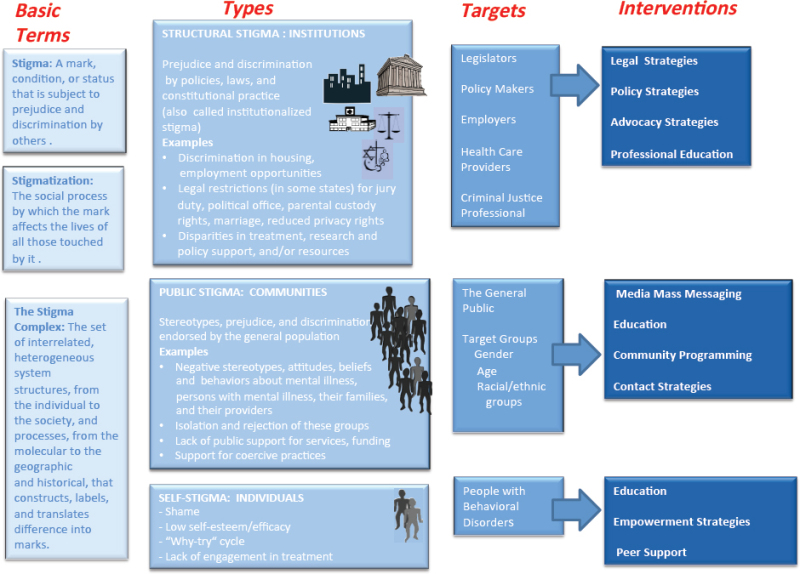
This diagram breaks stigma into three interacting levels (structural, public, and self) and summarizes typical consequences of each level, along with targets for stigma-change interventions. It supports the idea that even accurate research can cause harm if it feeds into institutional practices or public stereotypes. Use it to visually anchor how psychologists can reduce stigma by anticipating downstream interpretations of their work. Source
using respectful, non-stigmatizing language
avoiding claims that present a group difference as universal
making clear that average patterns do not describe every individual
considering environmental, historical, and structural influences on behavior
anticipating how the findings might be interpreted outside the research context
This is especially important when findings are likely to be used by institutions with power, such as schools, employers, health services, or the legal system. A careless interpretation can contribute to exclusion, discrimination, or self-stigma.
Communicating uncertainty responsibly
Psychological evidence is rarely absolute. Findings may depend on the sample, the setting, the measures used, or the time period in which the study was conducted. Socially responsible psychologists do not hide these limits when presenting results to other professionals, policymakers, journalists, or the public.
Communicating uncertainty does not weaken science. Instead, it improves accuracy and trust. It means showing where confidence is stronger and where claims must remain cautious. This matters because bold, simple statements often spread faster than careful ones.
Responsible communication of uncertainty includes:
stating what the evidence does support
stating what the evidence does not yet show
identifying important limitations in sampling or context
avoiding exaggerated language such as “proves,” “always,” or “certainly”
acknowledging when evidence is mixed, new, or still developing
Psychologists should also distinguish between a research finding and its interpretation. A finding may show a pattern, but the meaning of that pattern may still be debated. Clear communication helps prevent misuse by media outlets, organizations, or political actors who may prefer certainty over accuracy.
Why uncertainty matters ethically
If uncertainty is hidden, weak evidence can be treated as settled fact. This can lead to harmful interventions or unfair policy decisions. A tentative finding may be used to justify screening, labeling, or restricting opportunities for particular groups. Honest communication reduces the risk that people will be judged on claims that are not yet secure.
It also supports public trust. When psychologists are transparent about limits, they show that science is a process of ongoing testing rather than a source of unquestionable truths.
Advocating for evidence-based policy
Psychological research can help guide policy in areas such as education, mental health, public health, work, and criminal justice. However, social responsibility requires that policy advocacy be evidence-based, not driven mainly by ideology, intuition, or isolated findings.
In practice, this means psychologists should be careful about when and how they recommend policy action. Advocacy is most justified when:
the evidence is sufficiently strong or consistent
the findings are relevant to the target population
likely benefits and risks have been considered
the policy recommendation stays within the psychologist’s expertise
A socially responsible psychologist does not assume that one study should automatically become a rule for everyone. Good policy usually depends on a body of evidence, not a single result.
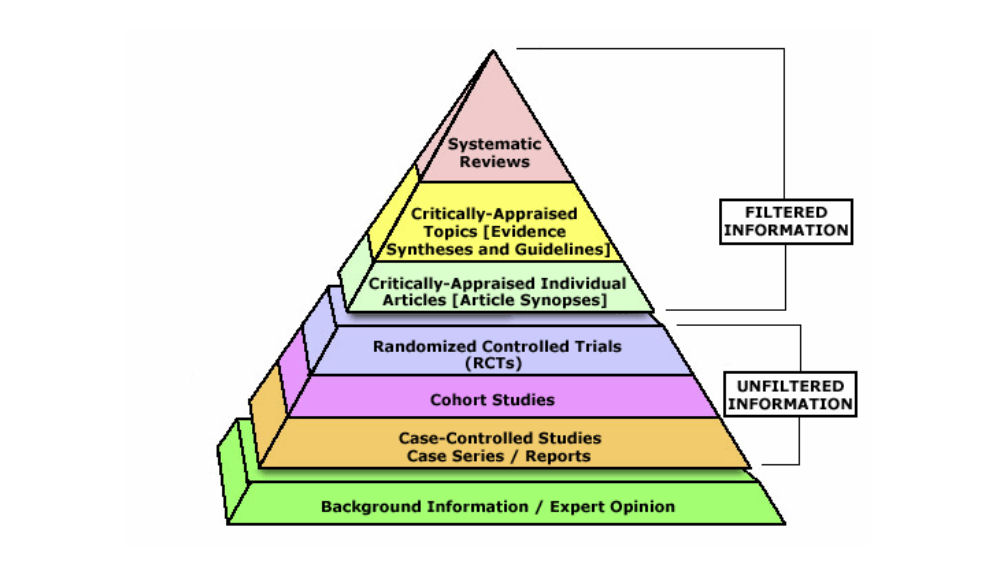
This evidence pyramid ranks common research sources by typical evidential strength, placing systematic reviews and other ‘filtered’ syntheses above individual primary studies. It helps explain why policy recommendations should usually rely on converging findings across multiple studies rather than one striking result. The labels also support exam-ready vocabulary for discussing how evidence is appraised before it informs policy. Source
It should also remain open to revision if better evidence appears.
Evidence-based does not mean value-free
Policy decisions involve values as well as data. Psychologists can inform decisions with research, but they should be transparent about where the evidence ends and where broader social choices begin. This distinction helps prevent experts from presenting personal opinions as if they were purely scientific facts.
Good practice in public application
When applying findings beyond research, psychologists should think ahead about possible social effects. Strong practice includes:
checking whether public messages could increase stigma
consulting the likely real-world meaning of labels and categories
preparing clear statements about limits and uncertainty
correcting public misinterpretations when possible
supporting policies that can be monitored, evaluated, and changed if harmful effects appear
Practice Questions
State two ways psychologists can communicate uncertainty when presenting findings to the public. [2]
1 mark for each relevant way stated, up to 2 marks.
Acceptable answers include:
reporting limitations
avoiding absolute or exaggerated language
noting that evidence is still developing
identifying sample or context boundaries
separating findings from interpretation
Explain two social responsibilities psychologists should consider when applying research findings to public policy. [6]
For the first responsibility:
1 mark for accurately identifying a relevant responsibility
1 mark for explaining what it means in practice
1 mark for clearly linking it to public policy or application of findings
For the second responsibility:
1 mark for accurately identifying a relevant responsibility
1 mark for explaining what it means in practice
1 mark for clearly linking it to public policy or application of findings
Relevant responsibilities include:
protecting marginalized groups from stigma
communicating uncertainty honestly
using converging evidence rather than relying on one study
staying within the limits of the evidence
considering possible harms or unintended effects
FAQ
They should correct the record clearly and publicly when possible.
Useful responses include:
issuing a clarification statement
explaining what the study did and did not show
correcting overgeneralizations about groups
reminding audiences about limits, context, and uncertainty
A response should stay evidence-focused rather than becoming a personal argument.
Yes. Broad promotion may be inappropriate when the evidence is too preliminary or especially vulnerable to misuse.
Common reasons include:
a very small or unrepresentative sample
lack of replication
high risk of stigmatizing a group
likely media oversimplification
findings outside the researcher’s area of expertise
In such cases, cautious professional discussion may be more responsible than public promotion.
A recommendation is premature when the evidence base is too weak for real-world action.
Warning signs include:
one isolated study
inconsistent findings across studies
unclear measurement
poor fit between the research sample and the target population
no assessment of possible harms
Premature recommendations can create ineffective or unfair policies that are difficult to reverse later.
Because public audiences often turn averages into stereotypes.
A real average difference does not mean:
every person in the group fits the pattern
the difference is fixed
the difference is caused by biology
the difference justifies unequal treatment
Harm increases when institutions use simplified group data to label individuals or limit opportunities.
Open science can reduce overclaiming and improve public accountability.
Helpful practices include:
preregistration
transparent reporting of methods
sharing materials when ethical
encouraging replication
publishing null or mixed findings
These practices make it easier to judge how strong the evidence really is before findings are used in policy or public debate.