
Water as the medium for life
The first cells originated in water.
Water remains the medium in which most processes of life occur.
The syllabus therefore links both the origin and continuing processes of life with an aqueous medium.
Cohesion and surface tension
Hydrogen bonding produces cohesion between water molecules.
One consequence of cohesion is surface tension at water surfaces.
Water surfaces can therefore function as habitats for organisms.
Connect surface tension directly to the cohesive behaviour of water.
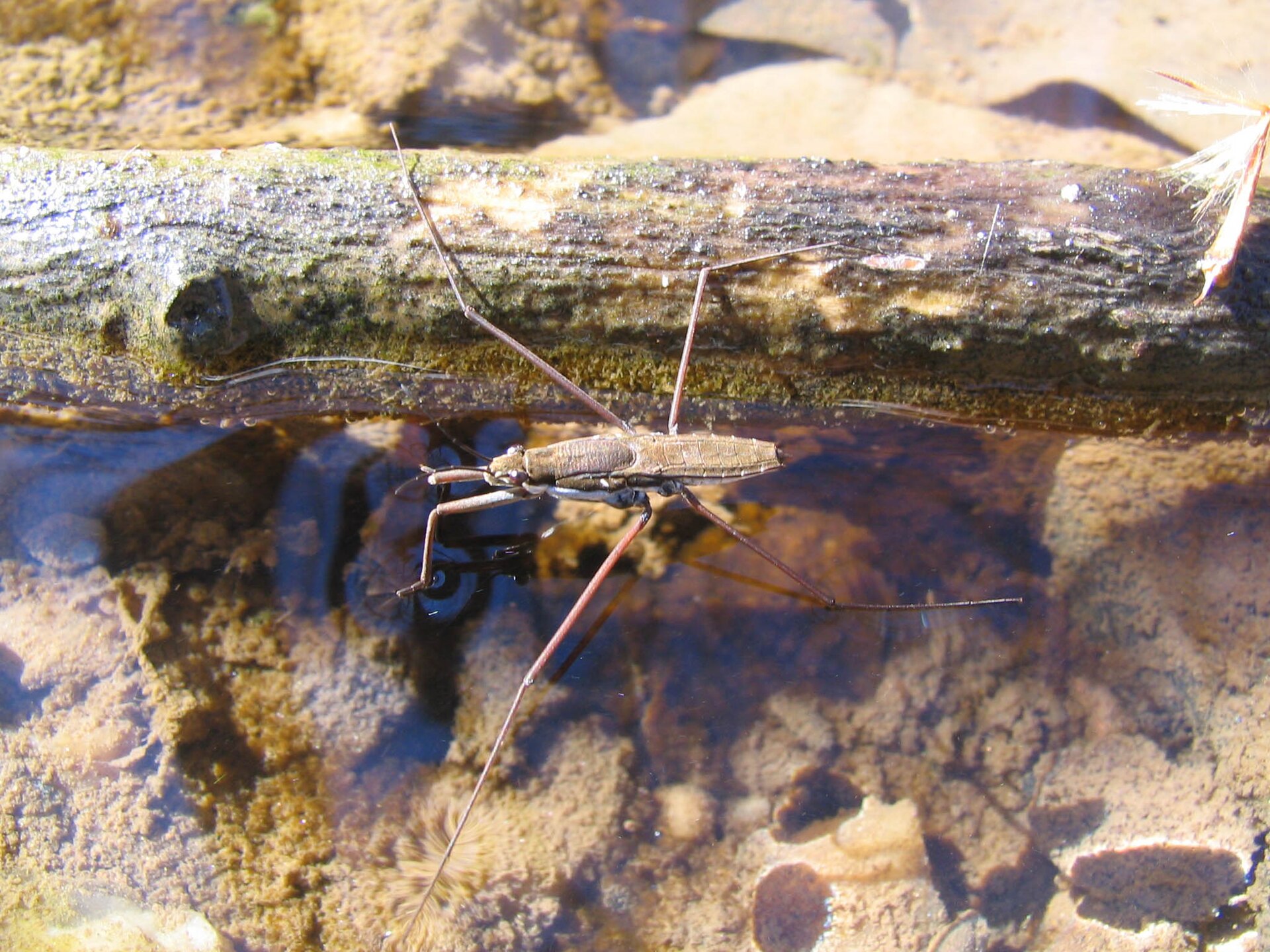
The water strider visibly deforms the water surface beneath its legs. Use this example to connect cohesion, surface tension and the use of water surfaces as habitats. Source
Adhesion and capillary action
Adhesion occurs between water and materials that are polar or charged.
A required consequence is capillary action in soil.
Another required consequence is capillary action in plant cell walls.
Distinguish adhesion from cohesion by identifying what the water molecules are attracted to.
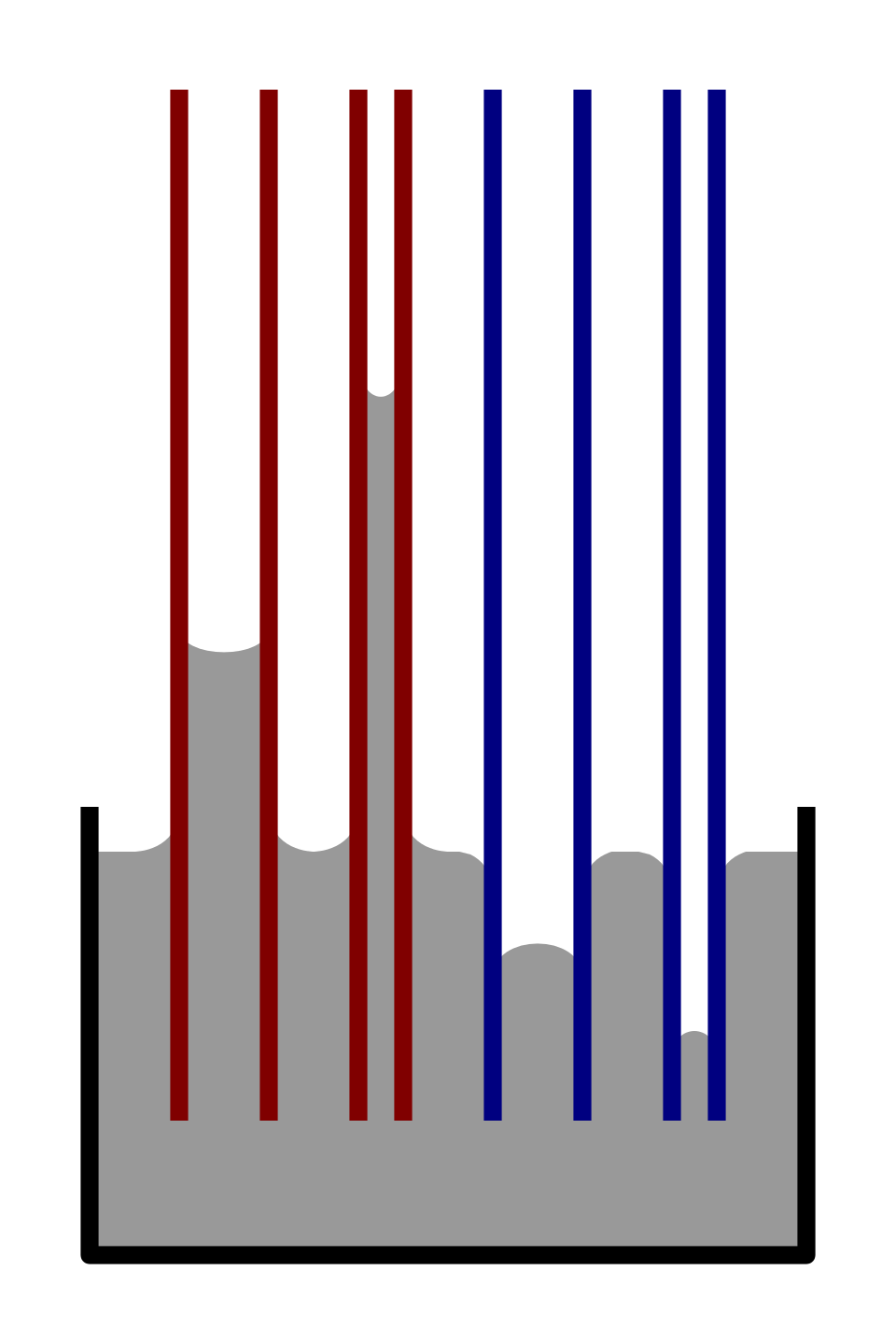
The diagram visualizes capillary action in narrow spaces. Use it to connect adhesion of water to polar or charged materials with capillary action in soil and plant cell walls. Source
Hydrophilic and hydrophobic molecules
Molecule type | Relationship with water | Biological significance required |
|---|---|---|
Hydrophilic | A wide variety dissolve in water | Compatible with an aqueous biological medium |
Hydrophobic | Insoluble in water | Some cellular molecules depend on being hydrophobic and insoluble for their functions |
HL Only: Origin and retention of Earth’s water
Additional higher level: consider an extraplanetary origin for water on Earth.
Limit the origin hypothesis to asteroids.
Limit retention reasons to gravity and temperatures low enough for water to condense.
The abundance of water over billions of years allowed life to evolve.
Polar covalent bonds and hydrogen bonding
Polar covalent bonds within water involve unequal sharing of electrons.
Unequal electron sharing makes each water molecule polar.
Represent the oxygen end as and the hydrogen ends as when indicating polarity.
Hydrogen bonds form between water molecules because of this polarity.
Be able to represent two or more water molecules and the hydrogen bonds between them.
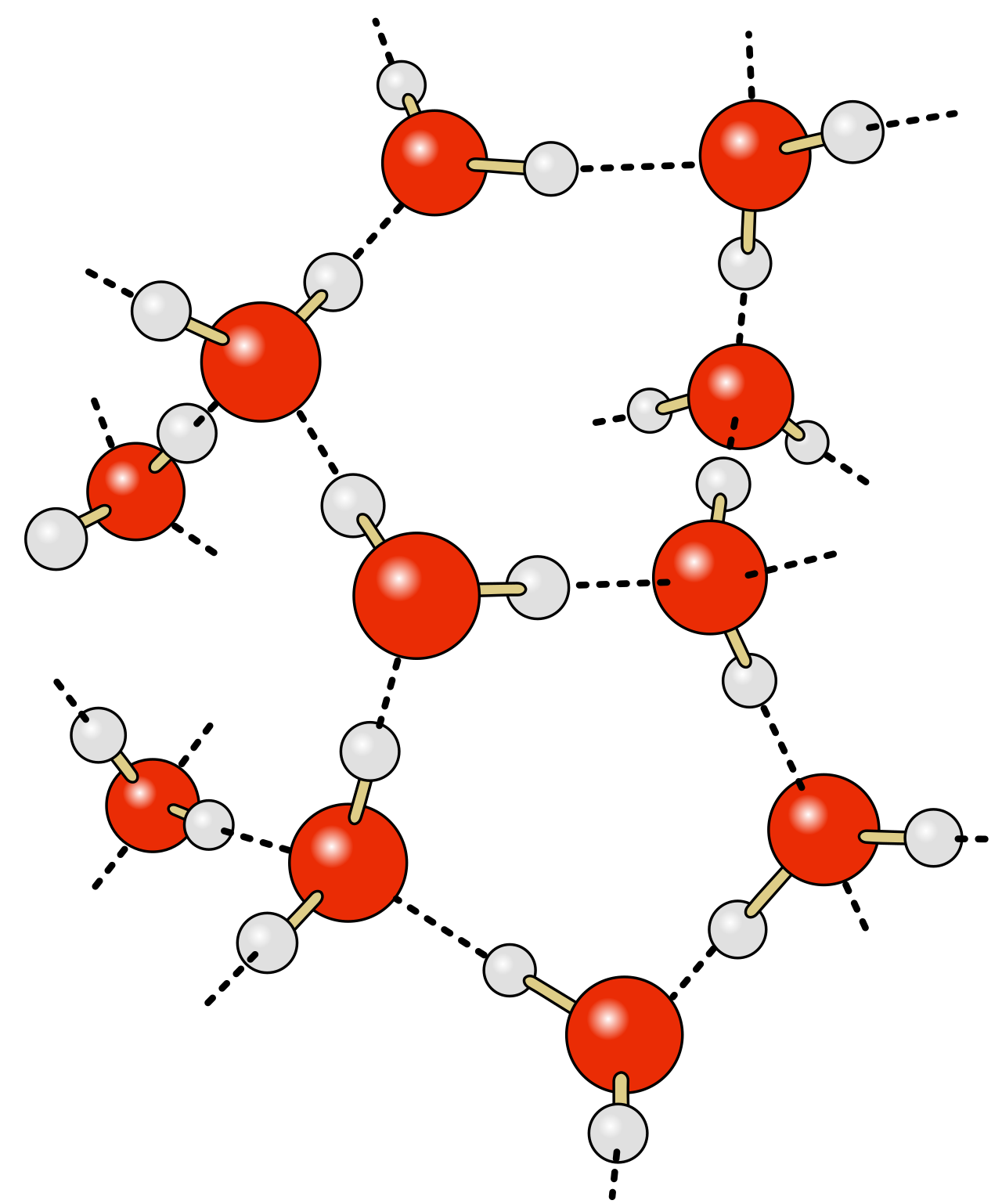
The diagram shows water molecules linked by hydrogen bonds. When reproducing the syllabus representation, mark oxygen and hydrogen to indicate polarity. Source
Cohesion and xylem transport
Cohesion of water molecules results from hydrogen bonding.
A required biological consequence is transport of water under tension in xylem.
Link the molecular property of cohesion directly to this plant transport context.
Water as a solvent
Water’s solvent properties are linked to its role as a medium for metabolism.
A wide variety of hydrophilic molecules dissolve in water.
Most enzymes catalyse reactions in aqueous solution.
Water is also a medium for transport in plants and animals.
Connect solubility with both biological reactions and transport.
Physical properties and aquatic habitats
Required property | Required comparison | Required biological application |
|---|---|---|
Buoyancy | Water versus air | Link the contrast to consequences for animals |
Viscosity | Water versus air | Link the contrast to consequences for animals |
Thermal conductivity | Water versus air | Link the contrast to consequences for animals |
Specific heat capacity | Water versus air | Link the contrast to consequences for animals |
Exam examples | Aquatic versus aerial or terrestrial habitats | Black-throated loon (Gavia arctica) and ringed seal (Pusa hispida); common or scientific names are acceptable |
HL Only: Water and extraterrestrial life
Additional higher level: relate the search for extraterrestrial life to the presence of water.
Include the idea of the Goldilocks zone.
Keep this requirement specifically linked to water when considering extraterrestrial life.
Checklist: can you do this?
Can you explain why water is the medium for life?
Can you represent two or more water molecules using , and hydrogen bonds?
Can you explain cohesion and apply it to xylem transport and surface tension?
Can you distinguish adhesion from cohesion and apply it to capillary action in soil and plant cell walls?
Can you explain the solvent properties of water and distinguish hydrophilic from hydrophobic molecules?
Can you compare buoyancy, viscosity, thermal conductivity and specific heat capacity of water with air and link the contrasts to animals?
Can you explain the HL hypothesis for the origin and retention of Earth’s water?
Can you relate water to the HL search for extraterrestrial life and the Goldilocks zone?