
Biodiversity at three levels
Biodiversity is the variety of life in all its forms, levels and combinations.
The three required levels are ecosystem diversity, species diversity and genetic diversity.
Exam answers should identify which level of biodiversity is being considered rather than treating biodiversity as species number alone.
Anthropogenic species extinction: required case studies
Focus on anthropogenic causes of the current sixth mass extinction, not non-anthropogenic causes of previous mass extinctions.
Study three or more brief species-extinction case studies.
Use the North Island giant moa (Dinornis novaezealandiae) as an example of lost terrestrial megafauna.
Use the Caribbean monk seal (Neomonachus tropicalis) as an example of a lost marine species.
Prepare one additional example of a species extinct from an area familiar to you.
For each case study, connect the relevant human pressure to the extinction outcome.
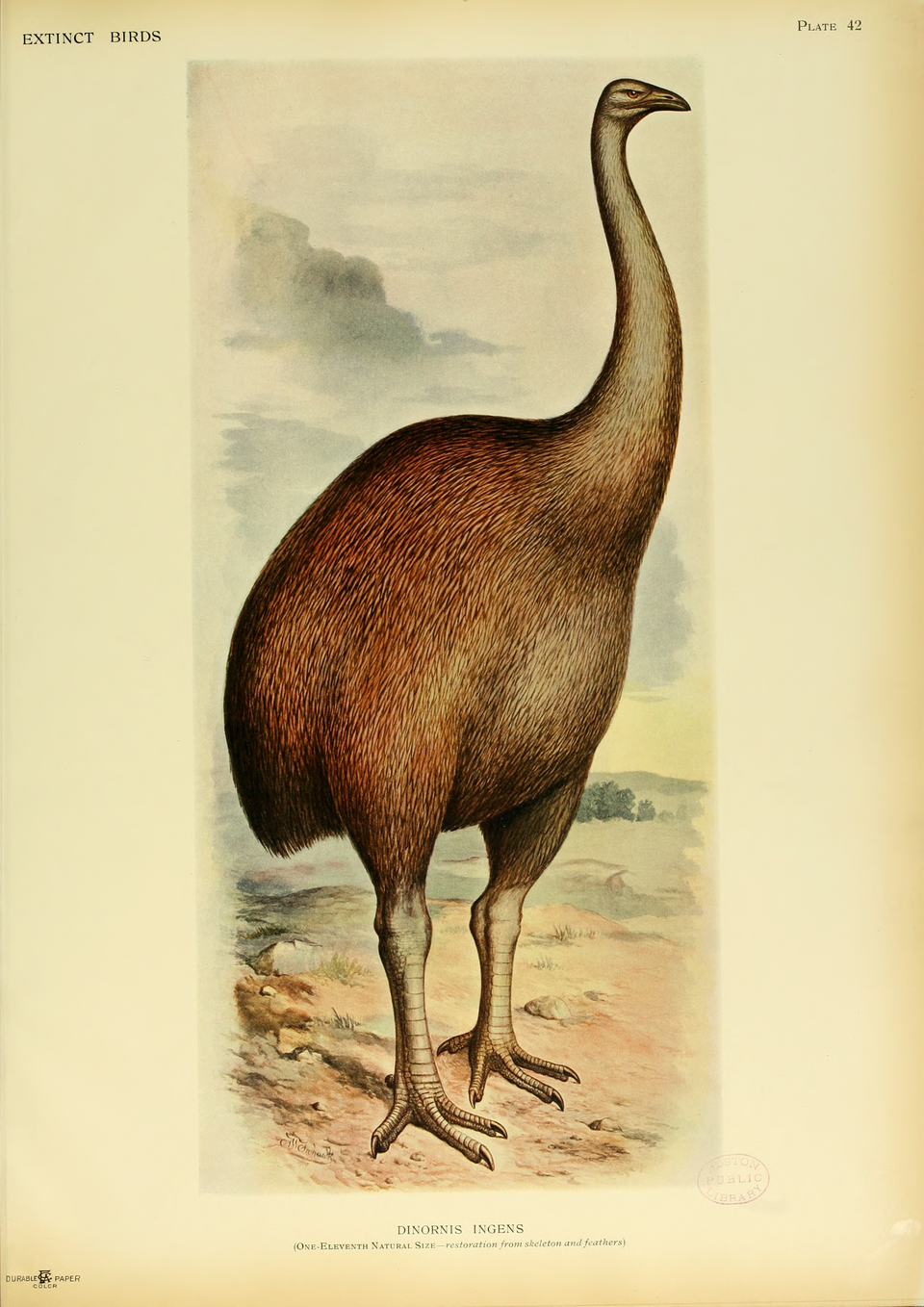
The North Island giant moa is one required IB species-extinction case study and represents loss of terrestrial megafauna. Use it when organizing evidence about anthropogenic extinction. Source
Evidence for the biodiversity crisis
Evidence may come from IPBES reports and other reliable sources.
Use reliable biodiversity surveys from a wide range of habitats around the world.
Surveys must be repeated to demonstrate changes in species richness and evenness.
Both expert scientists and citizen scientists can contribute useful observations.
Verifiable evidence usually comes from published, peer-reviewed sources whose methodology can be checked.
Citizen-science data provide benefits but also create unique methodological concerns.
Conservation requires several approaches
No single conservation approach is sufficient; different species require different measures.
In situ conservation protects species within their natural habitats.
Nature reserves require active management.
Rewilding and reclamation can address degraded ecosystems.
Ex situ conservation includes zoos and botanic gardens.
Germ plasm can be stored in seed banks or tissue banks.
Effective conservation therefore combines approaches appropriate to the species and situation.
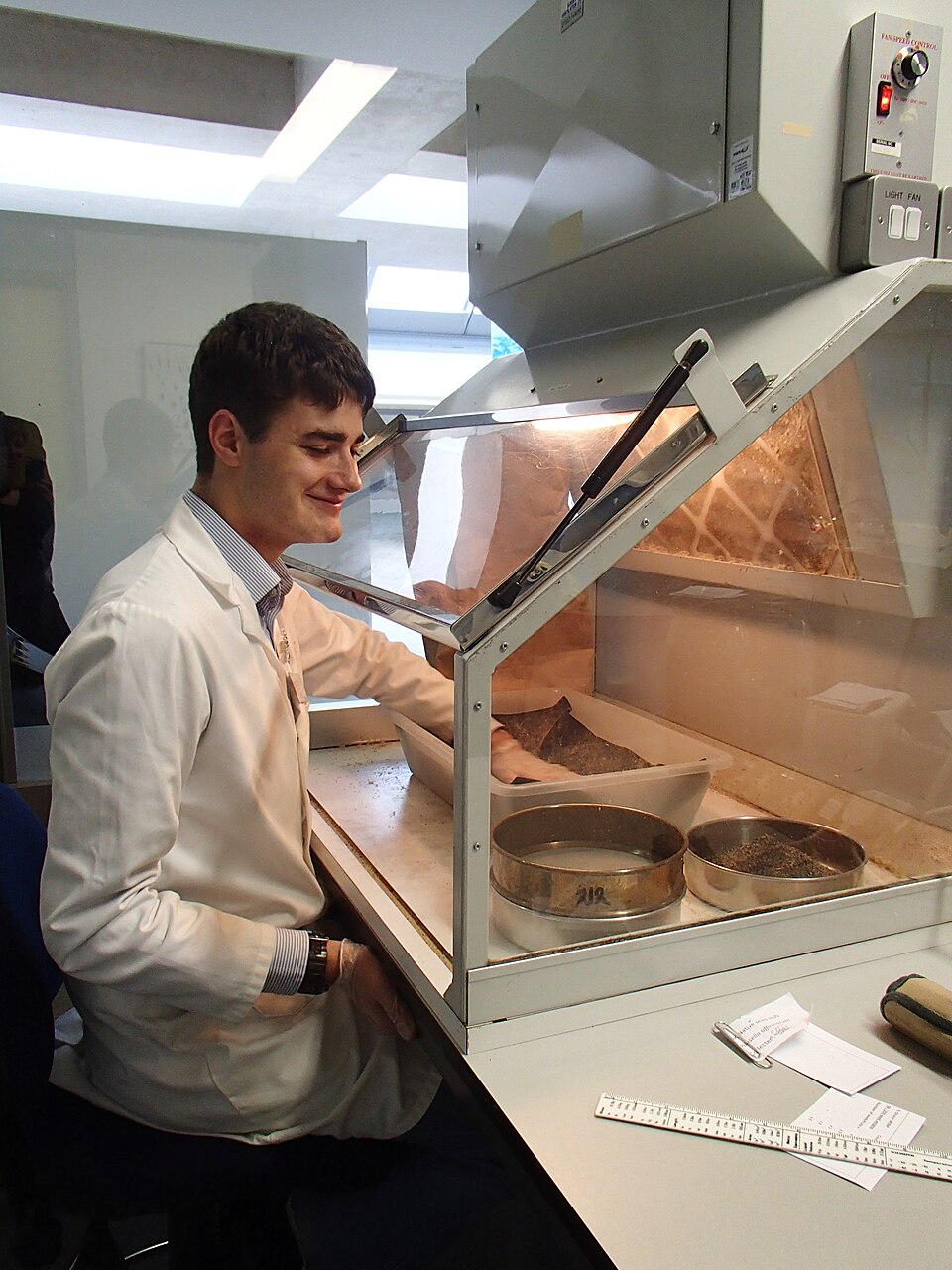
This image links practical seed-bank work with ex situ conservation. The syllabus requires germ plasm storage in seed or tissue banks as one conservation approach. Source
Biodiversity now, past and classification
Millions of species have been discovered, named and described, but many more remain undiscovered.
Fossil evidence suggests more species are alive on Earth today than at any previous time.
Classification is an example of pattern recognition; the same observations can be classified differently.
Splitters recognize more species within a taxonomic group than lumpers.
Recorded species totals can therefore depend partly on how organisms are classified.
Anthropogenic ecosystem loss: required case studies
Study only causes of ecosystem loss that are directly or indirectly anthropogenic.
Prepare two ecosystem-loss case studies.
One required case study is loss of mixed dipterocarp forest in Southeast Asia.
The second should, where possible, be a lost ecosystem from an area familiar to you.
For each case study, identify the human activity involved and explain its relationship to ecosystem loss.
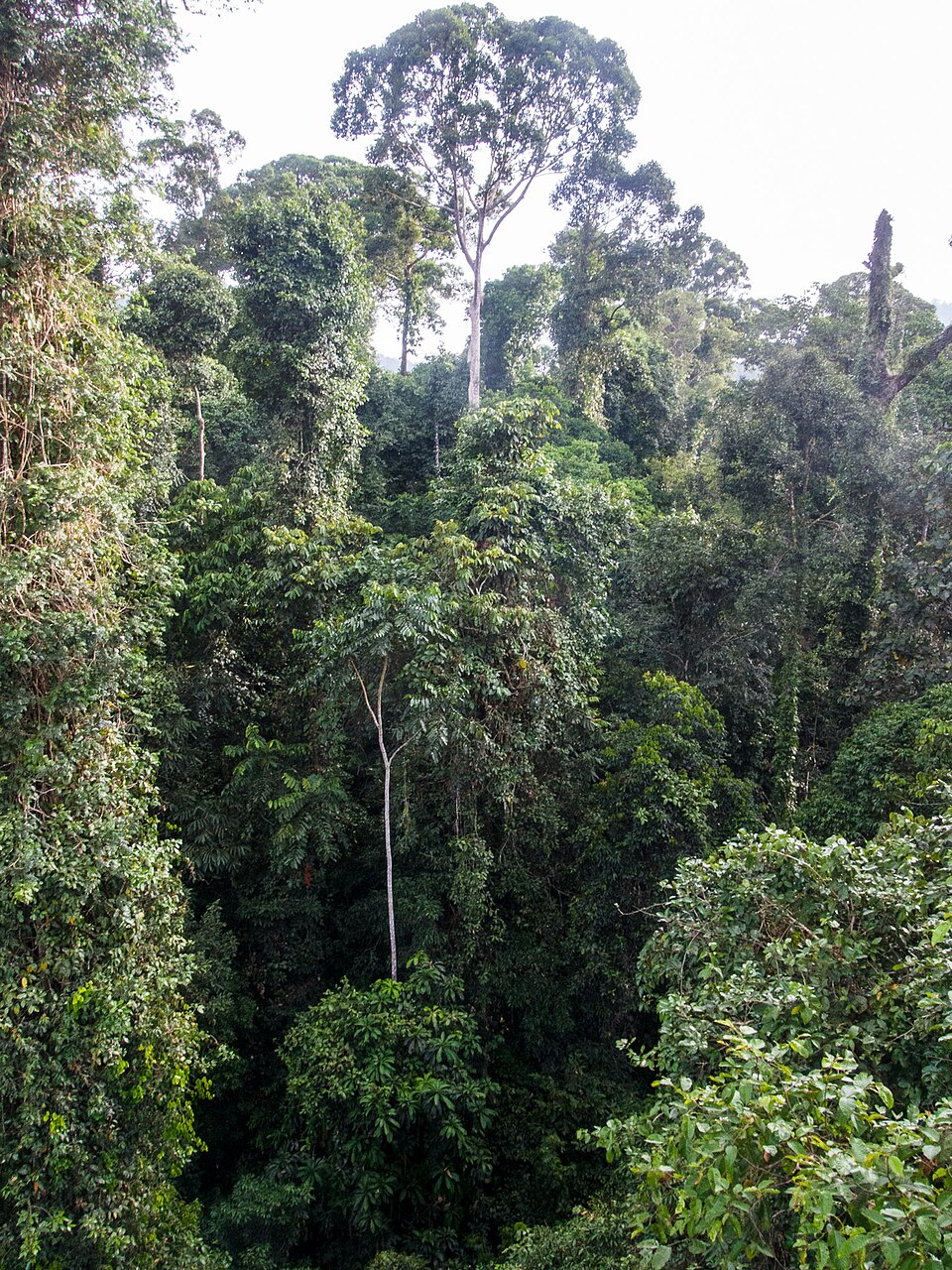
This image visualizes a dipterocarp forest, the ecosystem type required in the Southeast Asian case study. The photograph shows the ecosystem itself, not evidence of its loss. Source
Causes of the current biodiversity crisis
Human population growth is the overarching cause identified in the syllabus.
Hunting and other forms of over-exploitation directly threaten biodiversity.
Urbanization contributes to loss of natural habitats.
Deforestation and clearance for agriculture cause natural habitat loss.
Pollution is another major anthropogenic pressure.
Global transport promotes the spread of pests, diseases and invasive alien species.
EDGE conservation prioritization
EDGE conservation prioritizes species that are evolutionarily distinct and globally endangered.
The rationale is to focus conservation effort on species combining these two characteristics.
Choosing which species receive priority is not a purely biological decision.
Prioritization has ethical, environmental, political, social, cultural and economic implications.
These competing considerations mean conservation priorities need to be debated.
Be prepared to explain the rationale for EDGE and evaluate why prioritization can be controversial.
Common exam errors and case-study checks
Do not discuss non-anthropogenic causes of previous mass extinctions when asked about the current sixth mass extinction.
Do not use a single survey as evidence of biodiversity change; the syllabus requires repeated surveys.
Do not imply that one conservation method alone is sufficient.
Do not omit the required moa, Caribbean monk seal and additional locally familiar extinction case study.
Do not omit mixed dipterocarp forest and, where possible, a locally familiar ecosystem-loss case study.
Do not confuse evidence for the biodiversity crisis with causes of the biodiversity crisis.
Checklist: can you do this?
Can you distinguish ecosystem diversity, species diversity and genetic diversity?
Can you compare present biodiversity with past levels and explain splitters versus lumpers?
Can you explain anthropogenic species extinction using the required species case studies?
Can you explain anthropogenic ecosystem loss using mixed dipterocarp forest and a locally relevant case?
Can you evaluate biodiversity-crisis evidence using repeated surveys, peer review and citizen science?
Can you explain human population growth and the listed specific causes of biodiversity loss?
Can you distinguish the required in situ, ecosystem-restoration and ex situ conservation approaches?
Can you explain the rationale for EDGE and evaluate debates over conservation prioritization?