AP Syllabus focus:
‘Hormones act similarly to neurotransmitters and include adrenaline, leptin, ghrelin, melatonin, and oxytocin.’
Hormones are chemical messengers that travel through the bloodstream to influence brain and body activity. In psychology, they help explain slower, longer-lasting changes in arousal, appetite, sleep timing, and social bonding.
What hormones are (and how they differ from neurotransmitters)
Hormone: A chemical messenger released by endocrine glands into the bloodstream that affects target organs and the brain by binding to specific receptors.
Both hormones and neurotransmitters communicate information in the body, but they typically differ in speed and delivery route.
Neurotransmitters act across synapses (very fast, local signalling).
Hormones circulate in blood (usually slower onset, broader and longer-lasting effects).
Hormones still influence behaviour by changing how responsive cells are, including neurons, which can alter mood, motivation, and physiological readiness.
The endocrine system and hormone signalling
Endocrine system: A network of glands that secrete hormones into the bloodstream to regulate body processes and influence behaviour and mental processes.
Hormone communication follows a common pathway:
Release: An endocrine gland secretes a hormone into the blood.
Transport: The hormone travels throughout the body.
Targeting: Only target cells with matching receptors respond strongly.
Effect: The hormone changes cell activity (e.g., metabolism, neural firing likelihood, gene expression).
Regulation: Many hormones are controlled by negative feedback (rising hormone levels reduce further release to maintain stability).
Because hormones can act on the brain, they link body states (sleepiness, hunger, stress arousal) to psychological experiences (alertness, cravings, emotional intensity).
Key hormones emphasised in AP Psychology
Adrenaline (epinephrine): arousal and “fight-or-flight”
Adrenaline is released primarily by the adrenal glands during stress or excitement.
Increases heart rate, blood pressure, and energy availability
Supports behavioural readiness: quicker reactions, heightened alertness
Can be experienced psychologically as intense arousal (e.g., feeling “keyed up”)
Leptin: satiety signalling
Leptin is produced by fat (adipose) tissue and generally signals longer-term energy sufficiency.
Higher leptin tends to reduce appetite and support energy balance
Influences brain systems involved in hunger and motivation for food
Helps connect body energy stores with eating-related behaviour
Ghrelin: hunger signalling
Ghrelin is produced largely in the stomach and tends to rise before meals.
Promotes hunger and food-seeking behaviour
Can increase attention to food cues and perceived reward value of eating
Works in dynamic balance with leptin to regulate appetite over time
Melatonin: sleep timing and circadian coordination
Melatonin is released by the pineal gland, especially in darkness, helping coordinate sleepiness with the day-night cycle.
Promotes sleep onset and signals “biological night”
Helps align behaviour with circadian rhythms (regular daily patterns)
Disruption to light exposure (e.g., bright screens at night) can shift melatonin timing, affecting sleep behaviour
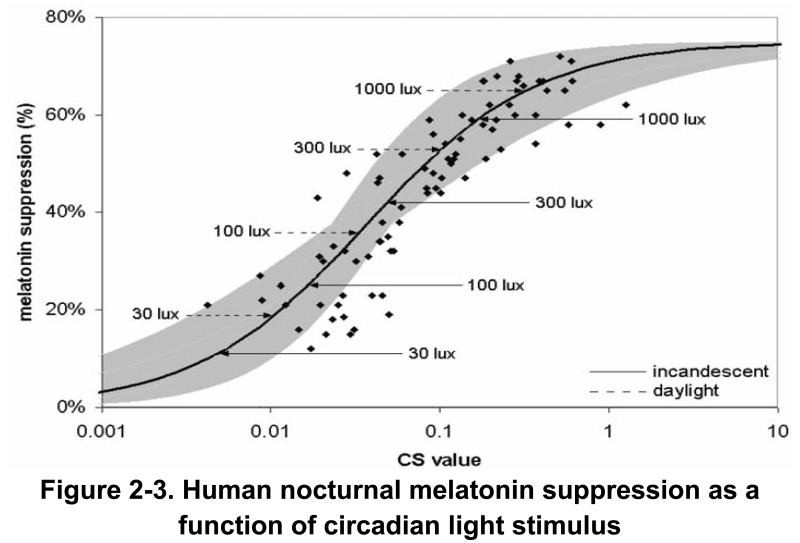
This figure plots percent nocturnal melatonin suppression against circadian light stimulus, showing that brighter light is associated with greater suppression of melatonin at night. It provides a quantitative way to connect environmental light exposure to the hormone signal that helps coordinate sleep timing. Source
Oxytocin: bonding and social affiliation
Oxytocin is produced in the hypothalamus and released via the pituitary into the bloodstream (and also acts in the brain).
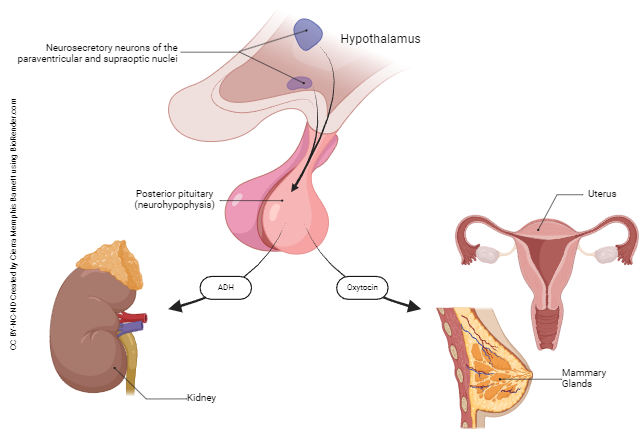
This diagram shows how hypothalamic neurons project to the posterior pituitary (neurohypophysis), where oxytocin is released into the bloodstream. It also labels classic target tissues (e.g., mammary glands) to illustrate how endocrine signaling links a brain-originating signal to body-level effects. Source
Associated with social bonding, caregiving-related behaviour, and affiliation
Can support calming effects in some contexts, influencing stress-related behaviour
Effects depend on context and individual differences; it is not a simple “trust hormone”
How hormones shape behaviour in real time
Hormonal effects are often best understood as changes in probability of behaviours (not rigid causes).
Arousal systems: adrenaline shifts the body toward action
Feeding regulation: leptin and ghrelin bias eating motivation up or down
Sleep regulation: melatonin biases the body toward sleep at specific times
Social behaviour: oxytocin can bias attention and motivation toward social cues
Hormones act similarly to neurotransmitters in that both change communication in biological systems, but hormones’ broad distribution and longer action make them especially important for sustained behavioural states.
Practice Questions
State what a hormone is and give one way hormones are similar to neurotransmitters. (2 marks)
1 mark: Correct definition (chemical messenger released into bloodstream by endocrine gland affecting target cells/brain).
1 mark: Similarity stated (both act as chemical messengers that influence cell/neuronal activity by binding to receptors).
Explain how two of the following hormones can influence behaviour: adrenaline, leptin, ghrelin, melatonin, oxytocin. (6 marks)
(Any two hormones; up to 3 marks each):
1 mark: Identifies a correct behavioural/psychological effect (e.g., melatonin promotes sleepiness; ghrelin increases hunger).
1 mark: Links the effect to regulation of body/brain state (e.g., arousal, appetite signalling, circadian timing, bonding motivation).
1 mark: Adds a relevant detail showing understanding (e.g., melatonin rises in darkness; adrenaline increases heart rate/energy availability; leptin signals energy stores; oxytocin linked to affiliation/caregiving).
FAQ
Common measures include saliva, blood, and urine.
Limitations:
Hormones fluctuate across the day; single samples can mislead.
Stress of sampling can alter results (especially for arousal-related hormones).
Peripheral levels may not perfectly reflect hormone action in the brain.
Some individuals show reduced sensitivity to leptin signals (“leptin resistance”).
This can weaken satiety signalling, so appetite and food reward may stay high even when leptin is elevated.
Bright light can delay melatonin release and reduce its overall level.
This may shift sleep onset later and make waking earlier feel harder, contributing to sleep timing problems.
No. Oxytocin’s behavioural effects are context-dependent.
Factors include perceived safety/threat, relationship closeness, and individual differences, which can shift outcomes toward soothing affiliation or heightened social sensitivity.
Many hormones are released in bursts and follow daily rhythms.
Timing affects interpretation: the same measured level can mean different things depending on when it was sampled and what else is happening physiologically.