IB Syllabus focus: 'Emic research studies groups from insider perspectives, supporting sensitive understanding and Indigenous psychology.'
Understanding behavior from within a cultural group is essential in psychology. Emic approaches and Indigenous psychology challenge universal assumptions by prioritizing local meanings, community voices, and culturally grounded explanations of mind and behavior.
Understanding the Emic Approach
An emic approach studies behavior from the viewpoint of people within the culture being studied.
Rather than starting with outside categories, researchers try to understand how group members define experiences, relationships, and social rules.
Emic approach: A research approach that investigates thoughts and behavior from the insider perspective of a specific cultural group.
In practice, this means that psychologists pay close attention to local meanings, language, and context.
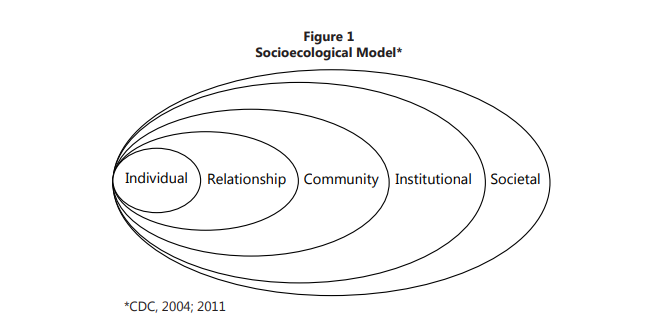
Socioecological model (nested levels of context). The diagram shows how influences on behavior can be understood at multiple, embedded levels (individual, relationship, community, institutional, and societal). This supports an emic mindset by reminding researchers that meaning is produced within layered cultural and social contexts, not just within individuals. Source
A behavior may appear similar across groups, but its meaning can differ greatly depending on cultural beliefs, values, and history.
Key features of an emic approach
It begins with the participants’ own categories and interpretations.
It aims for cultural sensitivity rather than assuming one explanation fits all groups.
It often uses open-ended methods such as interviews, observation, and community consultation.
It treats culture as a source of meaning, not just a background factor.
An emic approach is especially valuable when imported psychological concepts do not fully match local experiences. A term developed in one society may not capture how another society explains emotion, identity, responsibility, or well-being.
Insider Perspectives and Sensitive Understanding
The phrase insider perspective does not mean that only members of a group can do the research. Instead, it means the research process should be guided by the group’s own understandings. Psychologists must listen carefully to how participants describe their world and avoid forcing responses into unfamiliar categories.
This supports sensitive understanding because it reduces the risk of misunderstanding or mislabeling behavior. Without an emic approach, psychologists may:
interpret behavior using biased assumptions
overlook culturally meaningful practices
pathologize normal behavior in a specific cultural setting
miss important social, spiritual, or historical influences
Sensitive understanding matters in both theory and practice. Research findings affect how groups are represented, how interventions are designed, and whether communities feel respected by psychological science.
Indigenous Psychology
Indigenous psychology develops psychological knowledge from within a particular cultural tradition instead of simply applying outside theories to that group.
Indigenous psychology: Psychological knowledge, concepts, and methods developed within a specific cultural context and grounded in local worldviews, values, and experiences.
Indigenous psychology is closely linked to emic research because both emphasize culturally rooted explanations. However, Indigenous psychology goes further by building concepts, methods, and theories that arise from the community itself. It is not only about studying a group more carefully; it is about recognizing that the group may already have its own valid ways of understanding mind and behavior.
Why Indigenous psychology matters
It challenges the idea that psychology developed in one part of the world should automatically apply everywhere.
It values local knowledge systems, including community traditions and culturally specific concepts of health or personhood.
It can correct historical imbalances in which outside researchers defined other groups without equal participation.
It makes psychology more relevant to the people being studied.
This is especially important for Indigenous communities whose knowledge has often been ignored, simplified, or treated as less scientific. Indigenous psychology argues that culturally grounded knowledge should be taken seriously as a basis for explanation.
Building Knowledge From Within Cultures
When psychologists use emic approaches, they are more likely to produce culturally valid knowledge. This means explanations fit the meanings used by the group itself rather than only the assumptions of the researcher. Such work can reveal culture-specific ideas about selfhood, relationships, healing, obligation, or distress that might otherwise remain invisible. In this way, emic research does not merely add cultural detail to existing psychology; it can reshape what counts as psychological knowledge in the first place.
How Emic Research Is Carried Out
Psychologists using an emic approach often design research in ways that allow participants’ meanings to emerge. Common features include:
using the local language whenever possible
consulting community members when developing questions
asking open questions rather than relying only on fixed-response measures
interpreting findings within the group’s cultural and historical context
collaborating with local researchers or community leaders
Language is especially important because words for emotions, obligations, or identity may not translate neatly into outside categories. If meaning is lost in translation, the psychological explanation may also become distorted.
These practices help the research reflect the community’s viewpoint rather than only the researcher’s expectations. They are also important when topics are sensitive, such as identity, family roles, healing, grief, or spirituality.
Strengths and Limitations
A major strength of emic approaches is depth. They can reveal meanings that standardized measures might miss. This makes explanations richer and often fairer to the people being studied.
Another strength is cultural relevance. Findings are more likely to fit the lived experiences of the group, which can improve the usefulness of psychological knowledge and support the development of Indigenous psychology.
However, emic research also has limitations. Findings may be highly specific to one setting, which can make wider comparison difficult. Research can also take more time because it requires trust, language sensitivity, and close engagement with the community.
There is also a challenge in deciding whose insider perspective is represented. No cultural group is completely uniform. Differences in age, gender, status, location, and generation can shape viewpoints within the same community. Psychologists must therefore avoid treating one account as the voice of the entire culture.
Practice Questions
(3 marks)
State what is meant by an emic approach and give one reason it can produce culturally sensitive findings.
1 mark for stating that an emic approach studies behavior from the insider perspective of a cultural group.
1 mark for noting that it uses participants’ own meanings, categories, or interpretations.
1 mark for explaining one reason it is culturally sensitive, such as reducing bias, avoiding misinterpretation, or respecting local meanings.
(6 marks)
Explain how emic research can support the development of Indigenous psychology.
1–2 marks for explaining emic research as culture-specific and based on insider perspectives.
1–2 marks for explaining Indigenous psychology as psychological knowledge developed within a cultural context rather than imposed from outside.
1–2 marks for linking the two clearly, for example:
emic research identifies local concepts and values
it respects community knowledge
it challenges universal assumptions
it helps create culturally relevant theories or methods
FAQ
Yes, but it usually requires humility and collaboration.
An outsider can improve emic quality by:
working with community members throughout the study
learning local meanings and communication styles
checking interpretations with participants
accepting that some meanings may remain only partly accessible
Good emic research depends less on the researcher’s identity alone and more on whether the process genuinely centers insider knowledge.
Many psychological ideas do not map neatly across languages.
A direct translation may miss:
emotional nuance
spiritual meaning
social obligations built into a word
whether a term is positive, negative, or neutral in context
Because of this, researchers may use bilingual collaborators, discuss meanings in detail, and compare several possible translations before deciding how to represent participants’ views.
Community participation can change both the quality and the fairness of a study.
It may help researchers:
choose questions that actually matter to the community
avoid offensive or irrelevant assumptions
interpret findings more accurately
decide how results should be shared
Participation can also improve trust, which may lead to richer and more honest responses.
It can use quantitative methods.
What makes it Indigenous is not the method by itself, but whether the research is grounded in local concepts, values, and priorities. A survey or scale can fit Indigenous psychology if it is built from community knowledge and validated within that cultural setting.
The main issue is cultural grounding, not whether the data are numerical or verbal.
They can make services more culturally appropriate.
For example, they may influence:
how distress is identified
what counts as healing or recovery
whether family or community is included in support
which communication styles feel respectful
This can improve engagement because people are more likely to use services that reflect their own values and ways of understanding problems.