IB Syllabus focus: 'The sociocultural approach emphasizes how social environments, interactions, relationships and cultures shape human behaviour.'
Human behavior is deeply embedded in social and cultural contexts. The sociocultural approach examines how shared meanings, everyday interactions, and relationships influence what people think, feel, remember, and do.
What the sociocultural approach studies
The sociocultural approach argues that behavior cannot be understood fully by looking only at the individual.
Sociocultural approach: A psychological approach that explains behavior in relation to social interaction, relationships, and the cultural context in which people live.
People develop within social environments such as families, schools, peer groups, workplaces, neighborhoods, and media systems.
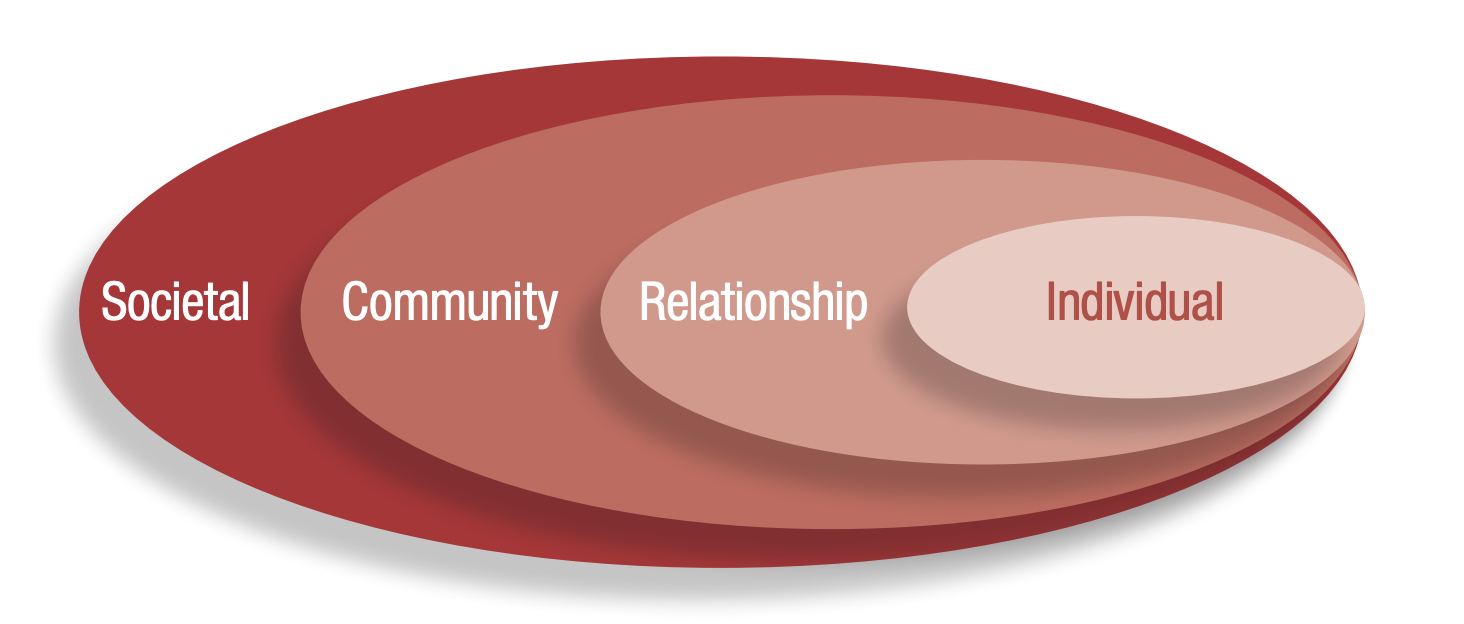
This diagram presents the social-ecological model as nested levels of influence on behavior. It helps you see how individual action is simultaneously shaped by close relationships, the wider community, and broader societal structures—an intuitive visual bridge into the sociocultural approach. Source
These environments provide rules, expectations, and opportunities that shape behavior over time.
This means psychologists study not only what a person does, but also who is present, what is expected, and what the surrounding culture values. The same action can have different meanings depending on context. For example, speaking loudly may be viewed as confidence in one setting but disrespect in another.
Social environments and everyday behavior
A social environment influences behavior by setting boundaries around what is normal, acceptable, rewarded, or punished. These influences can be formal or informal.
Formal influences include laws, school rules, workplace policies, and religious expectations.
Informal influences include family habits, friendship groups, traditions, and everyday routines.
Shared expectations guide behavior even when nobody states them directly.
In practice, people often adjust their behavior to fit the environment around them. A student may speak differently in class than at home. A person may change dress, posture, or language depending on the group they are with. This does not necessarily mean behavior is fake; it reflects the fact that people respond to social cues and social expectations.
Social environments also affect access to support and stress. Relationships that provide trust, belonging, and encouragement can increase confidence and prosocial behavior. By contrast, hostile or unstable environments may increase conflict, anxiety, or withdrawal. The sociocultural approach therefore pays close attention to the quality of the environment, not just the individual.
Interactions, relationships, and shared meaning
Behavior is shaped continuously through interaction. Conversations, gestures, feedback, and group participation teach people how to interpret situations. Through repeated interaction, people learn what others approve of and how they are expected to respond.
A relationship matters because it often carries power, status, and emotional importance. Parents, teachers, friends, and partners can all influence choices, attitudes, and self-beliefs. If a person values a relationship, they may be especially sensitive to approval or disapproval from that individual.
One key idea is the role of social norms.

These are the stimulus cards used in Asch’s line-judgment conformity experiments: a reference line and three comparison lines. The simple setup makes it easy to explain how normative social influence can lead individuals to publicly agree with a group even when the correct perceptual answer is obvious. Source
Social norm: A shared expectation about how people should think, feel, or behave in a particular social group or situation.
Norms help groups function smoothly because they create predictability. However, norms can also pressure people to act in ways they might not choose alone. The desire to belong, avoid rejection, or maintain harmony can be a strong influence on behavior. This shows why the sociocultural approach emphasizes group membership and social expectations rather than treating behavior as purely personal.
Culture and its influence
One major influence is culture.
Culture: The shared values, beliefs, norms, and practices of a group that are transmitted across generations and shape behavior and understanding.
It includes customs, language, symbols, and common ways of interpreting the world. Culture influences behavior in many ways:
It shapes values, such as independence, duty, competition, or cooperation.
It shapes communication, including eye contact, emotional expression, politeness, and silence.
It shapes roles, including expectations linked to age, gender, family position, or social status.
It shapes interpretation, affecting what people notice, remember, and consider important.
Culture also affects how people define the self. In some cultural contexts, personal choice and individual achievement may be emphasized more strongly. In others, family obligation, social harmony, or collective responsibility may be more central. These patterns can influence decision-making, emotional expression, and moral judgment.
Importantly, culture is dynamic, not fixed. Cultures change over time, and individuals can belong to multiple cultural groups at once. National culture is only one influence; local communities, religion, language groups, and online communities can also shape behavior.
How social and cultural influences work
Social and cultural influences usually operate through several connected processes.
Observation and participation: People learn expected behavior by watching others and joining group activities.
Communication: Language passes on beliefs, values, stories, and rules.
Feedback: Approval, praise, criticism, and exclusion signal whether behavior fits group expectations.
Internalization: Over time, external expectations can become part of a person’s own beliefs and identity.
These processes show that behavior is not simply imposed from outside. People actively interpret social messages, but those interpretations occur within a cultural framework. As a result, behavior is shaped through an ongoing interaction between the individual and the social world.
Key considerations in the sociocultural approach
The sociocultural approach is useful because it helps explain why behavior varies across groups and settings. It reminds psychologists that behavior is context-dependent and that meaning is often socially constructed. Researchers must therefore be careful not to judge behavior using only their own cultural assumptions.
At the same time, the approach does not mean every member of a group behaves identically. There is always variation within cultures and social groups. Age, social class, gender, personality, and life experience can all affect how social and cultural influences are expressed. The key point is that human behavior is shaped in context: people are influenced by the environments, relationships, interactions, and cultures in which they live.
Practice Questions
[2 marks]
Define culture in the sociocultural approach.
1 mark for stating that culture involves shared values, beliefs, norms, or practices.
1 mark for stating that these shared meanings shape behavior and/or are transmitted within a group across time.
[6 marks]
Explain one way a social environment or relationship can shape human behavior.
1 mark for identifying a relevant social environment or relationship, such as family, peers, school, or workplace.
1 mark for outlining a relevant expectation, rule, value, or pattern of interaction in that context.
2 marks for explaining the mechanism by which behavior is shaped, such as approval, disapproval, repeated interaction, communication, or internalization.
2 marks for a developed example showing how behavior changes or is guided in that context.
FAQ
Online communities often develop their own norms, symbols, humor, and rules. These can shape how people present themselves, what opinions they share, and how they respond to others.
Features such as likes, reposts, moderation, and group language can quickly reward some behaviors and discourage others. Over time, users may begin to treat these online expectations as normal, especially if the group is emotionally important to them.
Behavior is interpreted through shared meanings. A gesture, tone of voice, or level of directness may signal respect in one group but rudeness in another.
This happens because cultures do not only shape what people do; they also shape how people read behavior. Misunderstandings are more likely when people assume their own interpretation is universal.
They can do both. Some influences are immediate, such as changing your language in front of a teacher or staying quiet in a formal setting.
Others develop slowly through repeated experience. Family expectations, community values, and long-term relationships can gradually become part of a person’s identity, making the influence more stable over time.
Rituals and ceremonies communicate shared values and social roles. They show what the group considers meaningful, respectable, or sacred.
Because they are memorable and often emotionally intense, they can strengthen belonging and reinforce expectations. This can influence later behavior by reminding people how they are expected to act within the group.
A cultural mismatch happens when the values or communication style of an institution differ from those a person has learned in their home or community.
This can matter because behavior may be misinterpreted. For example, silence may be seen as respectful in one context but as disengagement in another. Cultural mismatch can affect confidence, participation, evaluation, and relationships even when ability is not the issue.