AP Syllabus focus:
‘REM sleep is paradoxical, dreaming typically occurs in REM sleep, REM periods increase across the night, and REM deprivation can cause rebound.’
REM sleep is a distinct sleep state marked by intense brain activity, vivid dreaming, and a body that is temporarily “switched off” for movement. Understanding REM’s patterns and rebound helps explain how sleep loss changes later sleep.
What REM Sleep Is
REM sleep is one of the recurring sleep states that cycles throughout the night. It is identified by a characteristic cluster of physiological signs rather than by a single feature.
REM sleep (rapid eye movement sleep): A sleep state marked by rapid eye movements, high brain activity resembling wakefulness, vivid dreaming, and near-paralysis of voluntary muscles.
REM is often described as paradoxical because the brain and body appear to be in opposite states: the brain looks “awake” while the person is clearly asleep.
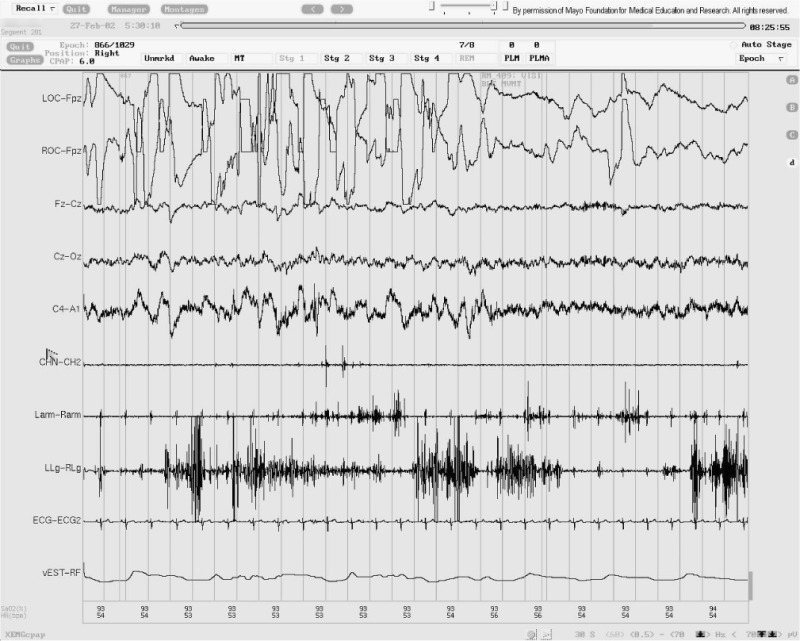
This labeled polysomnography snapshot shows multiple physiological channels recorded during REM: EOG (eye movements), EEG (brain electrical activity), and EMG (muscle activity). The combination of rapid eye movements with relatively wake-like EEG alongside altered muscle tone captures the “paradoxical” profile used to identify REM in sleep labs. Source
Why REM Sleep Is “Paradoxical”
REM sleep is paradoxical for two main reasons:
Brain activity is highly active: Many measures of neural activity resemble waking levels, supporting complex mental experiences like dreaming.
Skeletal muscles are inhibited: Large voluntary muscles are largely prevented from moving, even though the brain is generating motor imagery and emotional reactions.
This paradox helps explain why most people do not physically act out typical REM dreams.
Core Physiology of REM Sleep
REM includes a reliable pattern of changes across multiple body systems. These features help distinguish REM dreams from thoughts that occur while awake or during other sleep states.
Eyes and Motor System
Rapid eye movements occur intermittently; these are measurable and are part of REM’s defining profile.
Muscle atonia (pronounced reduction in skeletal muscle tone) limits large movements while still allowing essential functions like breathing.
Muscle atonia: A near-paralysis of voluntary skeletal muscles during REM sleep that reduces the ability to enact dream content.
Atonia is not total; small twitches can occur, and the eyes remain active.
Autonomic and Emotional Arousal
During REM, the autonomic nervous system can become more variable:
Heart rate and breathing may become less regular than in calmer sleep periods.
Physiological arousal can rise even though the person remains asleep, aligning with the emotional intensity that many REM dreams contain.
These bodily shifts help illustrate why REM is considered a highly activated sleep state.
Dreaming in REM Sleep
The syllabus emphasis is that dreaming typically occurs in REM sleep. Dreaming can occur outside REM, but REM is most strongly associated with vivid, story-like dreams that feel immersive.
Typical Features of REM Dreams
REM dreams often show:
Vivid imagery and a strong sense of visual “presence”
Emotional intensity, including fear, excitement, or surprise
Narrative structure, with shifting scenes and unusual combinations of events
Reduced reality monitoring, meaning dreamers often accept bizarre content as normal until they wake
Because REM includes high brain activation and strong emotion, REM dreams are more likely to be recalled if a person awakens during or right after a REM period.
REM Across the Night: Increasing REM Periods
Another required point is that REM periods increase across the night.
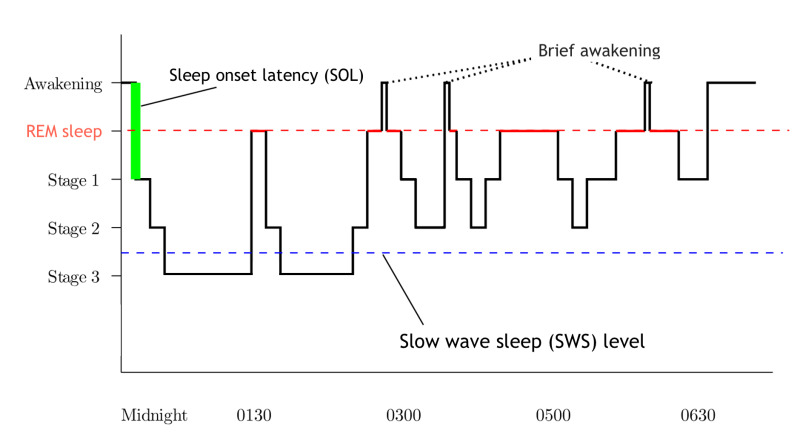
This hypnogram plots sleep stages across the night, highlighting how sleep cycles repeat while REM episodes tend to become longer and more prominent toward morning. It also contrasts early-night deeper NREM (slow-wave sleep) with later-night lighter stages plus REM, reinforcing the idea of changing sleep architecture over time. Source
Sleep is organized into repeating cycles, and REM does not appear in equal amounts in every cycle.
How REM Changes from Early to Late Night
Across a typical night:
Early cycles contain shorter REM periods
Later cycles contain longer and more frequent REM periods
The largest blocks of REM tend to occur closer to morning for many people
This pattern matters for real life: waking up very early can disproportionately reduce late-night REM, whereas sleeping in may capture more REM-rich sleep.
REM Deprivation and REM Rebound
When a person is repeatedly prevented from entering REM (or repeatedly awakened when REM begins), the body shows a compensatory response.
REM rebound: An increase in REM sleep (earlier onset, longer duration, and/or greater intensity) following REM sleep deprivation.
What Causes REM Rebound
REM rebound reflects homeostatic sleep pressure specific to REM-like processes:
If REM is suppressed, the brain appears to “track” the missed REM
Once normal sleep is allowed, REM tends to return more quickly and/or more strongly than usual
How REM Rebound Can Look
REM rebound may involve:
Shortened REM latency (entering REM sooner after falling asleep)
Longer REM periods, especially later in the recovery night
More frequent awakenings from REM, which can increase dream recall
The key AP idea is functional: REM deprivation can cause rebound, showing REM is biologically regulated rather than optional.
Practice Questions
Define REM rebound and state one change in sleep that may be observed after REM deprivation. (2 marks)
1 mark: Correct definition of REM rebound (increase in REM following REM deprivation).
1 mark: One valid observed change (e.g., longer REM periods, earlier onset of REM, increased proportion of REM during recovery sleep).
Explain why REM sleep is described as paradoxical, describe how REM changes across the night, and outline what happens after REM deprivation. (6 marks)
1 mark: REM is paradoxical because brain activity resembles wakefulness while the person is asleep.
1 mark: Mention of skeletal muscle inhibition/atonia contributing to the paradox (body “paralysed” despite active brain).
1 mark: Dreaming typically occurs in REM sleep (association with vivid dreams).
1 mark: REM periods increase across the night (longer/more REM later).
1 mark: REM deprivation leads to REM rebound (compensatory increase).
1 mark: Specific rebound feature (e.g., shorter REM latency or longer REM episodes).
FAQ
REM is typically identified using multiple recordings together:
EEG (brain activity patterns)
EOG (eye movements)
EMG (muscle tone)
The combination is crucial: rapid eye movements plus low muscle tone alongside an activated EEG profile distinguishes REM from quiet wakefulness.
Dream recall is strongly influenced by timing and arousal.
People who briefly awaken during or just after REM are more likely to encode the dream into waking memory. Individual differences in sleep fragmentation, stress, and baseline arousability can raise the chance of these micro-awakenings.
Yes. Some substances suppress REM, and discontinuation can produce stronger REM rebound.
Common patterns include reduced REM while using a substance and increased REM intensity or vivid dreams during withdrawal. The exact effect depends on the drug class and dosage.
Across development, REM proportion tends to decline from infancy into childhood and stabilise in adulthood, with further changes in later life.
Researchers link this to maturation of brain systems supporting learning and neural organisation, though precise mechanisms remain debated.
Lucid dreaming is often reported during REM and may involve increased reflective awareness within the dream.
Whether lucidity changes REM rebound is unclear; rebound is primarily driven by REM loss, but intentional awakenings used to induce lucidity could indirectly increase rebound by fragmenting REM.