AP Syllabus focus:
‘Consciousness varies in awareness of thoughts, feelings, behavior, and events; sleep and wakefulness are two forms of consciousness.’
Consciousness refers to moment-to-moment experience. In AP Psychology, it is treated as variable—shifting in clarity, control, and awareness—especially across wakefulness and sleep, two core forms of consciousness.
Consciousness as a variable state
Consciousness: an individual’s current awareness of internal experiences (thoughts, feelings, bodily sensations) and external events, including how much control they have over attention and action.
Conscious experience is not “all-or-nothing.” It changes with:
Arousal level (alertness vs. drowsiness)
Attention (what information is selected for processing)
Awareness (what is noticed and can be reported)
Control (deliberate vs. automatic responding)
Wakefulness: the alert form of consciousness
What characterizes wakefulness
During wakefulness, people typically show:
Greater awareness of thoughts (inner speech, planning, self-monitoring)
Greater awareness of feelings (emotion labeling and regulation)
Greater awareness of behavior (intention, choice, inhibition)
Greater awareness of events (tracking time, context, and surroundings)
Wakefulness supports goal-directed behavior, especially when tasks require flexible thinking, sustained attention, and self-control.
Attention in wakefulness
Attention helps determine which stimuli enter conscious awareness.
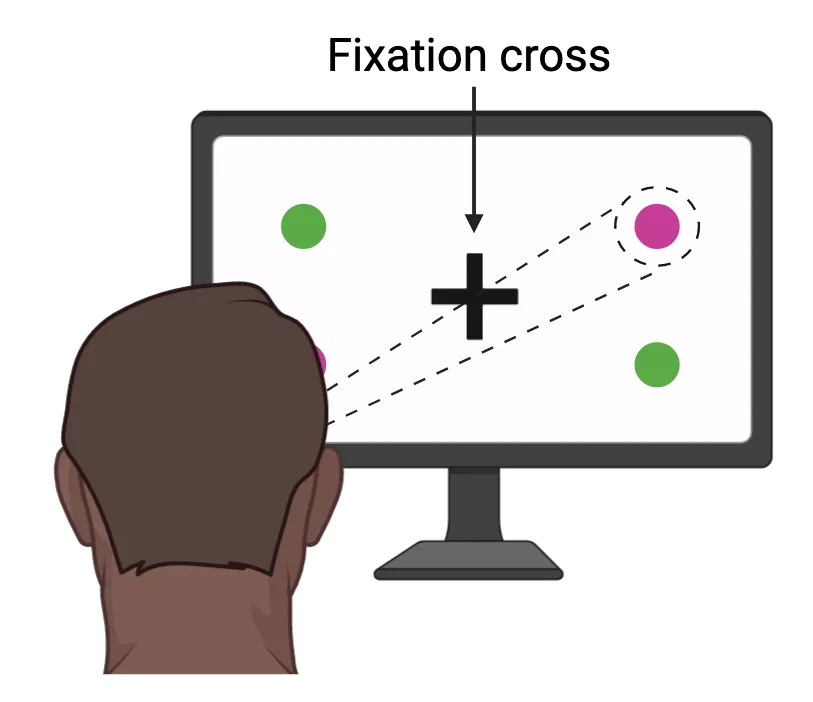
This diagram illustrates covert selective attention: gaze stays fixed while attention is shifted to a peripheral location. It visually separates where the eyes point from what the mind prioritizes, highlighting how attention can determine which stimuli receive enhanced processing and reach conscious report. Source
Selective attention prioritizes some inputs while filtering others.
Divided attention attempts to share limited mental resources across tasks, often reducing accuracy or speed.
Sleep: a distinct form of consciousness
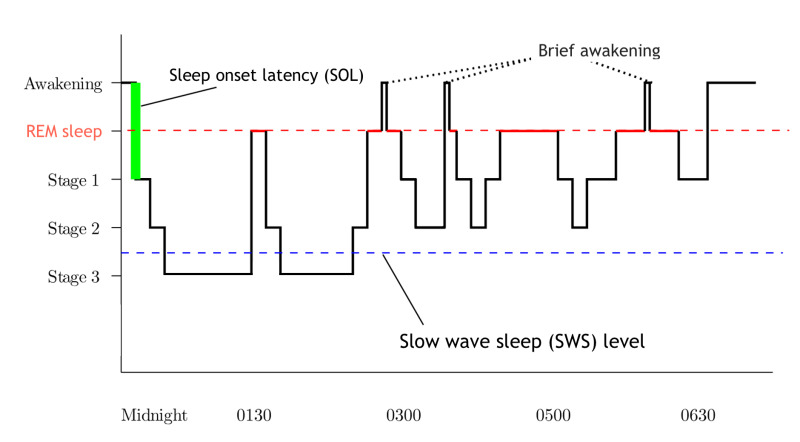
A hypnogram plots sleep stage across the night, showing how consciousness cycles repeatedly between NREM sleep (N1–N3) and REM sleep, with occasional brief returns to wakefulness. This makes the “not all-or-nothing” idea concrete by depicting continuous shifts in responsiveness and subjective experience over time. Source
What characterizes sleep
Sleep is a naturally occurring state marked by reduced responsiveness to the environment and changes in subjective experience. Even so, sleep is still a form of consciousness because experience does not fully “turn off.”
Awareness of external events is typically reduced.
Awareness of internal experiences can persist (e.g., imagery or thoughts), though memory for them is inconsistent.
Conscious control over behavior is usually decreased, reflecting diminished monitoring and voluntary responding.
Continuity and discontinuity with waking life
Sleep can include:
Continuity: themes or emotions related to waking concerns may appear in subjective experience.
Discontinuity: unusual shifts in logic, time, and self-control are more likely than in typical wakefulness.
Levels of processing: controlled vs. automatic
A key way consciousness varies across both sleep and wakefulness is the degree of deliberate control over mental activity.
Controlled processing is deliberate, effortful, and typically conscious (e.g., focusing on instructions, planning).
Automatic processing is fast, habitual, and may occur with little conscious awareness (e.g., well-practiced routines).
In wakefulness, both types occur, but controlled processing is easier to initiate and sustain. In sleep, controlled processing is generally limited, and awareness is less tethered to ongoing external input.
How psychologists infer conscious experience
Because consciousness is private, it is studied indirectly using:
Self-report (descriptions of experience, when available)
Behavioral responsiveness (ability to follow commands or respond to stimuli)
Performance patterns (errors, reaction time changes suggesting reduced awareness)
These methods reflect the syllabus emphasis that consciousness varies in awareness of thoughts, feelings, behavior, and events, and that sleep and wakefulness are major forms along that continuum.
Practice Questions
Define consciousness and name the two forms of consciousness emphasised in this topic. (2 marks)
1 mark: Clear definition of consciousness as awareness of internal experiences and/or external events.
1 mark: Identifies sleep and wakefulness.
Explain how consciousness varies between wakefulness and sleep with reference to awareness of thoughts, feelings, behaviour, and events. (6 marks)
Up to 2 marks: Wakefulness described as higher awareness/responsiveness to external events and greater voluntary control.
Up to 2 marks: Sleep described as reduced environmental responsiveness and reduced voluntary behavioural control.
Up to 2 marks: Accurate reference to internal experiences (thoughts/feelings) changing in clarity/reportability across the two states.
FAQ
Not necessarily. Many people report ongoing subjective experience during sleep, but external responsiveness and reliable recall are often reduced.
Anaesthesia is drug-induced and typically involves deeper suppression of responsiveness, with different clinical monitoring and recovery patterns than normal sleep.
Yes. States like extreme fatigue or attentional lapses can reduce awareness of events and impair self-monitoring despite being technically awake.
Metacognition is awareness of your own thinking. It tends to be stronger in wakefulness and weaker when monitoring and control systems are dampened.
Memory limitations, social desirability, and difficulty verbalising internal states can distort reports, especially when awareness is brief or fragmented.